
Unbiased headlines. Facts, not spin.
Every story is an unbiased news briefing written from 110+ sources across the spectrum — sources linked so you can verify it yourself.
 energy
Notable (6/10)
July 29, 2026 at 02:27 AM
energy
Notable (6/10)
July 29, 2026 at 02:27 AM
DOE Puts $60 Million Behind AI Effort to Cut Nuclear Reactor Build Times in Half
The pitch: nuclear's problem isn't physics, it's paperwork
The Department of Energy announced on July 22 that it selected 278 projects under its Genesis Mission, a Trump administration initiative launched by executive order in November aimed at wiring artificial intelligence into federal science and energy programs, according to World Nuclear News. The White House put a topline number on the whole effort: more than $5 billion in federal commitments across more than 15 agencies.
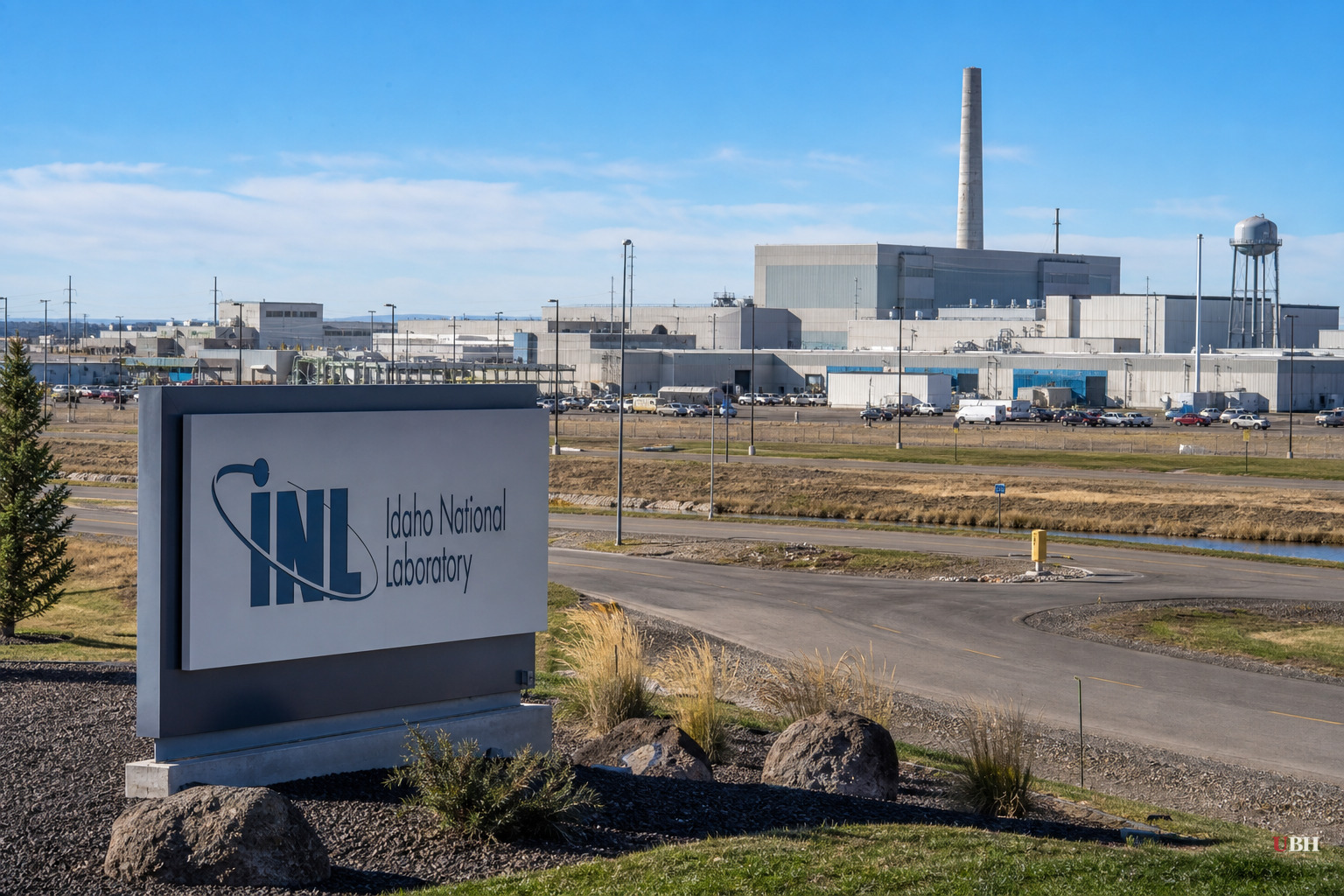
Out of those 278 projects, one nuclear effort took the single largest award, according to Nuclear Newswire Network. Project Prometheus, led by Idaho National Laboratory, got $60 million over three years. It was announced by Energy Secretary Chris Wright at the Genesis Mission Summit in Washington, according to iGrow News.
The idea behind Prometheus is straightforward even if the execution isn't. Nuclear power in the United States doesn't struggle because the reactors don't work. It struggles because licensing takes years, construction records pile up across decades of paperwork, and every reactor design has to fight through the same regulatory maze from scratch. Prometheus is betting AI tools can shorten that maze, according to ZeroHedge, by building what INL calls a secure digital thread connecting engineering models, regulatory requirements, manufacturing specs, construction records, and operating data.
Who's in the room
This isn't a small operation. Idaho National Laboratory is running it alongside Oak Ridge, Argonne, and Sandia national laboratories, plus universities including North Carolina State, Penn State, University of Tennessee-Knoxville, and University of Texas-Austin, according to World Nuclear News. The partner list runs to 32 organizations total.
On the commercial side, the names are the ones you'd expect if you've followed the AI-meets-energy story at all: NVIDIA, Microsoft, Amazon Web Services, Oklo, TerraPower, X-energy, GE Vernova, Westinghouse, Aalo Atomics, Valar Atomics, and Kiewit Nuclear Solutions, among others. HGP Intelligent Energy, a Dallas-based company, joined the effort contributing digital twin modeling and variable-speed reactor coolant pumps meant to let reactors ramp output up and down to match data center demand, according to iGrow News.
Gregory A. Forero, CEO of HGP Intelligent Energy, said the goal is to let a reactor "follow that load minute by minute, so the largest new electricity demand in a generation gets served by its own dedicated generation instead of being pushed onto the public grid and onto ratepayers." That's a real concern worth taking seriously: as AI data centers balloon in power demand, the fear among consumer advocates and some state regulators is that ordinary electricity ratepayers get stuck subsidizing grid upgrades built to serve tech company server farms. Prometheus's answer is dedicated, load-following nuclear generation sited next to the data centers themselves, so the strain never hits the public grid in the first place.
The money and the target
The federal $60 million is dwarfed by what industry is putting in. Sources differ slightly on the exact figure. ZeroHedge cites more than $200 million in industry cost-sharing plus $30 million in private capital, while iGrow News puts total commercial pledges above $250 million. Either way, private money outweighs the federal contribution by roughly 4-to-1.
The stated target is a 50% reduction in both reactor deployment timelines and long-term operating costs, according to both World Nuclear News and ZeroHedge. INL Director John Wagner said at the announcement that "America's nuclear future depends on our ability to move with greater urgency and drive down costs, while maintaining the uncompromising commitment to safety and technical rigor that defines our industry."
Under Secretary for Science and Genesis Mission Director Darío Gil said at the July 22 summit that the mission's broader challenge list will grow from 26 to 33 items, with roughly half of the new national security challenges focused on nuclear threat detection and nonproliferation, according to Nuclear Newswire Network.
The skeptical read
ZeroHedge's coverage places Prometheus inside a broader pattern it calls the AI financing circle: tech companies investing in AI developers who then commit to buying chips, cloud capacity, or infrastructure from those same backers. ZeroHedge points to Amazon's billions in Anthropic investment paired with Anthropic's pledge to spend more than $100 billion on AWS infrastructure as the template. The same companies funding nuclear AI development, NVIDIA, Microsoft, Amazon, are also the ones whose data centers desperately need the power those reactors would produce. That's not evidence of wrongdoing, and nobody is alleging fraud or any violation here. But it is a circular incentive structure worth watching as federal money and corporate pledges intertwine.
What none of the sources answer is the harder question: can AI actually compress a licensing and construction process that has been slow for regulatory, engineering, and safety reasons that have nothing to do with paperwork organization. The Nuclear Regulatory Commission still has to approve designs. Physical construction still takes years regardless of how fast the documents get filed. Prometheus runs through 2029. Whether reactor deployment timelines actually fall by half, or by any measurable amount, won't be knowable until then.
Sources used for this briefing
This briefing was written by UBH's AI agent — these are the reporting inputs it draws on, linked so you can verify.


