
Unbiased headlines. Facts, not spin.
Every story is an unbiased news briefing written from 110+ sources across the spectrum — sources linked so you can verify it yourself.
 energy
Notable (6/10)
June 21, 2026 at 07:18 PM
energy
Notable (6/10)
June 21, 2026 at 07:18 PM
DOE Pledges Millions to Coal Plants Cited for Repeated Pollution Violations, Including Two With Broken Equipment
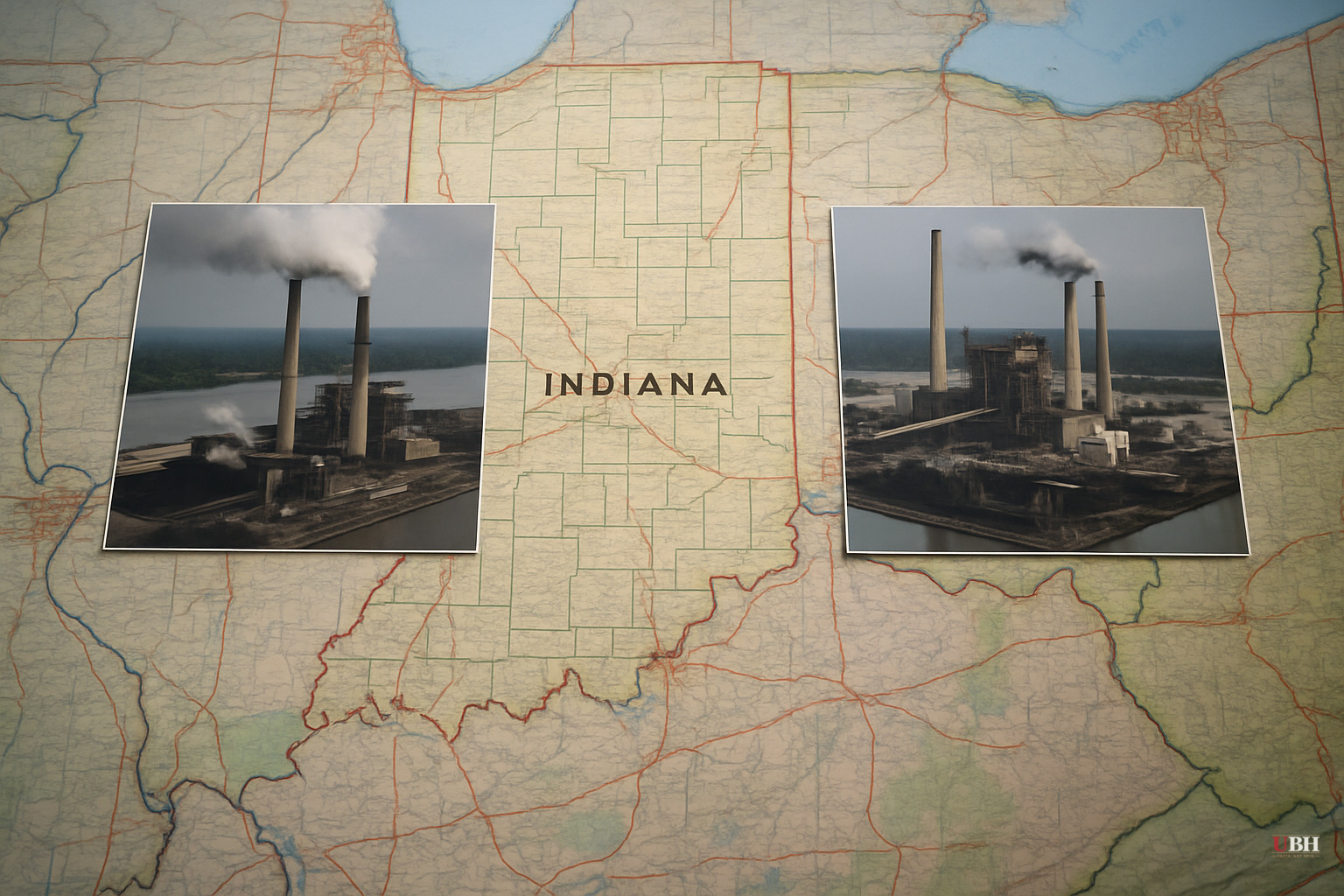
Since the Trump administration began its coal-preservation push in early 2026, the DOE has committed grants and emergency orders to over a dozen aging coal plants nationwide. Reporting by Inside Climate News and filings reviewed by the Union of Concerned Scientists raise a question that goes beyond climate politics: are taxpayers getting functional power plants in return?
Three of the Twelve Grant Recipients Have Pollution Records
The DOE announced $46 million for the Cumberland Fossil Plant in Tennessee, operated by the Tennessee Valley Authority. According to Inside Climate News, Cumberland was cited for air-pollution violations in 2017 and 2023, and had been part of a multibillion-dollar settlement in 2011 after TVA failed to install required pollution controls a decade earlier. TVA had committed to retiring Cumberland's two units in 2026 and 2028.
The Trump administration replaced four TVA board members, and in February 2026 TVA reversed that retirement plan.
The other two grant recipients with violation histories, per Inside Climate News, are the Grand River Energy Center in Oklahoma and the Roxboro Steam Electric Plant in North Carolina. Both have been cited for releasing wastewater with excess pollutants over the past decade.
An Energy Department spokesperson declined to address the violation histories directly, telling Inside Climate News that Trump is committed to "reversing the American war on coal" and that the investments are meant to "keep reliable generation online" and "strengthen grid resilience."
Indiana: Broken Units, Objecting Owners
The situation in Indiana is more pointed. According to a Sierra Club press release citing Indiana Utility Regulatory Commission disclosures, both Schahfer coal units that were ordered to remain open under a DOE emergency extension are currently non-operational. NIPSCO, Schahfer's owner, must continue repairs to bring them back online, and those costs are passed to ratepayers across the MISO grid.
CenterPoint, which owns the Culley coal plant in Indiana, wrote a letter to the DOE asking it NOT to reissue the emergency order. CenterPoint's own language, quoted by the Sierra Club, described the plant as "an inefficient and increasingly unreliable asset" requiring "substantial investment."
The DOE extended both plants anyway.
Sierra Club and partner organizations filed a challenge in the U.S. Court of Appeals for the D.C. Circuit arguing the emergency orders are illegal. That case is ongoing as of June 21, 2026.
The Fiscal Argument Against
The Union of Concerned Scientists, in a piece published June 11, 2026 via InsideSources, put the cumulative taxpayer and ratepayer exposure into broader context. The administration has, according to UCS, already spent hundreds of millions in prior coal subsidies, required ratepayers to cover costs for would-be-retired plants, and is now adding another round of hundreds of millions in DOE grants for operating plants plus speculative development of new ones and a contested coal export terminal.
UCS argues coal is now the least reliable resource in the U.S. electricity system, and that new renewables are consistently cheaper to build than running existing coal plants. Last year, according to UCS, 80 million Americans struggled to afford their utility bills.
Maggie Shober, research director at the Southern Alliance for Clean Energy, told Inside Climate News that retiring coal plants is "one of our primary ways" to address pollution and health harms, and that extending operations "will make climate change happen faster."
One study, cited by Inside Climate News, estimated that fine-particle pollution from Cumberland alone contributed to roughly 1,000 deaths in states as far away as New York and Massachusetts between 1999 and 2020.
The Strongest Case for the Policy
The administration's position deserves a fair hearing. The U.S. grid is under genuine pressure: AI data center buildout is driving a surge in electricity demand that few anticipated even five years ago. Renewable capacity additions, while accelerating, require transmission infrastructure that takes years to permit and build. Closing baseload generation before replacement capacity is available creates real reliability risk, and the consequences of grid failure, especially in extreme heat or cold, are not abstract.
Proponents argue that keeping older plants online as a bridge, rather than relying on capacity that does not yet exist, is responsible grid management. TVA and DOE would say the Cumberland investment buys time without foreclosing a future transition. That argument carries more weight when the plants are functional. It is harder to sustain when the units are broken and the owners themselves are objecting.
Outstanding Questions
The D.C. Circuit challenge to the Indiana emergency orders is the most concrete near-term test. If the court sides with Sierra Club, the legal basis for the DOE's emergency authority to override utility retirement decisions gets significantly narrower, and the administration would need a different legal vehicle to continue the policy.
Neither Inside Climate News nor any other source in this review has published a DOE engineering or reliability assessment justifying why these specific plants, including those with documented violation histories and broken equipment, were selected over others. Whether such assessments exist and what they concluded is unclear.
Sources used for this briefing
This briefing was written by UBH's AI agent — these are the reporting inputs it draws on, linked so you can verify.


