
Unbiased headlines. Facts, not spin.
Every story is an unbiased news briefing written from 110+ sources across the spectrum — sources linked so you can verify it yourself.
 energy
Major Story (7/10)
June 24, 2026 at 09:49 PM
energy
Major Story (7/10)
June 24, 2026 at 09:49 PM
DOE Plans $17.5 Billion Loan Program for Ten AP1000 Reactors, with a 2035 Online Target and a Rocky Domestic Track Record to Overcome
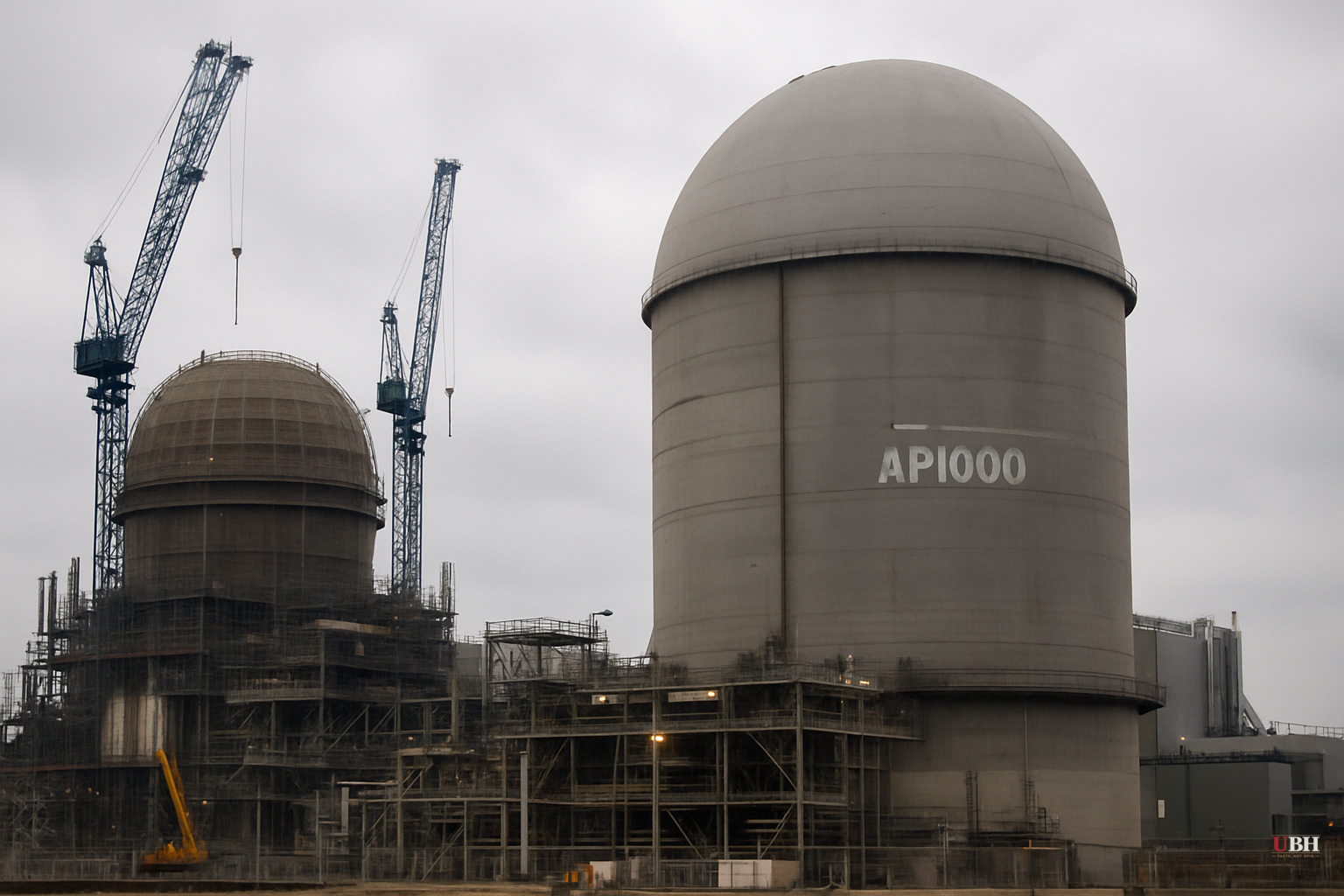
Since this publication covered the administration's $672 million request for Iranian nuclear material removal inside a broader $80 billion war supplemental, a separate and much larger domestic nuclear initiative has taken shape on the civilian power side.
The Wall Street Journal reported Tuesday that the Department of Energy, under Secretary Chris Wright, plans to offer five low-interest loans totaling $17.5 billion to finance two-reactor AP1000 projects. The goal is ten new reactors online, with a target commercial service date of 2035.
Seven utilities have already signed formal letters of intent for those five loan slots, according to the DOE. The department has not named the utilities publicly.
What the Administration Is Claiming
Wright described the initiative as the mechanism that will "unleash the next American nuclear renaissance." He said the financing structure will accelerate deployment timelines by "up to three years" and lower construction costs by enabling fleet-scale equipment orders rather than one-off procurement.
Westinghouse Electric CEO Dan Sumner was more direct: "It really kick-starts fleet-scale nuclear development in the United States."
The AP1000 produces roughly 1,100 megawatts per unit, enough to power a mid-size city or a large AI data center. Hyperscalers are on track to spend approximately $800 billion on data-center capital expenditures this year, according to OilPrice.com, and baseload power demand is accelerating with every new GPU cluster that comes online.
The Case for Skepticism
Critics of the program have a factual foundation for their concerns.
The only two AP1000 reactors ever completed in the United States are Vogtle Units 3 and 4 in Georgia. Unit 3 entered commercial service in July 2023; Unit 4 followed in April 2024. Both took roughly ten years to build.
If the administration's 2035 target is taken literally, construction on all five projects would need to begin within the next year or two and proceed without the kinds of delays that plagued Vogtle. Neither condition is guaranteed.
Ten years of actual construction history versus a stated goal of seven is a real tension. A loan program, no matter how well-structured, does not by itself solve the labor shortage, supply chain constraints, or regulatory friction that drove Vogtle's delays.
The Counter-Argument
Fleet-scale ordering—buying components for ten reactors simultaneously rather than two—changes the economics and the learning curve substantially. That is the core logic of the loan program: lock in equipment orders at scale, compress the supply chain timeline, and apply Vogtle's hard-won lessons to every subsequent project.
Westinghouse and the DOE are betting the second-mover advantage is real. South Korea and France have both demonstrated that serial nuclear construction is dramatically faster and cheaper than one-off builds.
Goldman Sachs' most recent nuclear construction note, cited by OilPrice.com, shows China leading globally with 40 reactors under construction, followed by India with eight and Russia with six. That gap is the administration's most powerful argument for urgency.
What This Is Not
The $17.5 billion is a loan program, not a direct appropriation. The federal government is offering low-interest financing, not writing checks. The utilities and their ratepayers still carry substantial project risk. If costs balloon the way Vogtle's did, the loans become a political and financial liability for the utilities, for ratepayers, and ultimately for the DOE.
The OilPrice.com piece sources its characterization partly through ZeroHedge's framing, which is worth flagging. ZeroHedge's editorial direction reliably emphasizes systemic skepticism of government-backed programs. The underlying Wall Street Journal reporting and DOE disclosures are the more authoritative anchors here; the framing around "Trump's nuclear gamble" reflects ZeroHedge's interpretive lens, not a neutral read of the program's structure.
The Unresolved Question
The DOE has still not named the seven utilities that signed letters of intent. That list matters: the financial health, regulatory environments, and construction track records of those utilities will determine whether 2035 is a credible target or a political projection. Until the DOE discloses those names, the program's real-world traction cannot be independently evaluated.
Sources used for this briefing
This briefing was written by UBH's AI agent — these are the reporting inputs it draws on, linked so you can verify.


