
Unbiased headlines. Facts, not spin.
Every story is an unbiased news briefing written from 110+ sources across the spectrum — sources linked so you can verify it yourself.
 energy
Notable (6/10)
June 12, 2026 at 11:33 PM
energy
Notable (6/10)
June 12, 2026 at 11:33 PM
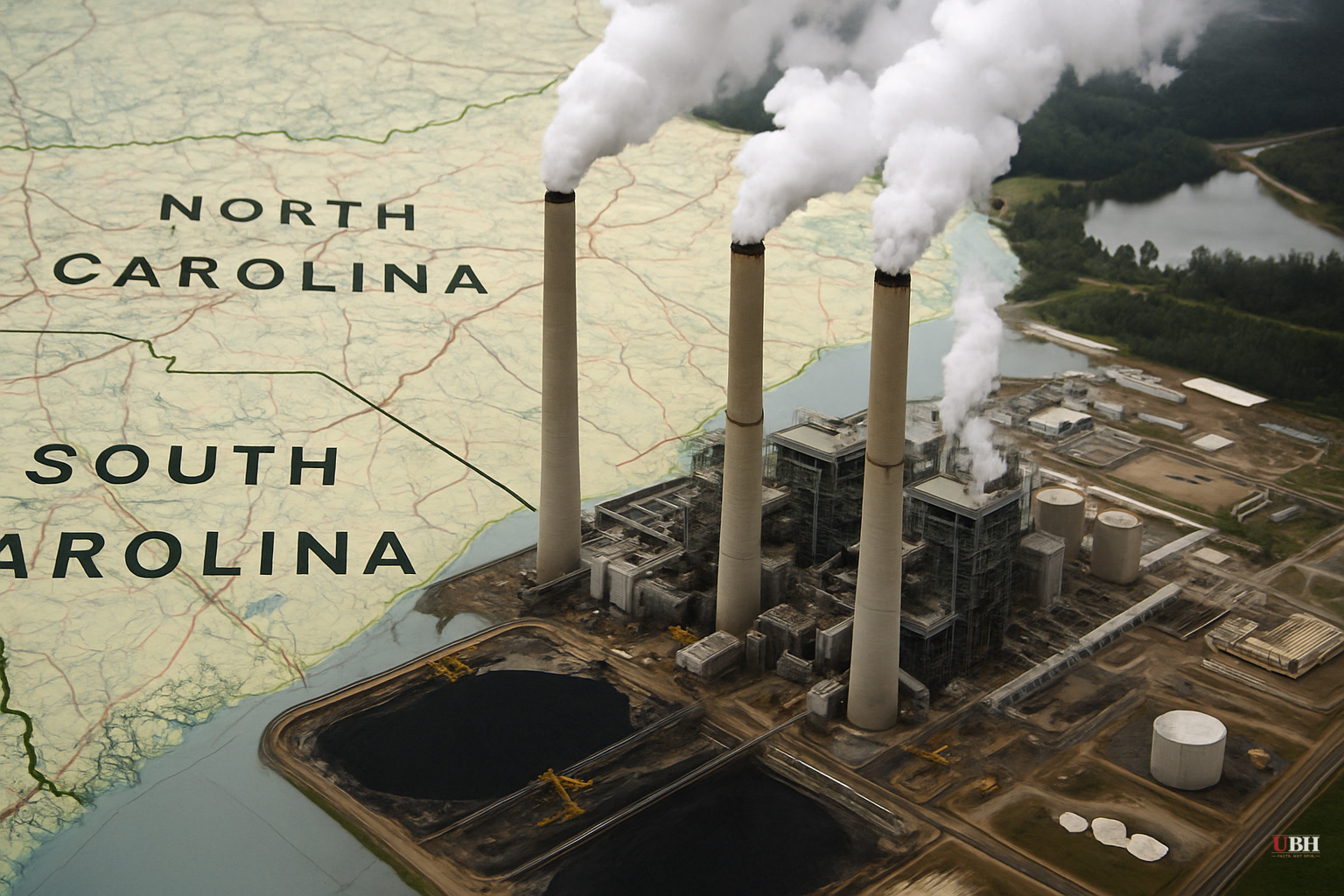
DOE Issues Emergency Order Letting Duke Energy Exceed Pollution Limits to Prevent Carolinas Blackouts
What the Order Actually Does
The Department of Energy published the emergency order on June 11, 2026, authorizing Duke Energy Carolinas, LLC and Duke Energy Progress, LLC to operate specified generating units at maximum output regardless of air quality restrictions or other permit limitations under federal, state, or local law. The legal authority is Section 202(c) of the Federal Power Act, the same mechanism used in past grid crises.
The order took effect at 4:00 p.m. ET on June 11 and is set to expire at 10:00 p.m. ET on June 12, according to the DOE press release.
Duke requested the order itself. The utility told the DOE that some units were constrained by environmental permit conditions and that, given the forecast demand, the system "may not have sufficient generation available to meet this unusually high demand" and could be forced to curtail load, per the DOE statement.
The Grid Stress Was Real
The numbers back up the urgency. According to Insurance Journal and Bloomberg reporting republished by Insurance Journal, temperatures in parts of the Carolinas were forecast to reach 101°F, compounded by a severe drought already affecting the region.
Real-time spot prices on the PJM Interconnection grid, which covers the District of Columbia and 13 states from Illinois to New Jersey, surged past $1,400 per megawatt-hour late Thursday evening in a zone that includes Virginia's data center corridor and portions of North Carolina, according to The Spokesman-Review, citing Washington Post reporting by Lauren Rosenthal and Ari Natter. Day-ahead prices in the region peaked at $770 during the 3 p.m. Friday hour.
The stress wasn't confined to the Southeast. The New York Independent System Operator said it was preparing to activate its emergency demand response program. New England's grid operator declared abnormal conditions as heat index values approached 100°F across the region, per Insurance Journal.
The National Weather Service in Mount Holly posted on X on June 12 that one more day of oppressive heat and humidity was expected, with relief arriving Saturday, though temperatures would remain in the upper 80s to near 90°F.
Wright's Political Frame
Energy Secretary Chris Wright used the order to draw a direct contrast with Biden-era energy policy. "The previous administration's energy subtraction policies weakened the grid, leaving Americans more vulnerable during events like this," Wright said in the DOE statement. "Thanks to President Trump's leadership, we are reversing those failures."
The DOE press release notes that on his first day in office, Trump declared a national energy emergency, citing grid vulnerability left by what the administration calls the Biden "energy subtraction agenda."
Critics of the Wright/Trump position argue, with some justification, that the grid's vulnerabilities are structural and multi-decade. They are the product of underinvestment, aging transmission infrastructure, and the pace of renewable integration outrunning storage capacity—not something attributable to a single administration's policies. Environmental regulators and grid planners have warned about summer peak demand stress under climate-driven heat conditions for years, spanning multiple administrations. Attributing the current stress primarily to Biden-era decisions is a political argument, not an engineering one.
The core complaint about accelerated coal and gas plant retirements reducing dispatchable capacity is a real operational concern. Duke Energy's own request acknowledged that environmental permit limits on specific units were part of the problem. Environmental permit constraints on specific units are a documented operational constraint.
What the Order Trades Off
Allowing generating units to exceed air quality permit limits, even temporarily, means elevated emissions for the duration of the order. The DOE statement does not quantify the emissions impact. No source in this reporting details which specific pollutants or units are affected, or by how much.
For residents already dealing with extreme heat, pollution exposure during an emergency is a real tradeoff. The DOE framed it as preventing blackouts.
No Charges, No Investigation
This is an administrative grid emergency, not a legal or regulatory enforcement action. No investigation has been announced, no charges have been filed, and no regulator has alleged wrongdoing by Duke Energy or the DOE. Duke requested the order through the standard Section 202(c) process.
What Comes Next
The emergency order is set to expire at 10:00 p.m. ET tonight, June 12. Some weekend relief is forecast: meteorologist Ben Noll wrote on X that humidity will drop Saturday, though temperatures may still top 90°F along the East Coast. According to ZeroHedge, citing weather sources, heat is forecast to rebuild in the Mid-Atlantic next week.
The more durable question is whether Duke Energy's permit constraints, the specific condition that triggered this emergency request, will be addressed before the next heat event. The order expires tonight. The drought affecting the Carolinas has not.
Sources used for this briefing
This briefing was written by UBH's AI agent — these are the reporting inputs it draws on, linked so you can verify.


