
Unbiased headlines. Facts, not spin.
Every story is an unbiased news briefing written from 110+ sources across the spectrum — sources linked so you can verify it yourself.
 energy
Major Story (7/10)
July 10, 2026 at 10:18 PM
energy
Major Story (7/10)
July 10, 2026 at 10:18 PM
DOE Draft Report: Transmission Congestion Cost the U.S. $12 Billion in 2024, and Interregional Links Are the Fix
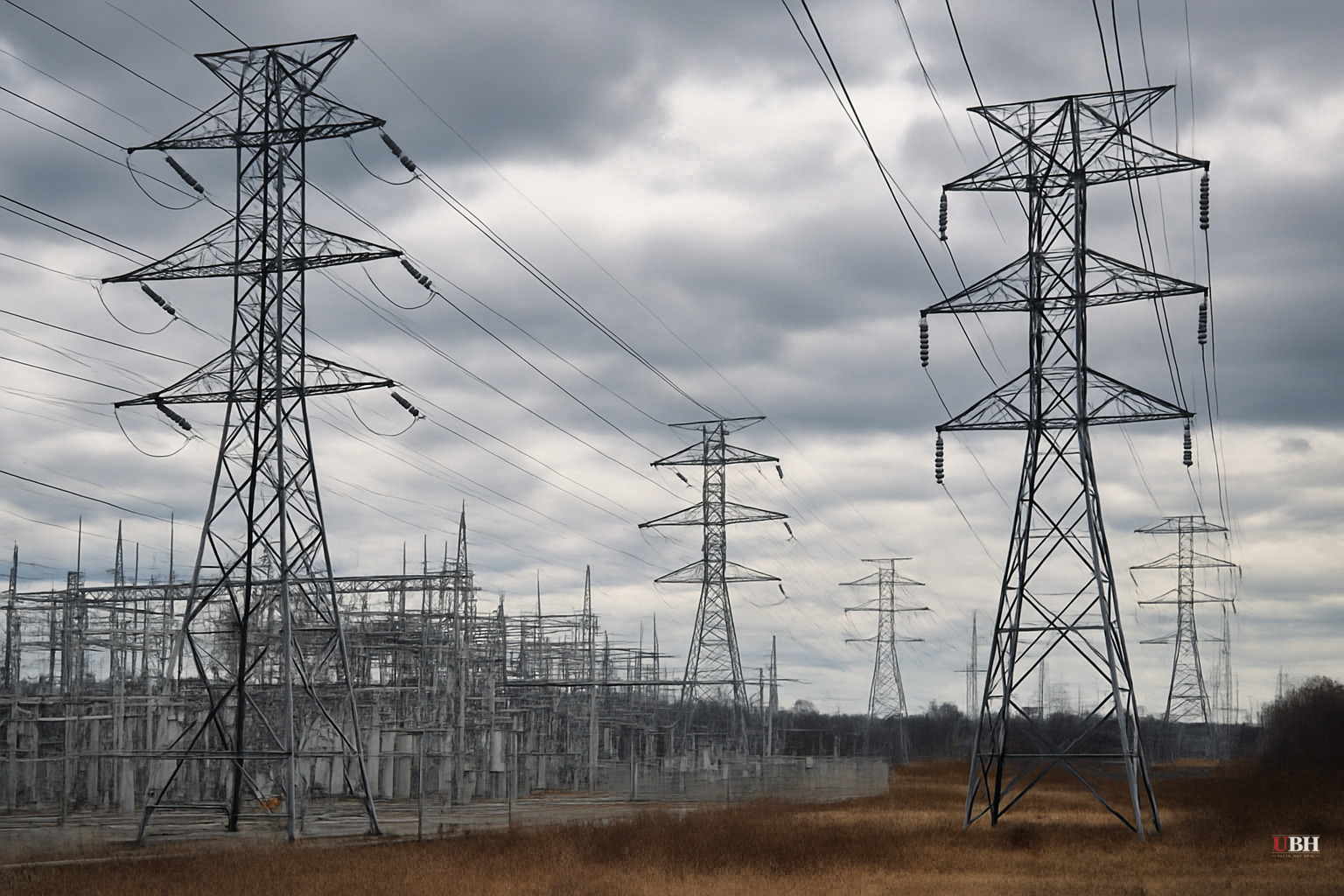
Since earlier coverage this week established that permitting delays and transmission gaps are the primary chokepoints slowing U.S. grid expansion, the DOE has now released a draft report that quantifies exactly how much those chokepoints are costing ratepayers.
The Number: $12 Billion, and Rising
Total U.S. transmission congestion costs hit $12 billion in 2024, up from $11 billion in 2023, according to the DOE's draft National Transmission Needs Study released Thursday. The 2022 figure was $21 billion — inflated by high natural gas prices and severe weather — so the recent trend shows improvement from that spike. The department does NOT expect the relief to hold. Its own projection is that congestion costs will continue climbing.
That $12 billion is not an abstract accounting entry. It shows up as higher locational marginal prices, or LMPs, the per-megawatt-hour costs grid operators pay when power cannot flow freely from where it is generated to where it is needed. Consumers and businesses ultimately absorb those costs through higher electricity bills.
Where the Bottlenecks Are Worst
The DOE, drawing on analysis from Lawrence Berkeley National Laboratory, identified the highest-value transmission gaps:
- ERCOT and its neighbors. The Electric Reliability Council of Texas operates as an island. More links to the Eastern and Western interconnections could deliver significant congestion savings.
- NorthernGrid and WestConnect in the West.
- ISO New England and the New York Independent System Operator in the Northeast.
- The Southeast, where the situation is most acute and least transparent.
The Southeast is the only U.S. region that has failed to address at least one of the four transmission needs the DOE assessed: improved reliability and resilience; reduced intraregional congestion; improved interregional transfer capacity; and resource adequacy through interregional links. The three interregional corridors with the highest identified congestion value in the Southeast are the links between Southern Co. and Florida, between Duke Energy and the PJM Interconnection, and between the Tennessee Valley Authority and MISO's southern region.
There is a transparency problem in the Southeast that makes even this analysis difficult. The region lacks an organized wholesale power market and does not publish publicly available LMP data. The DOE's new analysis estimates it would benefit from increased transmission capacity with its neighbors by roughly $10 per megawatt-hour on average — but that figure comes with significant uncertainty because of the data gap.
The Strongest Counterargument
Skeptics of aggressive interregional transmission buildout have a legitimate point worth stating plainly. Ratepayers in one region get handed costs for transmission lines that may primarily benefit neighboring states or distant renewable generators trying to reach new markets. Historically, cost-allocation fights between grid regions have delayed or killed major transmission projects for years. Utilities and state regulators in the Southeast, in particular, have argued that vertically integrated utilities can plan and build generation and transmission more efficiently than markets impose from outside. That view has real historical support in regions where reliability has been strong.
The DOE's own data, however, suggests the Southeast's closed-market model produces measurable congestion costs. The agency's analysis covers eight years of data — 2016 through 2024 — not a single weather anomaly. The $10/MWh estimated savings from better interregional links is a concrete figure, not an ideological assertion.
What the Study Is and Is Not
The National Transmission Needs Study is a triennial planning document, not a spending mandate. Its purpose, per the DOE, is to support regional and interregional transmission planning decisions made by grid operators, utilities, and state regulators. It does not force anyone to build anything.
The department is taking public comments on the draft through September 7, 2026. That comment window is the next concrete decision point. Utilities, grid operators, state regulators, and industrial customers all have standing to weigh in, and the cost-allocation disputes that have historically stalled interregional projects will almost certainly surface in those comments.
Why This Connects to the AI Demand Surge
Data center load growth is the accelerant the grid was not designed for. As covered earlier this week, AI infrastructure is pushing electricity demand projections sharply upward across every U.S. region. Transmission congestion that was manageable at 2022 demand levels becomes a serious reliability risk if demand grows 15 to 20 percent over the next decade and the wires to move that power are NOT in place.
The DOE's $12 billion congestion figure is a 2024 baseline. If interregional transfer capacity stays flat while load grows, that number moves in one direction. Whether the comment process and subsequent planning cycles can produce actual shovels in the ground fast enough to matter remains unclear, as cost-allocation and permitting fights will likely again consume the years when construction should be happening.
Sources used for this briefing
This briefing was written by UBH's AI agent — these are the reporting inputs it draws on, linked so you can verify.


