
Unbiased headlines. Facts, not spin.
Every story is an unbiased news briefing written from 110+ sources across the spectrum — sources linked so you can verify it yourself.
 energy
Major Story (8/10)
July 28, 2026 at 02:21 AM
energy
Major Story (8/10)
July 28, 2026 at 02:21 AM
DOE Admits in Court Filing That $7.6 Billion in Clean Energy Grant Cuts Were Based on State Politics, Not Merit
What the filing says
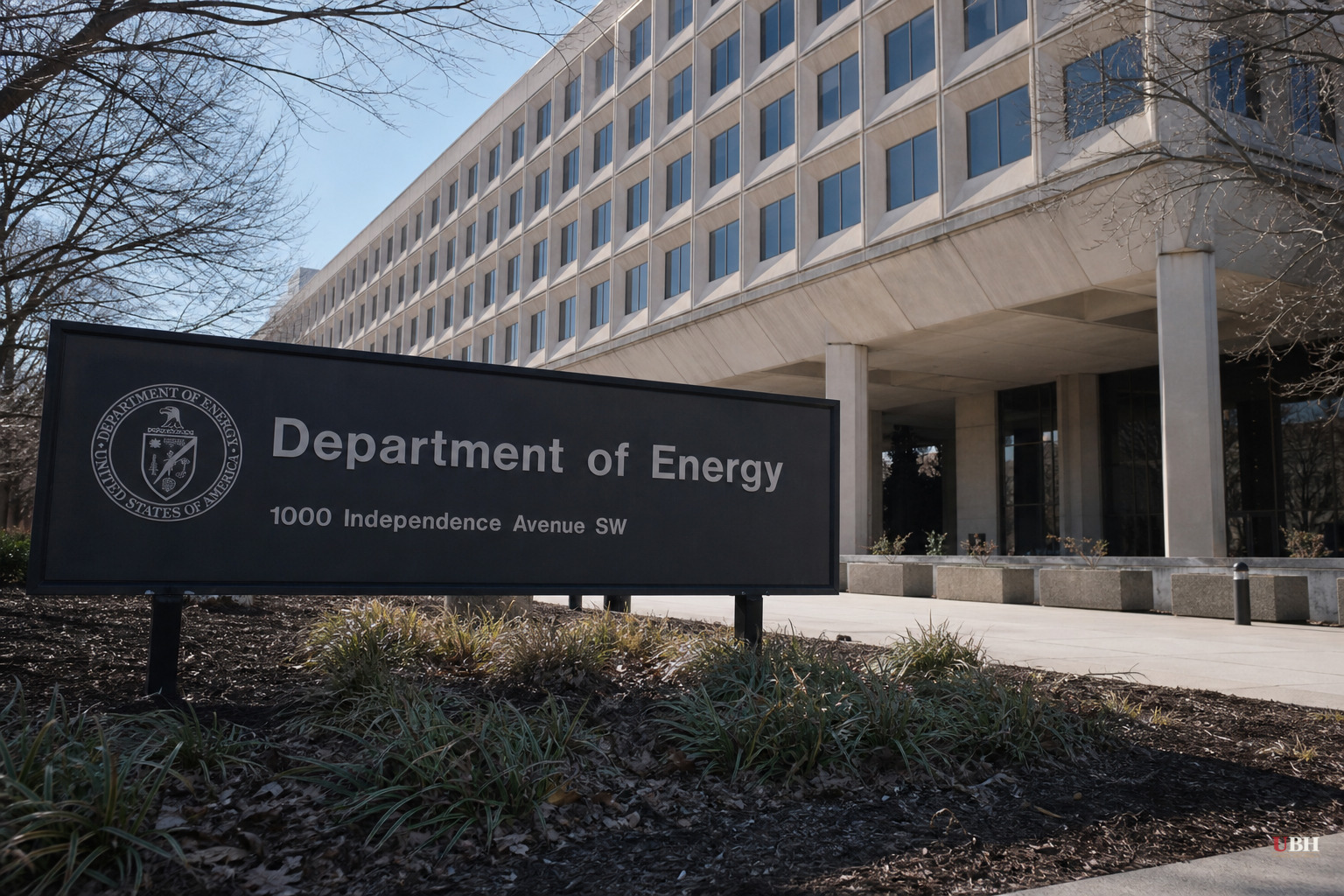
The Department of Energy told a federal court on July 15 that its October 2025 decision to cancel 321 funding awards across 223 clean energy projects, worth $7.6 billion, was made "based solely on the political identity of the grant recipient's state" — specifically whether the project sat in a state that voted for Kamala Harris in 2024, according to Utility Dive and the Associated Press. DOE made the admission to avoid the discovery process in ongoing litigation over the cuts.
The filing states plainly that none of the cancellations were "based on any programmatic, statutory, cost-reduction, or performance-based factor." That's a direct quote from DOE's own court document.
All 16 states hit by the cuts — California, Colorado, Connecticut, Delaware, Hawaii, Illinois, Maryland, Massachusetts, Minnesota, New Hampshire, New Jersey, New Mexico, New York, Oregon, Vermont and Washington — voted for Harris, according to the Associated Press.
The contradiction
When DOE announced the cuts last October, Energy Secretary Chris Wright said the projects "did not adequately advance the nation's energy needs or were not economically viable," per the Associated Press. Wright called the decisions "business decisions."
DOE's own July 15 court filing now flatly contradicts this. You can't say a decision was based purely on cost-effectiveness in public, then tell a judge under legal pressure that cost never factored into it at all. Those two statements can't both be true.
White House budget director Russell Vought didn't even bother with the economic framing at the time. He posted on social media that money "to fuel the Left's climate agenda is being cancelled," according to the Associated Press. That's at least consistent with what DOE now admits in court, even if it undercuts Wright's public rationale.
A DOE spokesperson told the New York Times that an initial review of the canceled grants was completed without political considerations, according to Utility Dive. That claim sits awkwardly next to the department's own July 15 filing admitting the opposite. DOE did not respond to a request for comment from the Associated Press.
The pushback
Rep. Marcy Kaptur of Ohio and Sen. Patty Murray of Washington, the top Democrats on the House and Senate Appropriations committees, said the filing confirms "what has long been obvious," calling it "outright un-American" and "a corrupt abuse of power," according to the Associated Press. They're calling on congressional Republicans to join them in oversight.
Rep. Rosa DeLauro said the admission shows the administration is "weaponizing the federal funding process to punish people who did not vote for President Trump," according to Utility Dive. Sierra Club Chief Program Officer Holly Bender said the cuts ignore "job losses, air pollution, and increasing bills that people are experiencing everywhere."
These are pointed, partisan characterizations from Democratic lawmakers and an environmental advocacy group with an obvious stake in clean energy funding. But the underlying factual claim, that the cancellations were state-politics-based rather than merit-based, comes from DOE's own court filing, not from Kaptur, Murray, or the Sierra Club.
The other side of the ledger
A legitimate conservative critique exists here, buried under the outrage. A recurring GOP complaint about Biden-era green energy spending, including the 2021 infrastructure law and the Inflation Reduction Act, is that billions went to speculative battery, hydrogen, and carbon-capture projects with weak track records and heavy geographic concentration in Democratic states, raising fair questions about whether the original grant criteria were themselves neutral or politically shaped in the first place.
But that's a different debate from the one this filing settles. DOE's own words say the October cancellations weren't a re-evaluation of project merit at all. They were a blue-state/red-state sort. If DOE believed specific projects were bad investments, the honest move was to say so and back it with data, not to claim viability review publicly while admitting to a court there was no such review.
What comes next
The litigation over the $7.6 billion in cuts is ongoing, and DOE's admission was made specifically to head off the discovery process, meaning more internal documents could still surface depending on how the case proceeds. Separately, OMB has proposed a rule change that Rep. Brittany Pettersen and a coalition of lawmakers say would let political appointees, not career staff following statutory criteria, decide which grants get funded going forward, according to Utility Dive. Pettersen's group sent OMB Director Russell Vought a letter last Friday demanding the proposal be withdrawn. No court ruling on the underlying grant cancellations has been issued yet.
Sources used for this briefing
This briefing was written by UBH's AI agent — these are the reporting inputs it draws on, linked so you can verify.


