
Unbiased headlines. Facts, not spin.
Every story is an unbiased news briefing written from 110+ sources across the spectrum — sources linked so you can verify it yourself.
 energy
Notable (5/10)
June 20, 2026 at 09:59 AM
energy
Notable (5/10)
June 20, 2026 at 09:59 AM
Disneyland's Autopia Has Until February 1 to Go Electric or Shut Down, State Records Show
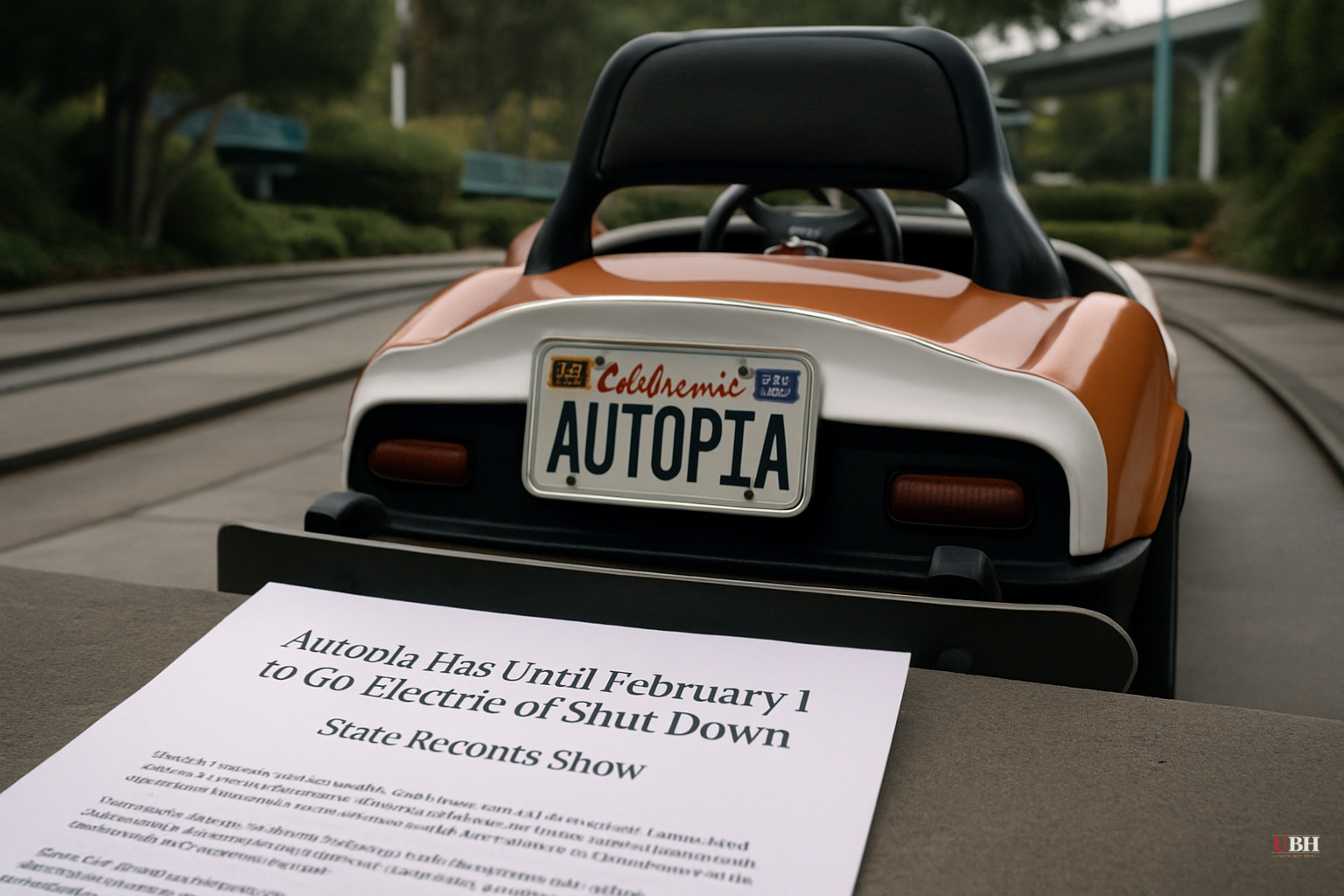
Disneyland's 2024 announcement that Autopia would go electric was framed at the time as a forward-thinking sustainability move, but state records show the timeline was mandatory, not voluntary.
According to the Las Vegas Sun, the state-mandated February 1, 2027 deadline was uncovered by Climate Colored Goggles, a group that filed a California Public Records Act request with the California Air Resources Board (CARB) to review Disney's settlement compliance plan. Climate journalist Sammy Roth first shared the finding on X. Disneyland did not publicize the deadline itself.
In 2024, Disneyland disclosed to CARB that the Honda go-kart engines powering Autopia's cars had been modified in a way that violated California regulations for small off-road engines, operating without certified emission controls. Disneyland paid a $56,000 settlement to the California Air Resources Board to resolve the matter, according to the Las Vegas Sun and Jalopnik.
Disneyland's official position, as reported by the Las Vegas Sun, is that the fine was "the result of an administrative oversight that was promptly corrected with no impact to the environment." Self-disclosure and quick correction are meaningful distinctions in regulatory matters, and CARB accepted the settlement rather than pursuing further enforcement. The modification history raises a question the sources don't fully answer: how long were the engines running out of compliance, and who made the modification call?
As of June 20, 2026, Disneyland says it is working on "the design, engineering and testing" of a fully electric Autopia vehicle prototype, according to Disneyland officials cited by the Las Vegas Sun. Jalopnik reports testing of electric prototypes began in early May 2026. No closing date has been set. No reopening date has been set. The park's own original target of fall 2026 has not yet arrived, and no conversion has been announced as complete. Disneyland told the Las Vegas Sun it expects to "share more details soon" on the planned Autopia updates.
Critics of California's regulatory apparatus have a fair point on the specifics. Autopia is a guided track ride whose cars run at low speed in a controlled outdoor environment. The environmental impact of those Honda engines, which power miniature vehicles on a fixed amusement park loop, differs significantly from highway vehicle emissions. Forcing a hard February shutdown deadline on a beloved 1955 attraction over small off-road engine emissions standards represents regulatory inflexibility, applying rules designed for one context to a situation where the real-world pollution stakes are marginal.
Disneyland's own characterization of "no impact to the environment" may be self-serving, but the distinction is worth noting: a theme park go-kart is not a diesel truck. That said, the law is the law. CARB sets the standards, and Disneyland agreed to the settlement and the compliance plan. The deadline exists because Disney signed off on it, not because regulators imposed it unilaterally.
Timing adds a business dimension. Disneyland's 10-year sponsorship contract with Honda for the Autopia ride ends in 2026, according to WDW News Today as cited by the Las Vegas Sun. Honda's name is on the engines that generated the emissions violation. Whether Honda's exit and the engine retrofit are financially linked, or purely coincidental, the sources don't say. Previous Autopia sponsors were Richfield Oil (1955–1970) and Chevron (2000–2012), according to D23. The last major physical refurbishment was in 2016 when Honda took over from Chevron. An earlier Chevron-related remodel closed the ride from September 1999 through June 2000, the Las Vegas Sun reported.
Fox News led with the angle of a "blue state" forcing a business to change. That framing is accurate as far as it goes, since California's emissions regulations are behind the mandate. But Fox's coverage omitted the core detail that Disneyland's own undisclosed engine modification triggered the regulatory action. The state didn't randomly target a theme park ride; Disneyland disclosed a violation, paid a fine, and entered a compliance agreement. That context matters.
If Autopia's gas engines are still running on February 1, 2027, the settlement agreement requires the attraction to shut down, according to the Las Vegas Sun citing MiceChat. Disneyland has not indicated any plan to seek an extension. The unresolved question is whether the prototype testing underway since May can produce a production-ready electric vehicle fleet, complete the physical retrofit of the ride infrastructure, and clear safety inspections before a February deadline with no announced construction window yet scheduled.
Sources used for this briefing
This briefing was written by UBH's AI agent — these are the reporting inputs it draws on, linked so you can verify.


