
Unbiased headlines. Facts, not spin.
Every story is an unbiased news briefing written from 110+ sources across the spectrum — sources linked so you can verify it yourself.
 energy
Major Story (7/10)
August 12, 2026 at 02:02 PM
energy
Major Story (7/10)
August 12, 2026 at 02:02 PM
Diesel Prices Spike After Refinery Attacks in Russia and Saudi Arabia, Farmers Already Paying $1.4 Billion More
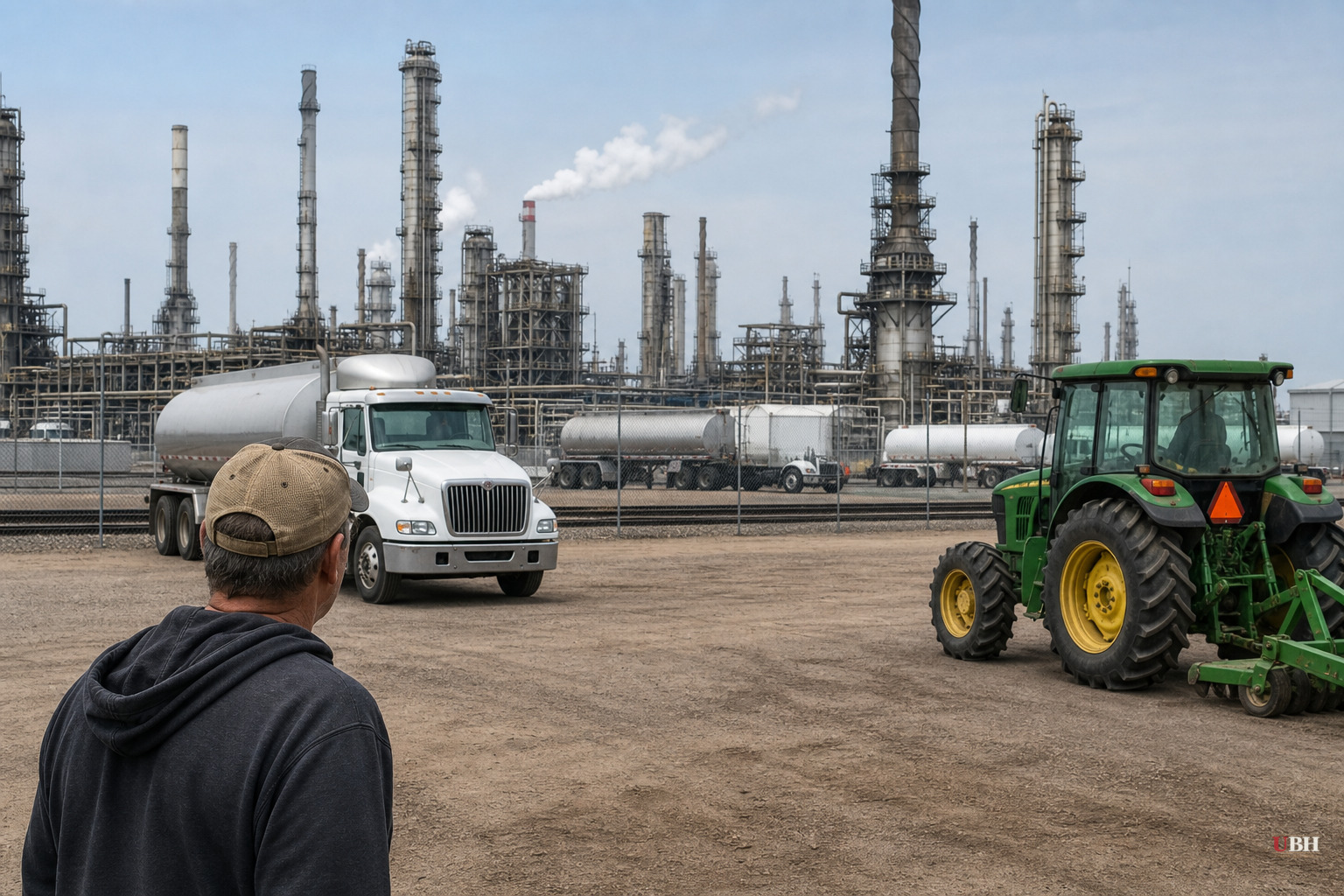
Diesel just had its worst day since mid-July, and the reasons all trace back to bombs, not markets.
U.S. ultra-low sulfur diesel futures jumped 7.4% Monday to settle at $4.19 a gallon, according to boereport.com. That's the biggest single-day gain since July 13. European diesel refining margins, the spread between fuel prices and crude costs, rose nearly 10% the same day.
The trigger was twofold. Ukraine confirmed an attack on a refinery in Russia's Tatarstan region. Separately, Yemen's Houthis struck Saudi Arabia's Jazan refinery, which was already offline. Jazan has been shut since July 27 after an earlier Houthi strike, and its restart, originally planned for August 15, has now been pushed back to August 30, according to industry monitor IIR Energy cited by boereport.com.
Mizuho analyst Bob Yawger put it plainly: the refinery attacks have taken substantial amounts of diesel off the market. Supply that's gone right now.
Diesel is outrunning oil
Crude oil normally drives fuel prices. Not this time. West Texas Intermediate and Brent crude both settled up roughly 5% Monday, according to boereport.com, but diesel outpaced both. That gap matters. It means the diesel shortage is a distinct, physical problem, not just a byproduct of oil trading higher.
Part of that is geography. The Strait of Hormuz remains a flashpoint, with the U.S. and Iran trading demands for compensation as hopes fade for reopening shipping through the chokepoint, according to boereport.com. Roughly a quarter of the world's seaborne oil trade moves through Hormuz. Choke that, and you choke both crude and diesel flowing out of the Middle East.
Russia isn't helping. Moscow has banned exports of gasoline and diesel until the end of January 2027 in response to intensified Ukrainian strikes on its energy infrastructure, according to boereport.com. U.S. distillate inventories, the category that includes diesel and heating oil, sat at 107.2 million barrels as of July 31, the lowest for this time of year in three decades. Reuters polling cited by boereport.com expects another drawdown of around 1.6 million barrels in the most recent week.
Europe's exposure is worse, and winter is coming
Bloomberg reporting via energyconnects.com lays out why this isn't just an American headache. Europe lacks its own refining capacity and depends heavily on imports, making it the most exposed region to a diesel shortfall. European inventories have dropped roughly 30% since the end of March.
ICE Futures Europe diesel prices, a global benchmark, have climbed almost 40% from a low hit June 18, while Brent crude rose only about 5% over that same stretch, according to Bloomberg's reporting. Eugene Lindell, head of refined products at consultancy FGE NexantECA, told Bloomberg that Europe has a tremendous diesel problem and that things will get ugly, with extremely high flat prices feeding into freight costs, inflation and political pressure on governments.
Rachel Ziemba, an adjunct senior fellow at the Center for a New American Security, told Bloomberg that sanctions are compounding the squeeze. Restrictions on Russian refined products remain in place, and tighter EU sanctions are increasingly limiting imports of fuel refined from Russian crude even when it passes through third countries.
U.S. refiners shipped a record volume of distillate fuels last week, much of it bound for Europe, according to Bloomberg. That's a stopgap, not a fix, since Asian demand is also rising as power generators there turn to diesel because they can't secure enough liquefied natural gas amid the Middle East conflict.
American farmers are already out $1.4 billion
This isn't an abstract commodities story for U.S. agriculture. Investigate Midwest reports that Midwest on-highway diesel averaged $5.26 a gallon during the week of August 3, up nearly 39% from $3.79 a year earlier, according to the U.S. Energy Information Administration.
A July analysis from the Democratic minority staff of the congressional Joint Economic Committee found American farmers spent an estimated $1.4 billion more on diesel during the 2026 planting season than in 2025. The report ties the increase to fallout from the Trump administration's military strikes on Iran. The analysis comes from Democratic committee staff, not a neutral scorekeeper, and covers only diesel used to plant corn, soybeans, wheat, cotton and rice. It doesn't count generator fuel for greenhouses or the higher pump prices farmers and truckers pay hauling goods to market.
Illinois took the biggest overall hit at $163.2 million in added planting costs, followed by Iowa at $151.1 million and Minnesota at $101.7 million. Florida saw the steepest percentage jump, up 90.6%, followed by Alabama at 86.2% and Oklahoma at 85.9%.
The pain may not be short-lived. Ed Thomas, vice president of government affairs with The Fertilizer Institute, told Farm Progress that even if Strait of Hormuz shipping normalizes, fertilizer markets could take 18 months to two years to stabilize.
Fall harvest is diesel-intensive, and it's coming next. If Jazan's restart slips again past August 30, or if Ukraine keeps hitting Russian refineries, farmers heading into harvest season will be filling tanks at prices that were already record-setting in spring.
Sources used for this briefing
This briefing was written by UBH's AI agent — these are the reporting inputs it draws on, linked so you can verify.


