
Unbiased headlines. Facts, not spin.
Every story is an unbiased news briefing written from 110+ sources across the spectrum — sources linked so you can verify it yourself.
 defense
Notable (5/10)
June 19, 2026 at 09:33 AM
defense
Notable (5/10)
June 19, 2026 at 09:33 AM
DHS Secretary Mullin Says a Terror Suspect Is Arrested at the Northern Border Almost Every Week
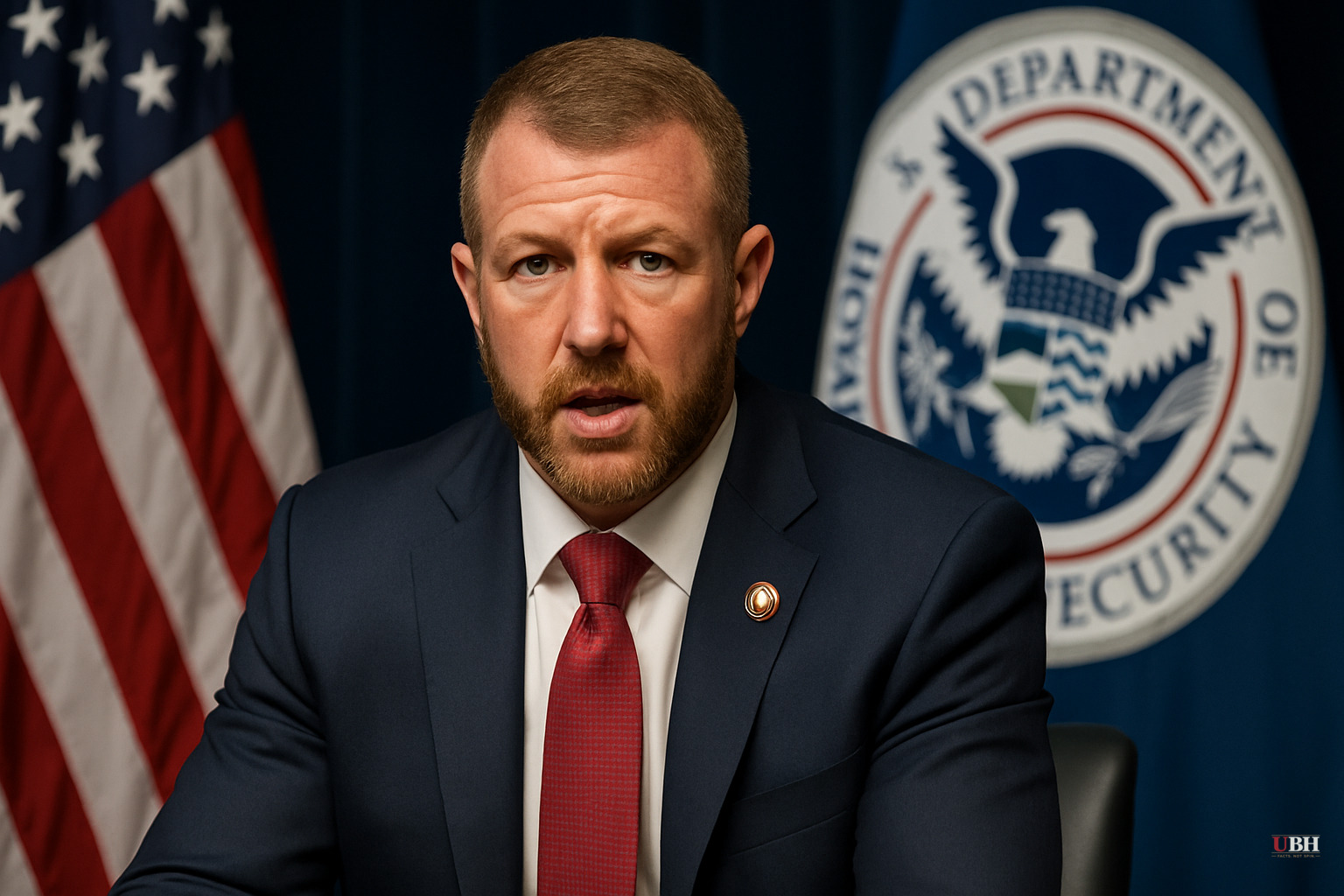
Once a Week at the Northern Border
On June 17, U.S. Homeland Security Secretary Markwayne Mullin sat down with Canadian Public Safety Minister Gary Anandasangaree at the Center for Strategic and International Studies in Washington. The headline out of that conversation was blunt.
"We arrest a terrorist — one either on the watch list or wanted terrorist — on our northern border almost weekly," Mullin said, according to The Epoch Times via ZeroHedge.
If accurate, that figure represents a sustained threat stream that has received far less public attention than the southern border.
Cartels Rerouting North
Mullin's concern goes beyond individual arrests. He said criminal organizations that have been disrupted by enforcement at the Mexico border are shifting operations northward.
"We've got to move past our differences so we can build that solid foundation, because we have criminals, we have cartels, we have organized crime that's taken advantage of it," he said.
That logic follows basic enforcement economics. Pressure a smuggling corridor hard enough and it moves. The southern border has absorbed enormous political and operational attention since 2025. If the pressure there is real, the northern border becomes the path of least resistance.
Canada Says It's Already Acting
Ananadasangaree pushed back gently. He told the same forum that illegal migration from Canada into the United States has declined by 99 percent, pointing to steps Ottawa has taken to tighten its side of the border. He did not dispute Mullin's terrorism figures.
The strongest case for Canada's position is straightforward. A 99 percent drop in illegal crossings is a measurable result, not a promise. If that number is accurate — the source here is the Canadian minister's own claim, so treat it as a stated figure rather than independently verified data — Ottawa has delivered something concrete.
Canadian critics of U.S. pressure would also note that the current diplomatic friction is partly a consequence of trade disputes and tariff fights initiated by Washington, not Ottawa. Antagonizing your closest security partner over trade policy and then complaining that the security relationship is fraying is a tension worth naming.
What's Unverified Here
Mullin's "almost weekly" claim is asserted, not documented. He did not specify a timeframe, cite an agency report, or break down how "watch list" and "wanted terrorist" arrests compare. Those are two different things with meaningfully different threat levels. A person on a terrorism watch list is not the same as a fugitive wanted for a specific attack.
No congressional testimony with backup data has been cited in available sourcing. Until DHS releases the underlying numbers, this is a senior official's stated characterization, not an auditable statistic.
The absence of a public dataset does not make the claim false. The Terrorist Screening Database, the federal watch list, is not fully public. DHS routinely withholds operational security details. The system design makes independent verification genuinely difficult.
Mullin's Role
Mullin was sworn in as DHS secretary on March 24, succeeding Kristi Noem after Trump reassigned Noem as special envoy for the Shield of the Americas. He has been in the seat fewer than three months. The June 17 CSIS appearance was a notable early use of the U.S.-Canada diplomatic channel, a forum rather than a press conference. This suggests the administration is treating the northern border as a relationship issue, not just an enforcement one.
The Open Question
Mullin explicitly framed the terrorism arrests as evidence that the two countries need to repair their relationship, not as an accusation that Canada is failing. "Some of the fracturing we have right now between the countries, we've got to figure it out," he said.
That framing matters. It positions DHS as wanting cooperation, not confrontation. Whether Congress or the public will accept an "almost weekly" terror-arrest claim without demanding the underlying data is the question that goes unanswered as of June 19. A Senate or House Homeland Security Committee request for the supporting statistics would be the logical next step, and no such request has been publicly announced.
Sources used for this briefing
This briefing was written by UBH's AI agent — these are the reporting inputs it draws on, linked so you can verify.


