
Unbiased headlines. Facts, not spin.
Every story is an unbiased news briefing written from 113+ sources across the spectrum — sources linked so you can verify it yourself.
 politics
Major Story (7/10)
September 30, 2026 at 03:44 PM
politics
Major Story (7/10)
September 30, 2026 at 03:44 PM
DHS Admits Its Noncitizen Voter Hunt Flagged U.S. Citizens as Aliens, Including All 185 Names Sent to Nevada
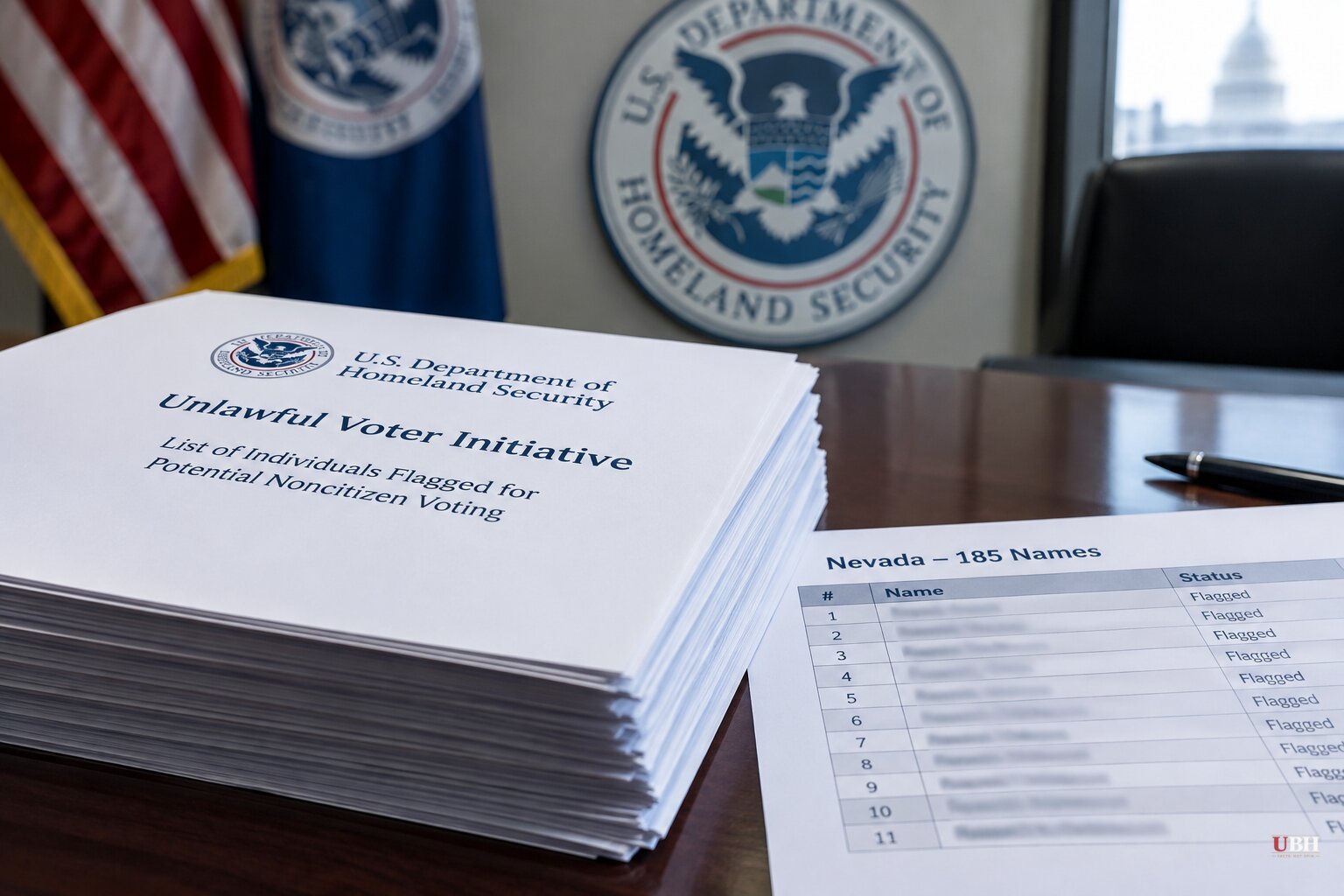
DHS Admits Its Noncitizen Voter Hunt Flagged U.S. Citizens as Aliens, Including All 185 Names Sent to Nevada
The Department of Homeland Security admitted in court filings Monday that its program for hunting down noncitizen voters has a track record of tagging actual U.S. citizens as illegal aliens, according to Reason.
DHS lawyers wrote that "potential inaccuracies were identified" in the database the agency uses for its Unlawful Voter Initiative, and that "in rare circumstances U.S. citizens might be incorrectly identified as aliens." The filings came in a lawsuit brought by several California local governments and organizations, which accuses the initiative of intimidating Americans.
The numbers back up the concern. DHS initially told Nevada it had found 15,903 noncitizens on the state's voter rolls. That number shrank to a list of 185 names. Then DHS discovered every one of the 185 was a U.S. citizen, according to Reason and corroborated by Yahoo News' reporting on the same court filings.
How the flagging works
The initiative, which launched in late August, orders USCIS officials to cross-reference state voter rolls against an immigration database. A training video for the program, obtained by a USCIS whistleblower and detailed in a report released by Senate Democrats, reportedly acknowledged that the database includes foreign-born U.S. citizens and American-born spouses of foreign nationals, according to CNN.
Matches get loaded into TECS, a federal law enforcement watchlist, for follow-up investigation by Homeland Security Investigations agents. CNN reported the effort covers all 50 states and could touch "up to hundreds of thousands of individuals," including naturalized citizens who registered or voted before finishing naturalization.
The whistleblower's report also alleges agents are being kept in the dark about where some of the underlying data comes from, and that the process can generate a TECS record even when an agent "reasonably believes" the source data isn't reliable enough to justify it, according to CNN.
What DHS says, and what it won't say
DHS lawyers told the court there are "various safeguards in place to prevent mistakenly contacting a U.S. citizen" for interrogation. An anonymous HSI agent's declaration said DHS "sought further resources to prevent inaccuracies and developed a new model for generating leads," but didn't explain what that new model actually does differently.
What the filings don't say is what happens to citizens who already got flagged incorrectly, or whether DHS has any process to scrub a mistaken TECS entry once it's created. A DHS spokesperson did not answer that specific question when asked by Reason.
DHS's public statement to CNN sidestepped the specific allegations, calling the effort "commonplace law enforcement" and insisting the investigations are "conducted diligently and professionally," adding that identifying aliens who vote "provides an essential guarantee in the authenticity of our election results."
The agency's own court filings downplayed the stakes of a TECS entry, arguing that creating the record "does not make any final decision and does not create any legal consequence" because HSI agents supposedly double-check before knocking on doors. That argument sits awkwardly next to DHS's own privacy assessment, which states TECS is shared with tens of thousands of officers across federal, state, local and tribal agencies, plus foreign governments and commercial organizations, according to Reason's review of that document.
The competing claims
Sen. Alex Padilla of California, appearing with other Democrats Monday, called the program a pretext. "The truth is, this has nothing to do with protecting the integrity of our elections," Padilla said, according to CNN, arguing it's designed "to intimidate voters, to disenfranchise eligible Americans and even undermine or challenge this November's election results." That's Padilla's characterization of the administration's motive, not an established fact, and DHS has not conceded any such intent in its filings.
CNN also noted that studies have found noncitizen voting to be exceedingly rare, which is the crux of Democrats' argument that a nationwide dragnet is disproportionate to the actual problem. Whether that's true doesn't resolve the separate question raised by DHS's own filings. The government's matching process has a demonstrated error rate high enough to misidentify 100 percent of a real-world sample in Nevada.
Rooting out illegal voting is a legitimate government function, and nobody disputes citizens should never be allowed to vote in someone else's name or before naturalization. But a system that flagged 185 real citizens as zero legitimate matches, then kept those names in a border-screening database without a stated removal process, is not a minor technical hiccup. It's the kind of government sloppiness that erodes trust in the very integrity effort DHS says it's running.
The California lawsuit is ongoing, and the court has not yet ruled on whether to restrict DHS's use of the database. DHS has not disclosed how many citizens beyond the Nevada 185 may currently sit on the TECS watchlist by mistake, or whether it plans to audit past matches nationwide.
Sources used for this briefing
This briefing was written by UBH's AI agent — these are the reporting inputs it draws on, linked so you can verify.


