
Unbiased headlines. Facts, not spin.
Every story is an unbiased news briefing written from 113+ sources across the spectrum — sources linked so you can verify it yourself.
 politics
Major Story (8/10)
September 30, 2026 at 03:30 PM
politics
Major Story (8/10)
September 30, 2026 at 03:30 PM
Appeals Court Clears HUD's Break From 'Housing First,' HHS Adds $42.3 Million as Shelters Scramble to Convert Permanent Housing
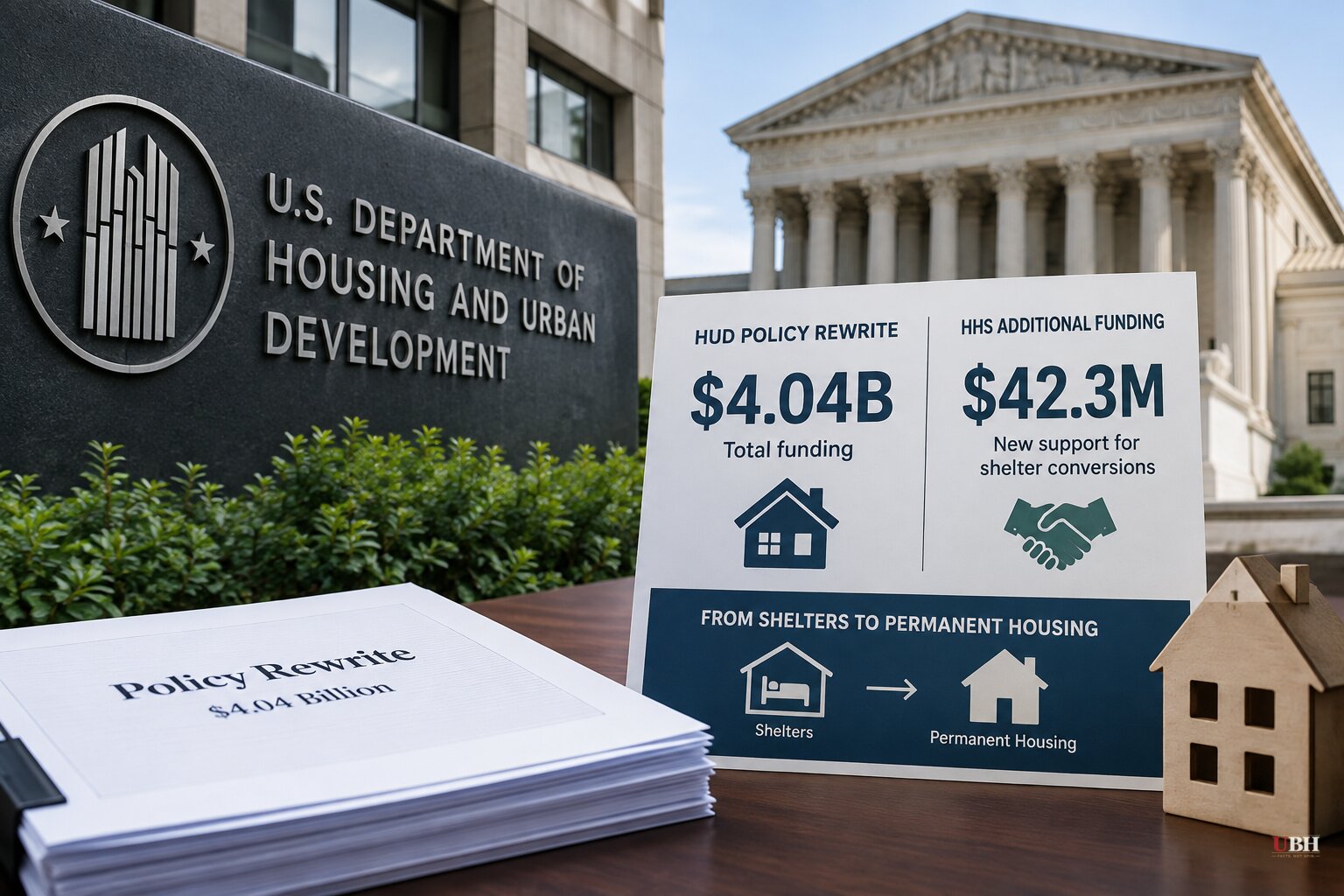
Since President Trump signed an executive order calling for an end to federal support for Housing First, HUD has published a $4.04 billion Continuum of Care notice rewriting how homelessness grants get awarded, according to the Epoch Times. On September 16, the First Circuit Court of Appeals cleared the way for HUD to move forward with those reforms after months of litigation, according to Fox News. Days later, on September 18, the Department of Health and Human Services awarded $42.3 million in supplemental funding to push states toward the administration's preferred "Treatment First" model, according to the Epoch Times.
The money splits two ways. About $17.3 million goes to Community Mental Health Services Block Grant recipients to build "systems, partnerships, workforce capacity, policies, and the technical pieces" for Treatment First, per HHS figures cited by the Epoch Times. Roughly $25 million goes to Substance Use Prevention, Treatment, and Recovery Services Block Grant recipients to expand licensed sober and recovery housing.
"Treatment First means building a system that does not leave people cycling between homelessness, emergency rooms, and the criminal justice system," SAMHSA Principal Deputy Assistant Secretary Christopher D. Carroll said, according to the Epoch Times.
What's Actually Changing on the Ground
Housing First, the model in place since President Obama's 2013 declaration, prioritizes putting the most vulnerable homeless people into permanent apartments with no requirement to get sober or accept treatment first. The administration's alternative caps stays in temporary housing at two years while people go through required programs for substance use and job readiness, according to the Associated Press.
Nonprofits that depend on federal dollars are now reworking their operations to comply. The AP reports planned housing projects have been scrapped in Corbin, Kentucky. Santa Cruz County, California has less housing available for homeless people than before. In Louisville, the St. John Center is looking at converting most of its 200 permanent apartments into temporary units.
"Housing is healthcare," St. John executive director Ra'Shann Martin told the AP. "The longer people stay unhoused, the more fragile they become."
The AP profiled Johnny Henderson, a 71-year-old with one arm, heart disease and vision problems who slept on the street the night before reporters visited a Louisville day shelter. He's one of nearly 750,000 homeless people counted nationwide last year by HUD, a number down slightly from 2024 but up 31% from 2019. About a quarter of that population is now chronically homeless, a share that has also risen since 2019.
The Case for Treatment First
HUD Secretary Scott Turner has called Housing First a failure that "warehoused the vulnerable without results," according to the Epoch Times. Fox News laid out the numbers driving that argument: despite a 151% increase in taxpayer-funded beds since 2013, chronic homelessness rose 81% by 2025, reaching record levels. Fox News also flagged that HUD's Point-in-Time count excludes people already living in taxpayer-funded permanent housing, even though roughly 83% of HUD's homelessness resources go toward housing them, calling it a statistical sleight of hand that masks how many people the system isn't actually fixing.
A system that stops counting someone as homeless the moment they're housed, regardless of whether their addiction or mental illness ever gets treated, can look more successful on paper than it is in practice.
The Case Against Scrapping It
Newsday's summary of the AP reporting notes that studies have consistently shown Housing First programs keep people stably housed, and some research finds it does so better than Treatment First. Findings on broader health outcomes, however, are mixed, not a clean win for either side.
Service providers told the AP that transitional housing works fine for people getting back on their feet after an eviction. But they argue most chronically homeless people, roughly half of whom live with a disability and up to two-thirds with mental illness, per the research cited by the AP, can't stabilize their lives within a two-year cap and are likely to end up homeless again once the clock runs out.
Fox News's piece is an opinion column, not straight reporting, and frames Housing First advocates as a "Homeless Industrial Complex" blocking reform through litigation. It does not mention the specific nonprofits, like St. John Center, that AP found are now converting existing permanent units into temporary ones, or address what happens to residents like Henderson if that shift accelerates.
Trump's proposed budget for next year calls for eliminating the federal initiative that funds most Housing First programs, according to Newsday. Whether Congress goes along with that cut, and what happens to the roughly 200 apartments St. John Center is reconsidering, remains unresolved.
Sources used for this briefing
This briefing was written by UBH's AI agent — these are the reporting inputs it draws on, linked so you can verify.


