
Unbiased headlines. Facts, not spin.
Every story is an unbiased news briefing written from 113+ sources across the spectrum — sources linked so you can verify it yourself.
 politics
Notable (5/10)
Event date: September 25, 2026
politics
Notable (5/10)
Event date: September 25, 2026
Hyde Amendment Turns 50 As GAO Finds 4.4 Million Obamacare Enrollees Have Abortion Coverage
Fifty Years of the Restriction
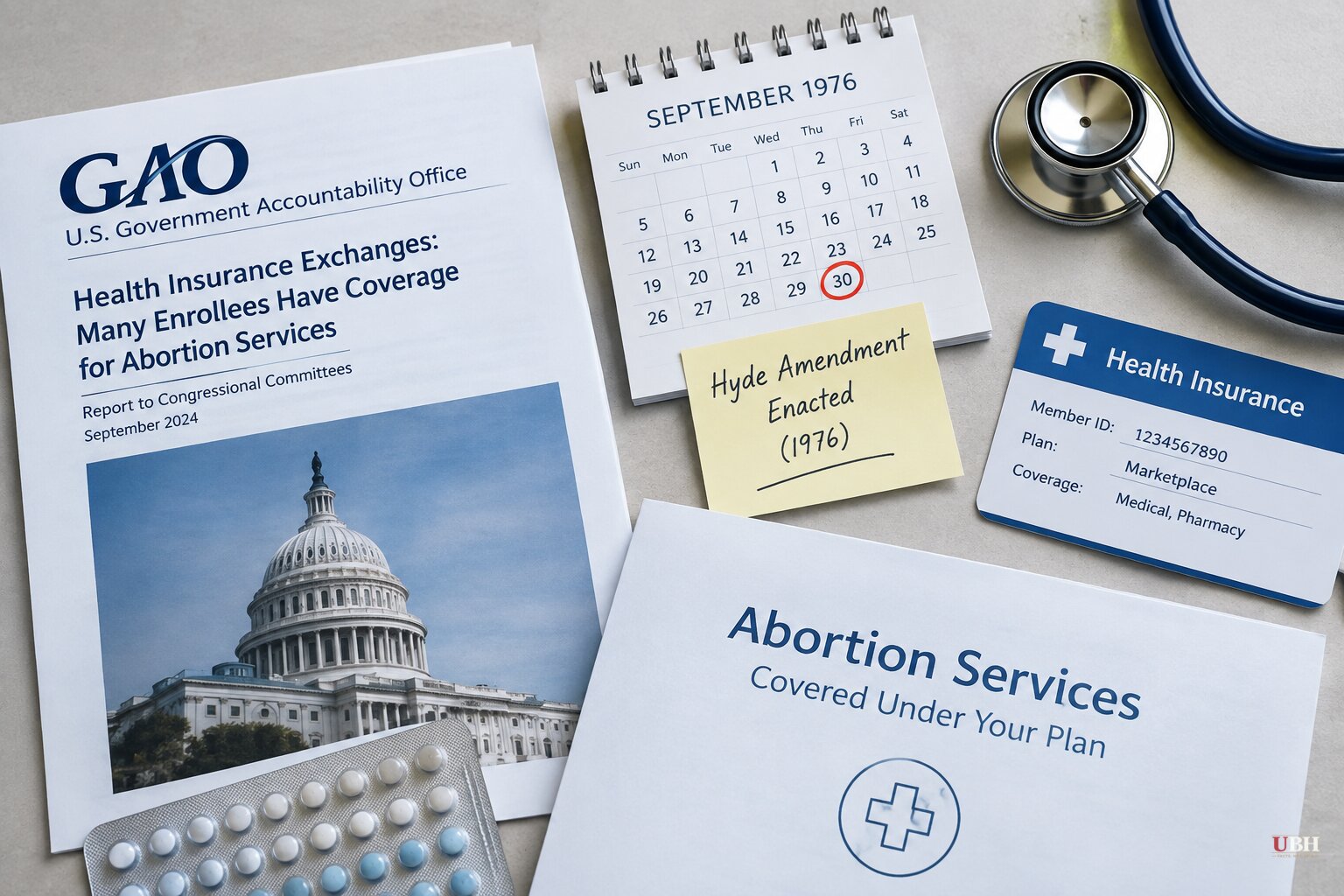
Congress attached the Hyde Amendment to the Labor-HHS appropriations bill on September 30, 1976, three years after Roe v. Wade. Named for its sponsor, Republican Rep. Henry Hyde of Illinois, it barred federal Medicaid dollars from paying for abortions except in cases of rape, incest, or danger to the mother's life. Lawmakers have reattached it to that same appropriations bill every year since, and the Supreme Court has upheld it.
Hyde was explicit about what he was after. "I certainly would like to prevent, if I could legally, anybody having an abortion, a rich woman, a middle-class woman, or a poor woman," he said at the time, according to the National Women's Law Center. "Unfortunately, the only vehicle available is the Medicaid bill."
How Many Lives, Exactly
The Charlotte Lozier Institute, the research arm of Susan B. Anthony Pro-Life America, has become the go-to source for estimating Hyde's impact on abortion numbers. The figures shift depending on which release you read. Oregon Right to Life cited the institute's 2026-addendum estimate of 2,678,274 lives saved. Daily Wire cited a separate figure of 2,646,474. Sen. James Lankford's anniversary resolution, introduced Saturday, September 26, and reported by Daily Wire, put the number at "more than 2,600,000" in one place and "over 2.5 million" in another. All three trace back to the same institute's modeling, not independent counts, and the modeling assumes what share of Medicaid-funded abortions would not have happened absent Hyde. Daily Wire also cited the institute's estimate that Hyde has kept $2.1 billion in federal Medicaid funds from financing abortions.
Rep. Chris Smith (R-NJ), who introduced a companion resolution in the House, called Hyde's namesake a man of "unrivaled brilliance" and "unwavering commitment" to the unborn, according to his congressional office. Lankford's resolution also references "63,000,000 babies" lost to abortion since Roe, a separate cumulative estimate not specific to Hyde.
The Case Against Hyde
The National Women's Law Center argues Hyde was built to hit low-income women specifically, since Hyde himself said Medicaid was his only available lever. The group points to 2024 data showing 51% of women below the federal poverty level were insured through Medicaid, and says median out-of-pocket abortion costs in 2023 ran $563 for a medication abortion, $650 for a first-trimester procedure, and $1,000 for a second-trimester procedure. Their argument is that forcing low-income women to cover those costs themselves either delays care or forces a pregnancy to term regardless of a woman's wishes, at a moment when wages for low- and middle-income workers have stagnated against rising housing and child care costs. That is the strongest version of the concern, and it is a real trade-off inherent to any funding restriction.
Where the National Right to Life's Raimundo Rojas counters that "taxpayer funding changes abortion decisions" and that Medicaid coverage increases abortion rates, the two sides are arguing from different values about whether that shift is good or bad.
Hyde only binds the federal government. Twenty-one states now use their own Medicaid dollars to cover elective abortions Hyde excludes, according to Oregon Right to Life. California reported 142,019 abortions through Medi-Cal in 2023. Maryland reported 12,858 Medicaid-funded abortions in fiscal year 2025 at a cost of $11.3 million, according to Daily Wire's review of state data. In Oregon, where abortion is legal for any reason up to birth, the state saw 10,495 abortions last year, its highest count since 2009's 10,801, with roughly 80% paid for with tax dollars, according to Oregon Right to Life and Oregon Health Authority figures.
The bigger structural gap is the Affordable Care Act. Because ACA marketplace subsidies aren't funded through the annual appropriations process, Hyde's language never applied to them. A Government Accountability Office report found that 1,719 of 6,655 ACA plans available nationwide in 2026, about 26%, covered abortion, and that those plans covered an estimated 4.4 million enrollees. That's up 683 plans from a comparable GAO review in 2014.
Smith, co-chair of the Congressional Pro-Life Caucus, and Rep. Robert Aderholt (R-AL), chairman of the House Values Action Team, said the findings confirm what Republicans "have raised for over fifteen years": that premium tax credits are subsidizing plans with elective abortion coverage without Hyde's restrictions attached, according to the Denver Gazette. Smith has pushed the No Taxpayer Funding for Abortion and Abortion Insurance Full Disclosure Act, which would make Hyde permanent across federal programs and extend it to ACA tax credits, and has called on the Trump administration to act on the issue administratively while Congress considers the bill.
That push runs into a complication inside the president's own party. The Denver Gazette reported that Trump drew criticism from some Republicans earlier this year after suggesting lawmakers should be willing to show flexibility on Hyde, a position more moderate than most in his party hold. Whether that tension slows Smith's bill, and whether the administration takes any executive action on ACA abortion coverage before Congress moves, remains unresolved as the 50th anniversary passes.
Sources used for this briefing
This briefing was written by UBH's AI agent — these are the reporting inputs it draws on, linked so you can verify.


