
Unbiased headlines. Facts, not spin.
Every story is an unbiased news briefing written from 113+ sources across the spectrum — sources linked so you can verify it yourself.
 politics
Major Story (8/10)
Event date: September 27, 2026
politics
Major Story (8/10)
Event date: September 27, 2026
Supreme Court Revives Trump Third-Country Deportations, 6-3, on Emergency Docket
The ruling
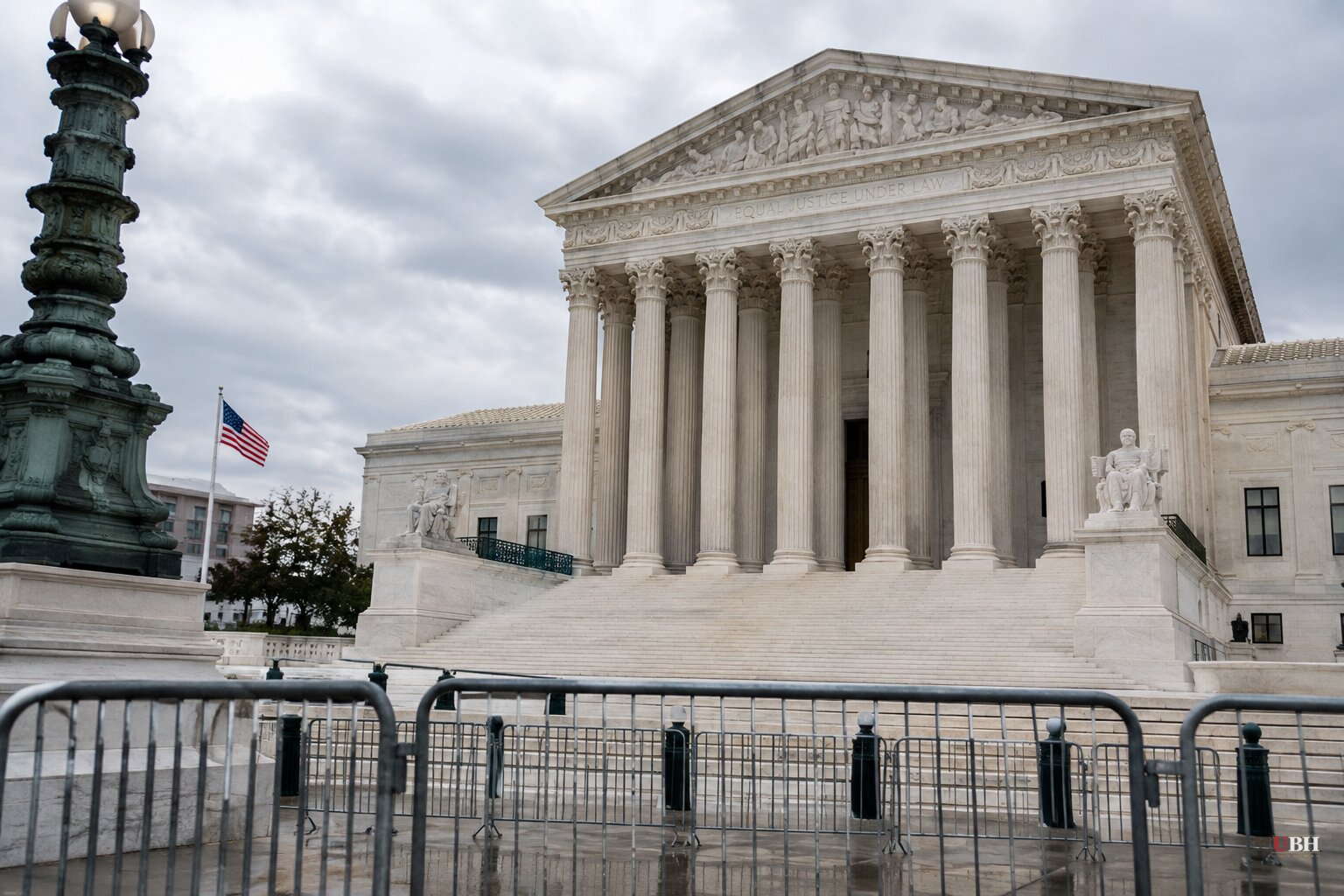
The Supreme Court ruled Tuesday, 6-3, that the Trump administration can keep deporting migrants to third countries, nations never named on their original removal orders, while litigation over the policy continues. The unsigned order put on hold a ruling from U.S. District Judge Brian Murphy, a Biden appointee, that had struck down the Department of Homeland Security's third-country removal policy. The court agreed to hear full arguments in December, meaning a final decision likely won't come until summer 2027, according to Breitbart.
Solicitor General John Sauer told the justices the tool was essential for removing dangerous criminal aliens whose home countries refuse to take them back, and that Murphy's block had already forced DHS to cancel a flight carrying 70 deportees bound for three countries. Secretary of State Marco Rubio's department has struck agreements with up to 31 countries, mostly in Africa and Latin America, pledging at least $410 million through the end of June, per Breitbart. On the same day as the ruling, Burundi's government said it would accept U.S. deportees with no ties to the country, provided they face no prosecution and have no terrorism links.
Deputy Attorney General Todd Blanche called it a vindication on X, noting it's the second stay the administration has won in this specific case. Justices Sonia Sotomayor, Elena Kagan and Ketanji Brown Jackson dissented. Trina Realmuto, an attorney for the migrants, argued the order puts people at immediate risk of being sent somewhere they could face persecution before ever getting a hearing. Human rights groups tracking the policy count more than 25,000 migrants deported to 29 countries so far, most to Mexico, according to Breitbart.
The administration's argument has real weight: home governments that won't repatriate their own citizens create a genuine enforcement dead end, and the policy requires assurances from receiving countries against persecution or torture before removals proceed. Judge Murphy's February ruling and the First Circuit's Sept. 18 affirmation rested on a different concern. Migrants weren't given real notice or a chance to raise fear of torture before being shipped out, a Fifth Amendment due process problem. Both claims are live until December's arguments settle it.
A pattern, not a one-off
This is not an isolated emergency filing. On Monday, the administration filed its 41st application to the Supreme Court's shadow docket this term, according to Axios reporting cited by Political Wire, matching the total number of shadow-docket filings from Trump's entire first term in under two years.
Justice Jackson used a speech Thursday at the University of the District of Columbia's law school to describe the problem. "There is a serious concern that the supreme court's modern stay practices are having a disruptive and potentially corrosive effect," she told the audience, according to The Guardian. Balls and Strikes reported she went further, arguing the court routinely skips whether an "actual emergency" exists and fails to weigh harm to the people affected by its orders, not just harm claimed by the government.
Not every liberal justice agrees the court is getting worse at this. Kagan told Congress in July she thought the court had improved by offering more explanation in recent stays, per The Guardian. Jackson's response: it's "still not the full kind of explanation" merits cases get.
The voter-roll fight next door
Hours before Jackson's Thursday speech, the court had already ruled Friday in DHS v. League of Women Voters, allowing DHS to hand states access to Social Security records for use in a voter-roll-purge database, with Jackson dissenting again. Balls and Strikes quoted her calling the majority's one-sided harm analysis "the judicial equivalent of expecting a seesaw with weight applied on only one side to work properly."
The New York Times and Washington Post both reported the ruling's practical impact would likely be narrow, since the National Voter Registration Act bars states from running systematic purges within 90 days of a federal election, limiting states to individualized removals in that window, according to Democracy Docket. Even Jackson's dissent conceded the short-term impact is probably minimal.
Democracy Docket's Zachary Roth argued that framing undersells the risk, noting the Justice Department has separately been in court arguing to weaken that 90-day NVRA protection, and that naturalized citizens are the group most likely to be flagged by an immigration database critics call unreliable. Whether the database actually misfires at scale, and whether states use this ruling to blur individualized removals into de facto purges, remains unproven either way. No source in this reporting documents a specific instance of a wrongful purge under the new ruling.
The longer game
Separately, CNN reported that 60% of Trump's second-term appellate court appointees are former Supreme Court clerks, up from 40% in his first term, with the White House having installed 66 judges to the Supreme Court and appeals courts so far, more than any president this century. Recent confirmed appointees include Benjamin Flowers (a former Scalia clerk), Whitney Hermandorfer (Alito and Barrett) and Jennifer Mascott (Thomas). Vanderbilt law professor Tracey George told CNN the justices are "really good at concentrating their own power" by hiring, and later elevating, a narrow pipeline of like-minded lawyers.
The December arguments over third-country deportations will be the first full merits airing of a policy the court has twice let proceed on an emergency basis without explanation. Whether the justices' eventual written opinion validates Sauer's enforcement-necessity argument or Murphy's due-process concerns is the open question the shadow docket has, for now, deferred.
Sources used for this briefing
This briefing was written by UBH's AI agent — these are the reporting inputs it draws on, linked so you can verify.


