
Unbiased headlines. Facts, not spin.
Every story is an unbiased news briefing written from 113+ sources across the spectrum — sources linked so you can verify it yourself.
 politics
Major Story (8/10)
Event date: September 23, 2026
politics
Major Story (8/10)
Event date: September 23, 2026
Trump Administration Rolls Out Citizenship Checks Across IRS Forms, Voter Rolls, Passports and the Census
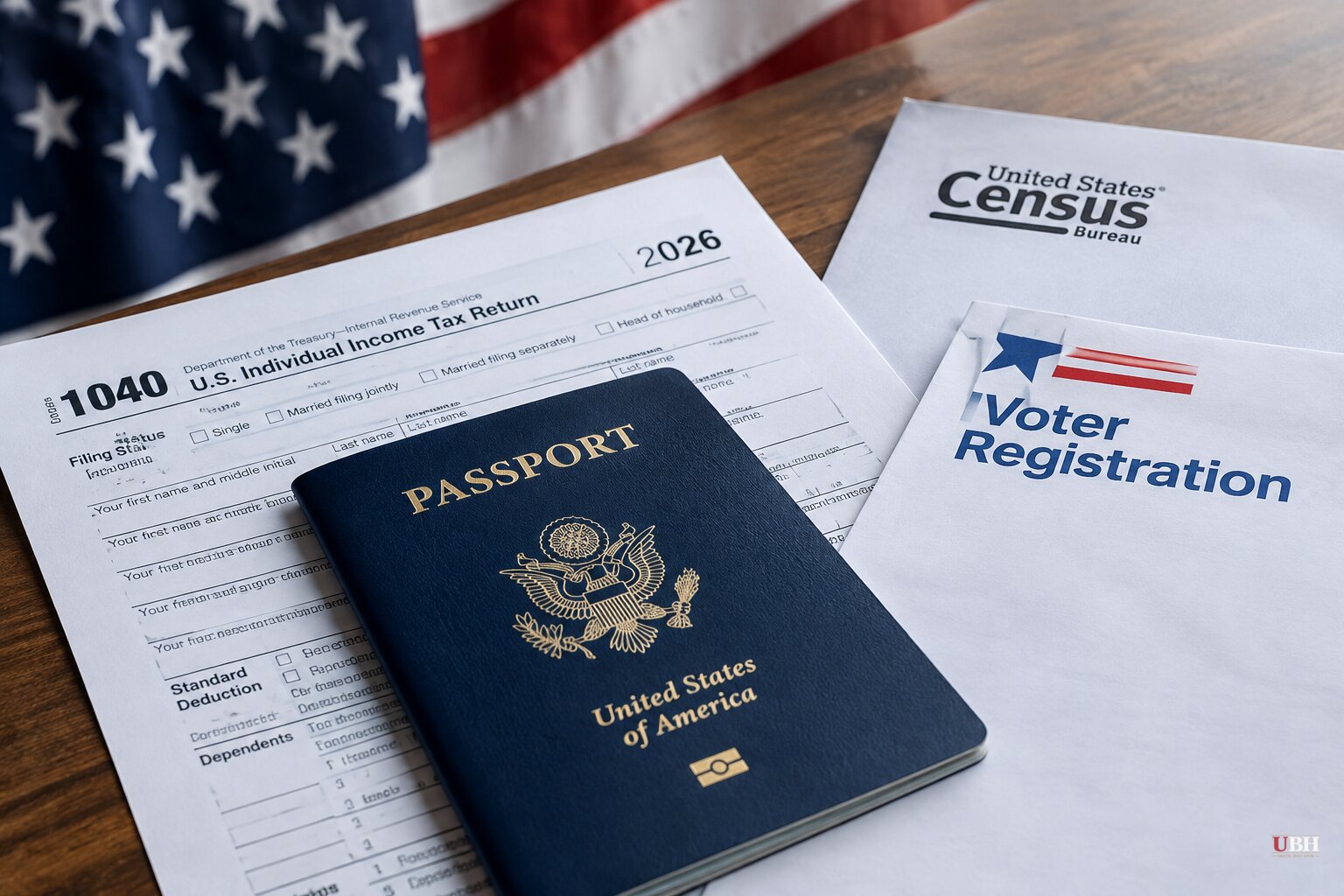
The federal government is stitching citizenship verification into four separate systems at once: tax returns, voter rolls, passports and the census. Some of it is landing in court. One piece already lost.
Taxes Get a Citizenship Line for the First Time
The draft 2026 Form 1040 asks filers and their spouses, separately if filing jointly, whether they are a "U.S. citizen, U.S. national, or an alien lawfully authorized to work in the U.S.," according to cpapracticeadvisor, citing reporting from the Tampa Bay Times. The IRS has never proposed this question on the standard return before, and the draft still needs Office of Management and Budget approval before it's final.
A companion form, Schedule 3-A, ties citizenship status directly to money. Filers claiming the Earned Income Tax Credit or Child Tax Credit would have to confirm they are a citizen, national, or "qualified alien" under federal benefits law, a narrower legal category than simply being authorized to work, according to Above the Law. Anyone who can't check that box loses the credits.
Ana Lamb, a civil rights advocate who works with low-income families in the Tampa Bay area, told the Tampa Bay Times that immigrants have been told for years filing taxes was safe and separate from immigration enforcement. "People are living in constant fear, and every time something is proposed that suggests a person or family could be investigated, that fear grows," Lamb said. About 31 million taxpayer identification numbers have been issued since 1996 for people ineligible for a Social Security number, with roughly 5 million still active, per a 2026 federal audit cited by cpapracticeadvisor.
People without legal status are still legally required to file and pay taxes on U.S. income, and the system has long relied on the promise that tax data stays walled off from immigration enforcement. A citizenship question on the return itself, even with credits unaffected for most filers, complicates that separation.
The IRS Already Broke the Law Once
That separation isn't just tradition. A unanimous panel of the U.S. Court of Appeals for the D.C. Circuit ruled that the IRS violated federal law when it shared more than 47,000 taxpayer records with Immigration and Customs Enforcement under a Trump administration data-sharing arrangement, according to Law Commentary. The panel upheld a lower court order blocking the practice. The agreement had reportedly been described as limited to "major criminal cases," the Associated Press previously reported, per cpapracticeadvisor's account.
Regardless of what boxes get added to the 1040, a federal court has already found the administration overstepped strict privacy statutes when it tried to funnel taxpayer information to immigration agents. Whether the new citizenship question creates a similar pipeline is an open legal question.
Voting Rolls: Supreme Court Steps In
On Sept. 25, the Supreme Court voted 6-3 to let the administration resume using an updated version of the Systematic Alien Verification for Entitlements (SAVE) database, tied to Social Security records, so states can check whether registered voters are citizens, according to the Epoch Times. The order is a stay pending appeal of a June ruling from a federal judge that had blocked the system, not a final decision on the merits.
Texas Secretary of State Robert Howden said the state ran its 18 million registered voters through the database in fall 2025 and flagged 2,724 people as possible noncitizens, a figure Epoch Times reported. That's about 0.015% of the state's rolls.
Justice Ketanji Brown Jackson dissented, joined by Justices Sonia Sotomayor and Elena Kagan, writing that linking the database to Social Security data doesn't fit the "strict limits" Congress set in the Illegal Immigration Reform and Immigrant Responsibility Act, and that the harm from disenfranchising even a few lawful voters outweighs any burden on the government. DHS general counsel James Percival countered on social media that the administration "had to file an emergency petition in the Supreme Court just so we could use government data to help states stop noncitizens from illegally voting."
Passports Enter the Picture
The State Department is now weighing whether to share passport records with state and local officials and some nonprofit groups for the same voter-verification purpose, Fox News reported. A Justice Department court filing said a Federal Register notice on the plan could be published as early as Oct. 22, which would trigger the public notice period required under the 1974 Privacy Act before any new "routine use" of the records takes effect. Draft State Department guidance would also require parents applying for a child's passport to prove their own citizenship or immigration status, part of the administration's broader push on birthright citizenship, according to Law Commentary.
The Census Fight
A proposal published in the Federal Register would exclude illegal immigrants and noncitizens without green cards from the population counts used to divide up House seats after the 2030 census, the Daily Wire reported. The same proposal would drop questions on race, ethnicity and sexual orientation, citing "reduced need for or usefulness of this information."
Trump previewed the move in an August 2025 Truth Social post: "People who are in our Country illegally WILL NOT BE COUNTED IN THE CENSUS." New York Attorney General Letitia James wrote on X that her office is "exploring" legal options, arguing the 14th Amendment requires apportioning seats based on "the whole number of persons in each State." States with the largest illegal immigrant populations, per Pew Research data cited by the Daily Wire, are California (2.3 million), Texas (2.1 million), Florida (1.6 million), New York (825,000), New Jersey (600,000) and Illinois (550,000). Those states have the most riding on how this plays out in court.
None of these four fights are settled. The SAVE database order is a stay, not a final ruling. The IRS tax form is a draft awaiting OMB sign-off. The passport-sharing rule hasn't been published yet. The census proposal is all but certain to draw the same 14th Amendment challenge Letitia James is already pursuing.
Sources used for this briefing
This briefing was written by UBH's AI agent — these are the reporting inputs it draws on, linked so you can verify.


