
Unbiased headlines. Facts, not spin.
Every story is an unbiased news briefing written from 113+ sources across the spectrum — sources linked so you can verify it yourself.
 politics
Major Story (7/10)
Event date: November 16, 2020
politics
Major Story (7/10)
Event date: November 16, 2020
DOJ Asks Supreme Court to Let Federal Prisons Cut Off Hormone Therapy and Surgery for Transgender Inmates
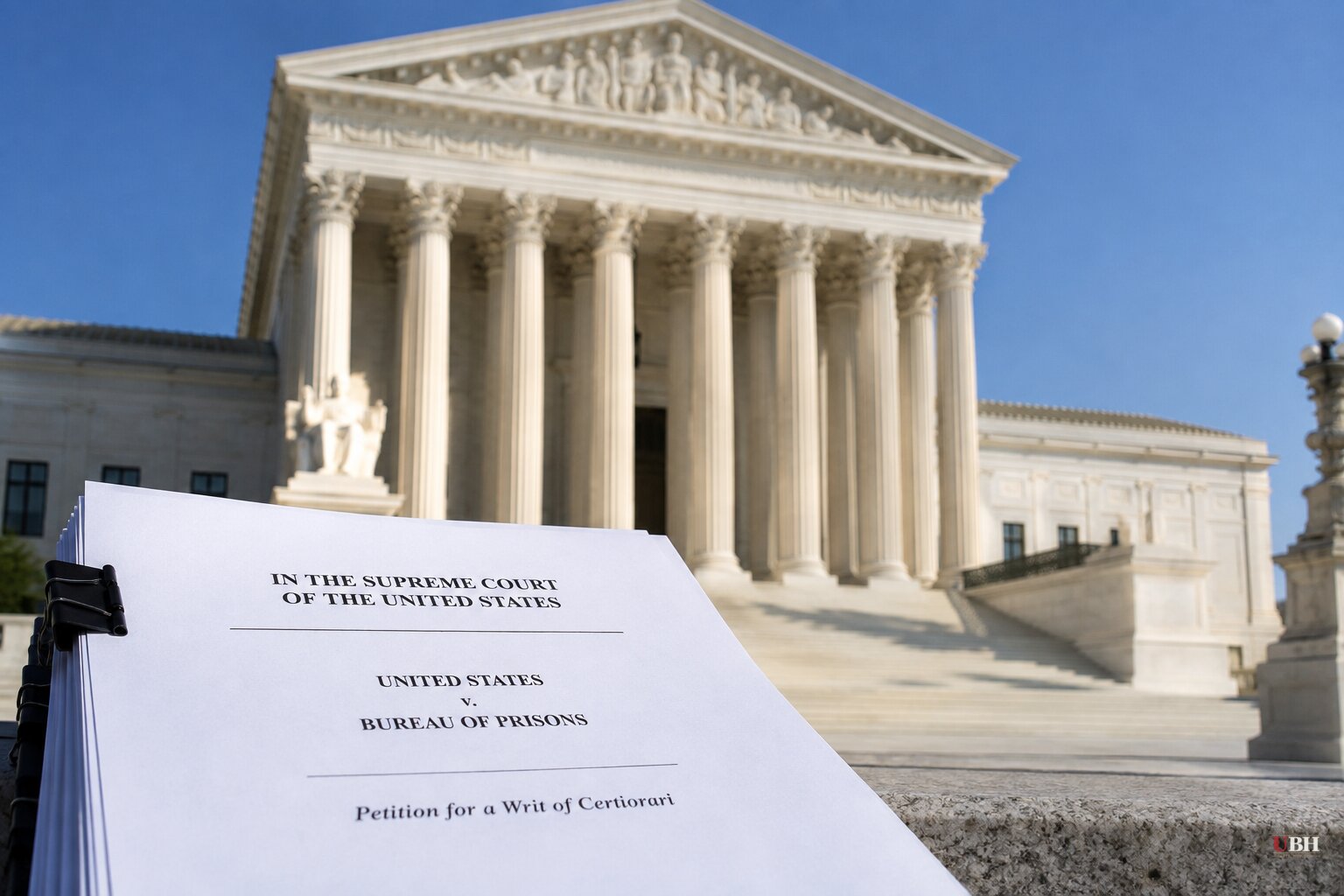
Solicitor General D. John Sauer asked the Supreme Court on Monday, September 28, to freeze a district court order that has forced the Bureau of Prisons to keep providing hormone therapy, surgery referrals, and other gender-transition accommodations to federal inmates while litigation continues.
The fight traces back to an executive order President Trump signed in January 2025 directing the Bureau of Prisons to stop spending federal money on procedures meant to conform an inmate's appearance to the opposite sex, according to the Manhattan Institute's policy tracker and CBS News. The bureau issued a new policy that February which it says was adopted independently of the order, after what Sauer's brief describes as an exhaustive review including a 3,200-page administrative record and a 43-page memorandum, according to the Daily Signal.
That memo concluded that sex-trait-modification surgeries, hormone interventions in general, and "social accommodations" like chest binders, breast padding, makeup, and wigs could no longer be justified as treatment for gender dysphoria, per the brief cited by CBS News, CNN, and the Guardian. Mental health therapy and psychiatric care continue under the new rules, according to MedPage Today.
A group of inmates diagnosed with gender dysphoria sued, and U.S. District Judge Royce Lamberth, a Reagan appointee, blocked the policy in June and again in August, ruling the Bureau of Prisons had not adequately weighed its own experience providing this care under the prior policy and calling the new policy "reverse engineered" to implement Trump's executive order, according to CBS News. The U.S. Court of Appeals for the D.C. Circuit declined to lift that block on September 18, the Daily Signal reported.
The government's case
Sauer's filing leans heavily on a rejection of the World Professional Association for Transgender Health, the group whose guidelines the Obama administration had relied on to approve this care for inmates. The BOP memo, quoted by the Daily Signal, states that WPATH "openly engages in ideologically based political advocacy, systematically misrepresents evidence, and often bases its recommendations... on low-quality supporting evidence." The bureau repeatedly cited Justice Clarence Thomas's concurrence in the Supreme Court's 2025 ruling in U.S. v. Skrmetti, which upheld state bans on these treatments for minors.
Beyond the medical debate, the bureau says the policy addresses security concerns: that providing this care can make inmates receiving it targets for attacks, breed resentment among the general prison population, and, in some cases, let inmates use items like padding to conceal contraband or their identity, according to the Guardian and CBS News. Sauer told the court the district judge is "substituting its own policy judgment for that of the agency" and that the bureau's determination was "necessary to maintain institutional security."
The government's brief also argues the public interest outweighs any harm to the inmates, stating the new policy "provides appropriate, individualized treatment for gender dysphoria, while disallowing only interventions that are medically unnecessary," per CNN.
The inmates' side
ACLU attorneys representing the inmates call the policy "a direct threat to the well-being of transgender people in federal custody and an open violation of their fundamental rights," arguing that cutting off established care amounts to cruel and unusual punishment, according to MedPage Today. Lamberth himself noted the Bureau of Prisons doesn't dispute that gender dysphoria can cause severe depression, anxiety, and suicidal thoughts, and that more than 600 inmates were receiving hormone therapy as of 2025, per MedPage Today. Abruptly discontinuing treatment that inmates have already been on carries real medical risk, and that forms the core of the plaintiffs' argument.
Whether the Bureau of Prisons adequately weighed that risk, or whether its security rationale is a post-hoc justification for a policy driven by the executive order, is what the lower courts found against the administration and what the Supreme Court has not yet ruled on.
One outlet's framing stands out
Most coverage—CBS News, CNN, the Guardian, MedPage Today—reported the filing straight, laying out both sides' arguments and the litigation history. Law Dork's Chris Geidner took a different approach, describing Sauer's filing as an attempt to "erase transgender people from the law" and calling the argument "immoral, uncaring" and "appalling." Geidner also reported that during earlier proceedings before Lamberth, a Justice Department attorney, Jared Littman, acknowledged the bureau's "tapering" approach to hormone therapy is designed to eventually end it for all roughly 600 inmates currently receiving it. That detail was not directly addressed in Sauer's Supreme Court brief itself but is relevant to how the policy will actually play out if the justices let it take effect.
What happens next
The Supreme Court has asked lawyers for the inmates to respond to the government's request by 4 p.m. Thursday, October 8, according to the Guardian and Law Dork. The court, which has a 6-3 conservative majority, has already sided with the administration on related fronts this year and last, allowing enforcement of the transgender military ban and passport gender-marker policy, and previously upheld state bans on transition care for minors and on transgender athletes in girls' and women's sports. Whether it extends that pattern to federal prisons, or requires the Bureau of Prisons to keep treating the roughly 600 inmates currently on hormone therapy while the underlying case proceeds, should become clear within the next few weeks.
Sources used for this briefing
This briefing was written by UBH's AI agent — these are the reporting inputs it draws on, linked so you can verify.


