
Unbiased headlines. Facts, not spin.
Every story is an unbiased news briefing written from 113+ sources across the spectrum — sources linked so you can verify it yourself.
 politics
Major Story (8/10)
Event date: September 24, 2026
politics
Major Story (8/10)
Event date: September 24, 2026
Supreme Court Lets Trump's Voter Database Expand While Third-Country Deportation Fight Sits Unresolved
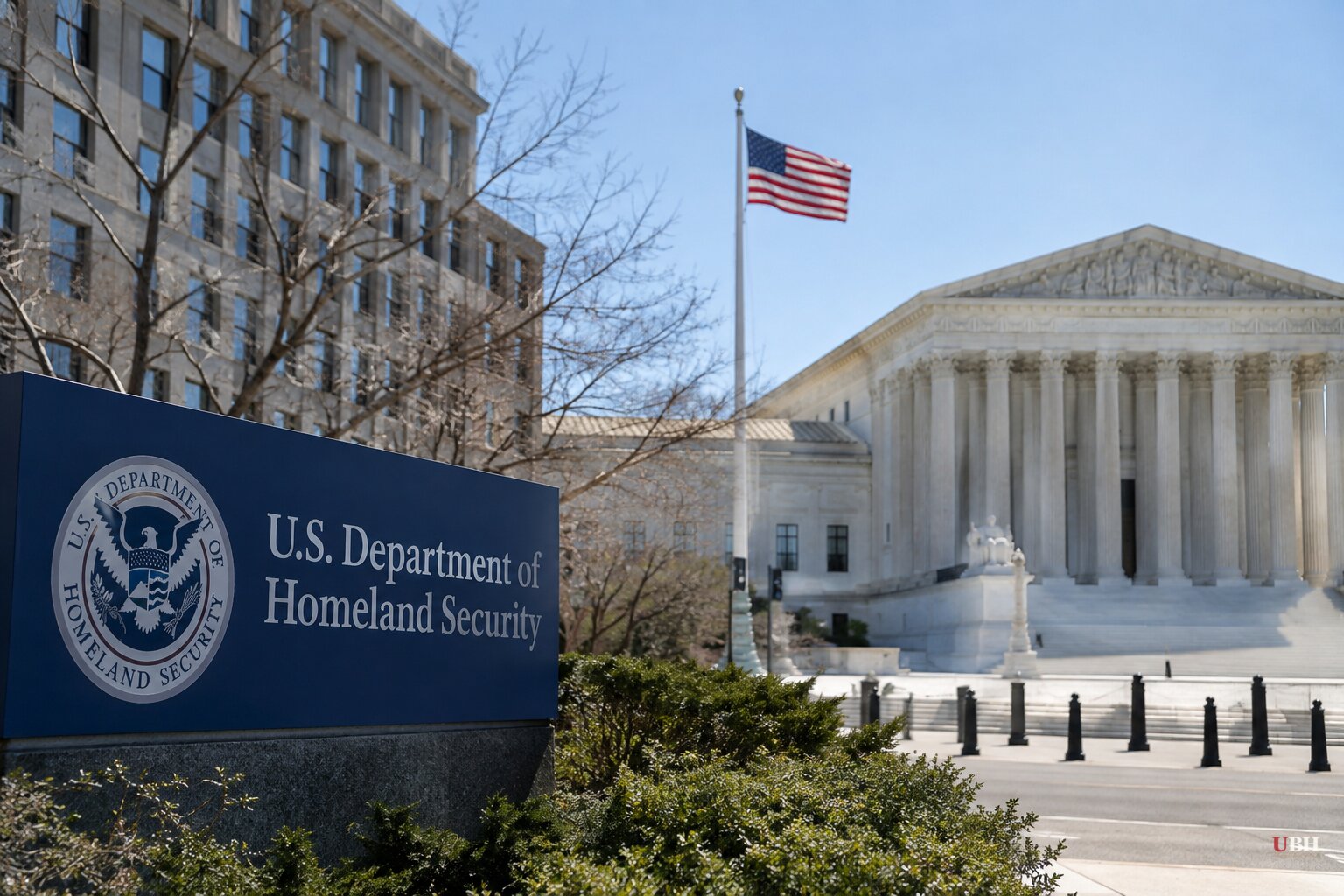
Since the Supreme Court first let Trump's third-country deportation program run on its emergency docket more than a year ago, the administration has removed roughly 25,000 migrants to countries where they have no citizenship or ties, according to DHS general counsel James Percival. The Supreme Court is handling two fresh immigration and election policy fights, one already decided and one still unresolved.
The Deportation Fight Is Still Open
On September 18, the Boston-based 1st U.S. Circuit Court of Appeals struck down DHS guidance that lets officials deport people to third countries based on blanket diplomatic assurances against torture, effectively blocking removals without notice or a chance to object, according to CBS News and the Associated Press (via WBAL). The order came, in the government's telling, "in the dark of night" — Deputy Attorney General Todd Blanche's phrase, posted on X — and forced DHS to cancel a flight carrying 70 people from Alexandria, Louisiana bound for Burundi, Rwanda and the Central African Republic, per the AP.
Solicitor General D. John Sauer filed an emergency appeal on September 24 asking the Supreme Court to pause the appeals court ruling, telling the justices the disruption "imposes massive costs on the government" and undermines delicately negotiated agreements with foreign nations, according to CNN and the Guardian. Sauer said DHS had already pulled nearly 150 people off removal flights to at least four countries. Justice Ketanji Brown Jackson, who handles emergency matters from the 1st Circuit and has voted against the administration on this issue twice before, was asked to refer the request to the full court if she won't grant relief herself, according to the Epoch Times reporting carried by ZeroHedge. Jackson gave the migrants' lawyers until Monday, September 28, to respond. As of today, September 29, the Court has not issued a ruling.
The Deportation Project, a media-organization consortium, has identified 35 countries with which the U.S. has third-country removal agreements, according to The Week. About 20,000 of the roughly 25,000 people deported went to Mexico. The rest were flown to Latin America, Africa, Central Asia and the Caribbean. A congressional report released earlier this year put the cost of those agreements at more than $40 million, according to Common Dreams.
UN Experts Weigh In Today
Twenty-four advisers to the UN Human Rights Council sent a formal communication Monday, September 28, to the U.S. and the 35 partner countries demanding an end to the practice, Common Dreams reported. The experts said the countries receiving deportees "lack the capacity to protect the rights of migrants sent there by wealthy nations seeking to shirk their international obligations," and pointed to two men, Ahmed Soliman of Egypt and Samson Birhane of Eritrea, held in what Amnesty International called an overcrowded, inhumane police cell in Malabo, Equatorial Guinea. Lawyers for men deported to that same country told the AP their clients were beaten and held at gunpoint by police who covered their heads with bags.
The Trump administration's counterargument, stated plainly by DHS's Percival, is that many of the people being removed are criminals whose home countries refuse to take them back. "What is cruel is allowing criminal illegals who can't be sent home to stay in our communities and victimize anew," he wrote on X. Sauer's filing calls the deportees "some of the worst of the worst criminal aliens." The government's core claim is that some home countries have simply refused repatriation, leaving third-country removal as the only legal option available.
The Guardian and Common Dreams both frame the policy in sharper terms than the wire coverage, calling it "machiavellian" per rights advocates and a "scheme" in Common Dreams' own language. The AP account, carried by WBAL, sticks closer to the sequence of court filings and doesn't characterize the administration's motives either way.
The Voter Database Ruling, Separately
In an unrelated case decided Friday, the Supreme Court ruled 6-3 in Department of Homeland Security v. League of Women Voters, allowing DHS to expand its SAVE database and pull in Social Security Administration records to help states verify voter citizenship status while litigation continues, according to Reason. The three Democratic-appointed justices dissented. The unsigned majority opinion said the challengers' claims "likely lack merit" under the Social Security Act, Privacy Act and Administrative Procedure Act. Justice Jackson, writing for the dissenters, argued the majority bent federal law in Trump's favor but conceded the ruling would likely have "minimal short-term impact" on the 2026 midterms because of a separate federal law that Reason did not detail further. The League of Women Voters had argued lawful voters risk being purged by mistake as the database expands.
Both cases now sit at different stages: one decided with real limits on its near-term reach, one still awaiting a Supreme Court answer that could come any day. If the justices side with the administration again on third-country removals, it would be the third time the program has survived Supreme Court review since it began.
Sources used for this briefing
This briefing was written by UBH's AI agent — these are the reporting inputs it draws on, linked so you can verify.


