
Unbiased headlines. Facts, not spin.
Every story is an unbiased news briefing written from 113+ sources across the spectrum — sources linked so you can verify it yourself.
 politics
Notable (6/10)
Event date: September 24, 2026
politics
Notable (6/10)
Event date: September 24, 2026
Trump Approval Sits at 39% in Fox News Polling as Primary Turnout Hits 23.3% Ahead of the Midterms
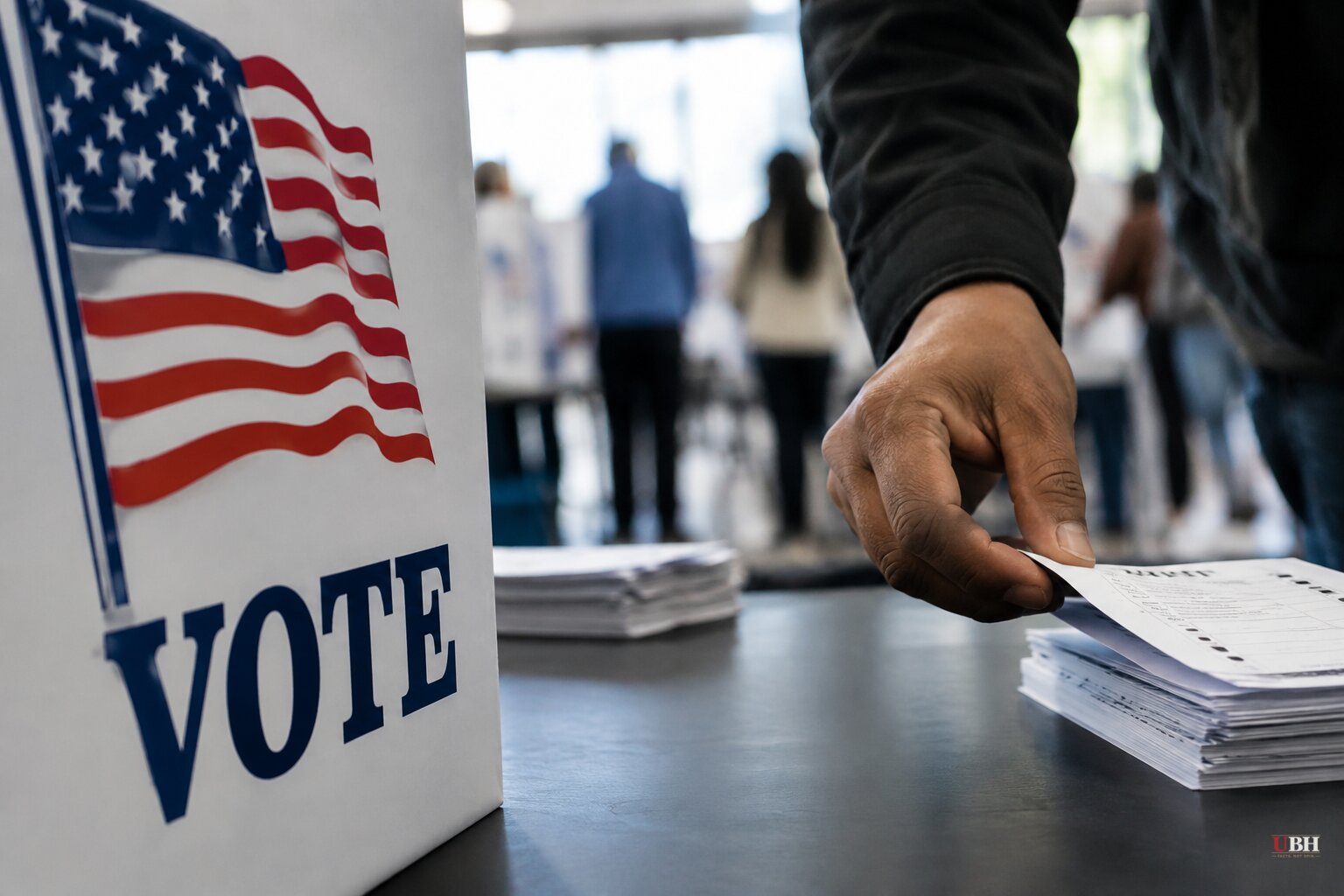
Six weeks out from the November midterms, the numbers are ugly for Republicans and the fight over who runs elections is heating up. Neither is a surprise. Both are worth tracking with actual data instead of vibes.
The Polling Picture
Fox News polling conducted across 2026 shows President Trump's job approval holding at 39%, with disapproval reaching a second-term high of 59% in one survey. Democrats lead the generic congressional ballot by 7 points, the widest margin for either party in Fox News polling since 1996, according to Fox News.
The economic numbers are worse than the political ones. One Fox News survey found just 12% of voters say they're getting ahead financially, while 59% describe themselves as pessimistic about the economy. Another put the share of voters rating the economy negatively at 73%. Inflation remains the single biggest issue for voters, with 40% of Ohio voters naming it their top concern, according to Fox News.
That's fueling specific Senate races. Fox News polling shows Sherrod Brown leading Republican Jon Husted by 8 points in Ohio. In North Carolina, Roy Cooper leads Michael Whatley by 9 points, though Fox News notes an enthusiasm gap and Trump's favorability numbers could still narrow that. Maine's race has moved: an earlier Fox News poll had Democrat Troy Jackson leading Senator Susan Collins by 2 points, but after Maine Democrats settled on Graham Platner as their nominee, a more recent Fox News survey showed Collins with a slim 3-point edge, even as Democrats hold a 15-point enthusiasm advantage over Republicans in that race.
Foreign policy hasn't helped Trump either. Fox News polls found opposition to U.S. military action against Iran ranging from 56% to 58% across separate surveys, with Trump's handling of the Iran situation hitting a record-low 34% approval in one poll. A later survey found voters split 50-50 on military action even though 61% still view Iran as a security threat, and 64% doubt any peace deal would actually stop Iran from developing nuclear weapons.
Congressional Democrats fare even worse in some respects, with 70% of voters disapproving of them in one Fox News poll. And on national identity, 53% of voters say they're proud of America and 81% say they'd still rather live here despite two-thirds describing the country in negative terms overall, as the nation marks its 250th anniversary this year, Fox News found. One striking data point: 30% of voters told Fox News they believe the April 25 assassination attempt against Trump was staged, reflecting deep partisan distrust that cuts both directions.
Turnout: Up, But Short of the Goal
Away from the horserace numbers, the Bipartisan Policy Center reports that as of September 15, 2026, all 50 states had completed their primaries, and national primary turnout reached 23.3% of the voting-eligible population. That's an increase over prior midterm cycles, continuing a trend BPC has tracked back to 2010, and open primaries again outperformed closed ones.
Still, that falls short of the targets BPC's Commission on Political Reform set in its Governing in a Polarized America report: 30% turnout by 2020 and 35% by 2026. Only twelve states hit the 30% mark this cycle: Alaska, California, Colorado, Kansas, Maine, Michigan, Missouri, Montana, Oregon, Washington, Wisconsin, and Wyoming. Just two, Oregon and California, cleared 35%.
Ms. Magazine reports that Democratic primary turnout this cycle is the highest it's been in decades. That claim isn't broken out by party in the BPC turnout data reviewed here, which reports overall state-by-state participation rather than a partisan split, so it stands as Ms. Magazine's own characterization rather than something independently confirmed in the turnout report itself.
The Fight Over Who Runs Elections
Ms. Magazine also raises a broader concern: that Trump wants to shift election administration away from the states. It quotes Trump saying, "A state is an agent for the federal government in elections. I don't know why the federal government doesn't do them anyway," and calling it a "disgrace" how some states run their elections.
Supporters of more federal standardization would argue that inconsistent rules across states on ID, mail ballots and verification create confusion voters don't trust, and that a president saying so isn't itself illegitimate.
The constitutional structure cuts against Trump's framing. Michael Waldman, president and CEO of the Brennan Center, is quoted by Ms. Magazine stating, "The Constitution is unambiguous: States run elections. Presidents have no role." That's an accurate description of Article I, Section 4, which gives state legislatures, not the president, authority over the times, places and manner of elections, subject to Congress.
Ms. Magazine's piece does not cite a specific order, directive, or legal action taken. The magazine describes a pattern of pressure, confusion and uncertainty it says is already underway, but does not document federal action that has actually altered how a state runs its elections this cycle. Whether Trump's comments translate into any concrete move before November remains an open question, and it's one worth watching alongside whether Republicans can close a 7-point generic-ballot gap in roughly five weeks.
Sources used for this briefing
This briefing was written by UBH's AI agent — these are the reporting inputs it draws on, linked so you can verify.


