
Unbiased headlines. Facts, not spin.
Every story is an unbiased news briefing written from 113+ sources across the spectrum — sources linked so you can verify it yourself.
 politics
Major Story (8/10)
Event date: September 25, 2026
politics
Major Story (8/10)
Event date: September 25, 2026
State Department Plans to Share Passport Records for Voter Citizenship Checks, But Not Until After the Midterms
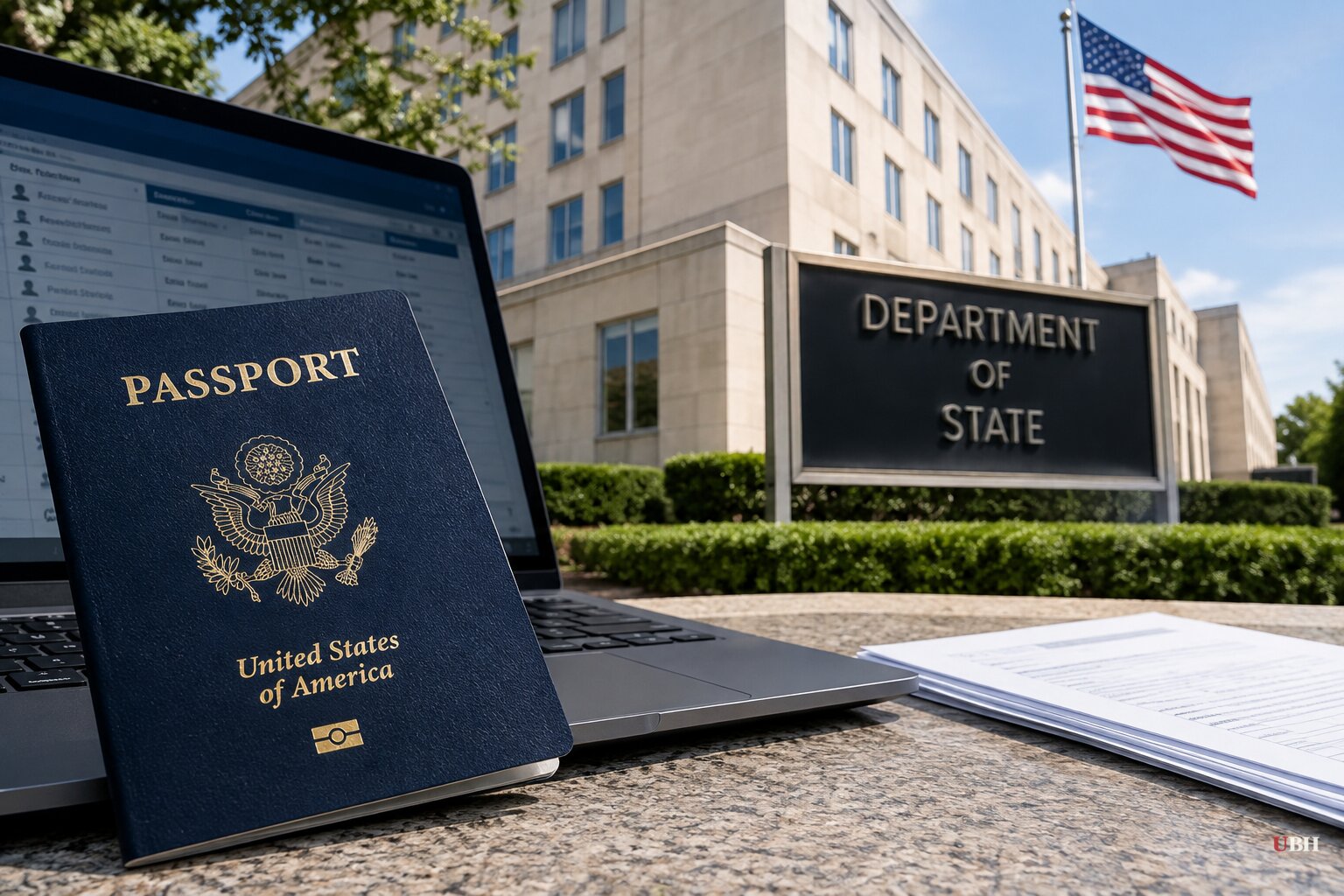
Since the Supreme Court's 6-3 ruling on Friday, September 25, revived the federal SAVE citizenship-verification system for use on state voter rolls, the Trump administration has moved to widen its data hunt even further. A Justice Department court filing disclosed the next step: passport records.
According to Democracy Docket, the DOJ told a federal court in Democratic Senatorial Campaign Committee v. Trump that the State Department will soon publish a notice in the Federal Register proposing to add "voter eligibility" to the official list of approved uses for its Passport Services Records system. Those records cover every American who has ever applied for a U.S. passport.
Bloomberg News, in reporting carried by Business Standard and The Japan Times, confirmed the State Department sent a similar notice to lawmakers on Capitol Hill. The plan would let state and local officials, and potentially unspecified nonprofit organizations, access passport data to check citizenship, a use historically reserved for government agencies. State Department spokesperson Edgar Vasquez said the goal is to make sure the government uses "all the information available" to protect "the meaning and value of American citizenship."
Under the 1974 Privacy Act, the government must publish public notice before repurposing personal data like names or Social Security numbers. The DOJ filing says that notice could go up as early as October 22, roughly two weeks before Election Day. Business Standard reported that based on bureaucratic timelines, the proposal wouldn't take effect until after the Nov. 3 midterms.
A Separate, Already-Active Tool
The passport plan is distinct from the SAVE database fight that the Supreme Court just settled. NPR reported that the high court's stay clears the way for DHS to resume running state voter rolls through the revamped Systematic Alien Verification for Entitlements system, plus DHS's separate project of compiling citizen lists in every state. Both were blocked by a D.C. federal judge in June and now are unblocked, at least while litigation continues.
The majority reasoned that the lower court order improperly stopped the federal government from doing "individualized inquiries" allowed under federal law during the 90-day pre-election window that normally bars systematic voter roll purges. Justice Ketanji Brown Jackson dissented, joined by the court's other two liberal justices, warning the ruling ignored real risk: that states could cancel the registrations of recently naturalized citizens or force them to prove citizenship before they're allowed to vote.
NPR reported the SAVE tool has already mistakenly flagged eligible voters as potential noncitizens. Critics of the administration's approach, including groups behind the original SAVE lawsuit like the League of Women Voters, argue that's exactly the kind of error a rushed system produces under election-year pressure. Ground News's source roundup noted the passport plan itself has "set off alarms among Democratic legislators and campaigners for the right to vote."
The Other Side of the Ledger
Republicans argue the opposite failure mode is worse: noncitizens sitting on voter rolls uncorrected because no one checked. On Fox News, Rep. Jim Jordan discussed a federal judge's decision blocking an earlier Trump voter-verification database, arguing the ruling impedes election integrity by allowing noncitizens on voter rolls and goes against common sense. The administration's broader case, echoed in the DOJ's Supreme Court briefing, is that identifying and removing improperly registered noncitizens shouldn't fall under the same 90-day blackout rule meant to stop late-cycle purges of eligible voters.
Business Standard noted, without attributing the judgment to any single administration official, that past studies have found noncitizen voting to be rare. Both the documented error rate and the rarity of noncitizen voting are worth weighing against the administration's stated rationale, though neither settles whether existing rolls contain errors worth correcting.
What's Actually Unresolved
The DSCC lawsuit isn't over. Plaintiffs represented by the Elias Law Group have asked U.S. District Judge Carl Nichols, a Trump appointee who separately blocked USPS from enforcing part of Trump's mail-voting executive order, to require regular updates on DHS's rollout of state-by-state citizenship lists. Nichols' USPS injunction came a day before the Supreme Court affirmed a similar order out of Massachusetts, but other provisions of Trump's mail-voting order remain in effect.
The open questions now are concrete: which federal agencies get passport access once the October 22 notice drops, which nonprofits qualify, and whether the error rate NPR documented in SAVE shows up again once passport data enters the mix. None of that will be resolved before voters go to the polls on November 3.
Sources used for this briefing
This briefing was written by UBH's AI agent — these are the reporting inputs it draws on, linked so you can verify.


