
Unbiased headlines. Facts, not spin.
Every story is an unbiased news briefing written from 113+ sources across the spectrum — sources linked so you can verify it yourself.
 politics
Notable (6/10)
Event date: September 27, 2026
politics
Notable (6/10)
Event date: September 27, 2026
Homan Says Trump Administration Will Shift Border Focus North to Canada Over Next Two Years
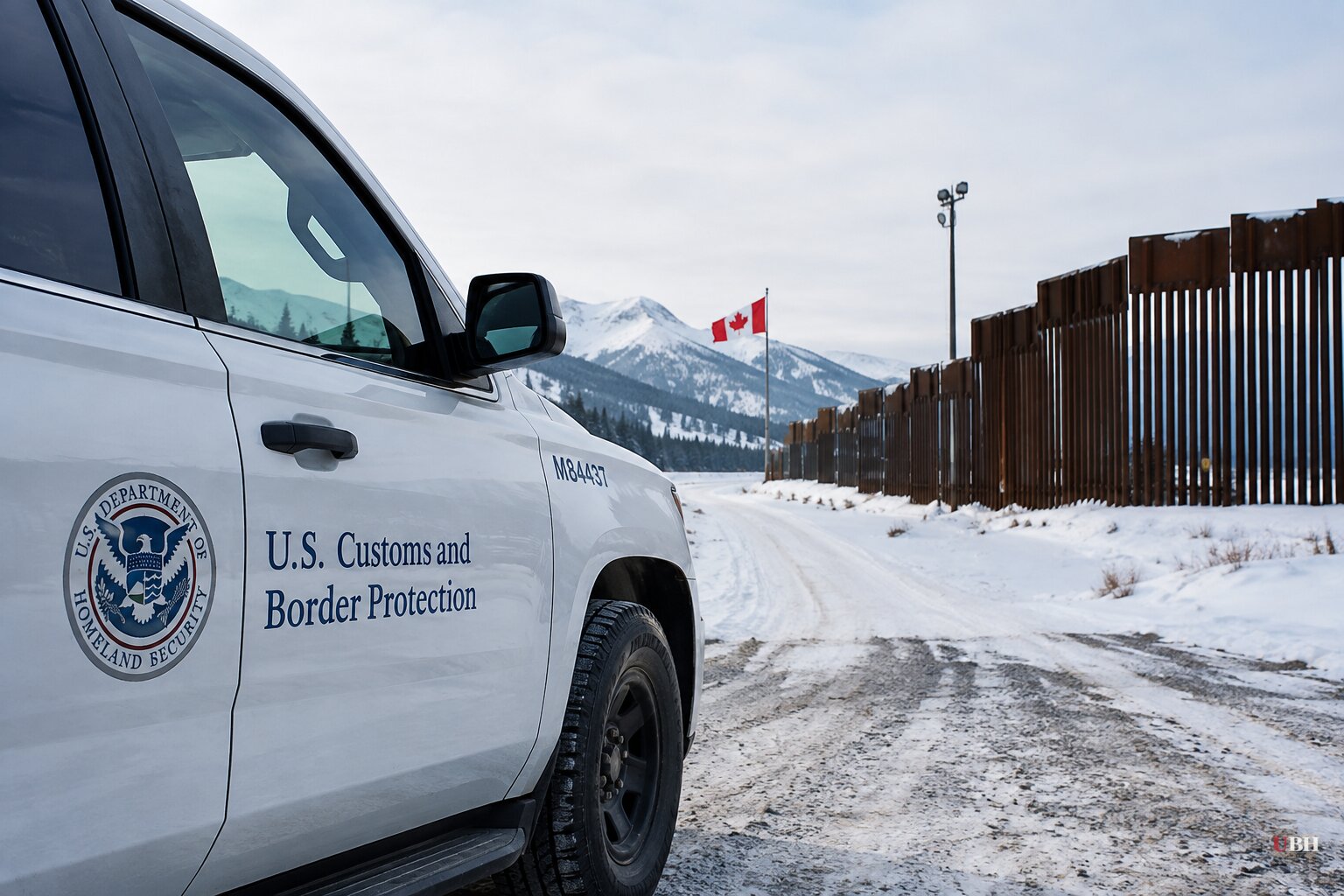
White House border czar Tom Homan says the next phase of the Trump administration's immigration strategy points north, not south.
In an interview airing Sept. 26 with Epoch Times senior editor Jan Jekielek, Homan said the administration will spend the final two years of President Donald Trump's term shifting resources to the roughly 5,500-mile border with Canada.
"The next two years, I'm really concentrating on the northern border," Homan said. "The southern border is the highest security we've ever had."
Why now
Homan's reasoning is straightforward: the southern border numbers have dropped enough that he thinks the northern border can finally get attention. U.S. Customs and Border Protection reported that daily apprehensions along the southern border are 94 percent lower than under the Biden administration, according to CBP's own numbers cited by The Epoch Times. CBP described the border as "more secure than at any point in history."
"Now that we have the money and the time, I think we need to dedicate more resources to the northern border, whether it's manpower, technology, or infrastructure," Homan said.
He framed the earlier imbalance in blunt terms: "You send the firemen where the biggest fire is."
The numbers on the northern border
CBP recorded 563 total apprehensions along the northern border in August and 586 in July, according to figures reported by The Epoch Times. That's a tiny fraction of what the southern border saw at its peak under the Biden administration, but Homan argues the raw numbers understate the risk.
"Canada's immigration laws are very lax," he said. "It doesn't take a lot to get into Canada." He said intelligence reporting and his own visits to northern border sectors over the past three months convinced him that people who pose security threats can enter Canada and then cross into the U.S. more easily than crossing directly at the southern border.
Homan said drug trafficking is a related concern, and that the U.S. government has been working with tribal nations along the northern border on enforcement.
Not a new warning
Homan has been making this argument since before Trump's second inauguration. Juno News reported that in November 2024, shortly after being named border czar, Homan called Canada a potential "gateway for terrorists" and an "extreme national security vulnerability" in an interview with a New York radio station. Then-Deputy Prime Minister Chrystia Freeland responded at the time that both countries had an interest in a secure border and that Canada took border security seriously, according to Juno News.
Homan repeated the warning in January 2025 in comments to Fox News, and told reporters in March that personnel and technology would begin shifting north as southern crossings fell, per Juno News's timeline. The Sept. 26 Epoch Times interview restates a plan he's discussed for nearly two years rather than announcing a new policy.
Congress is already moving
Separately from Homan's comments, the House passed the Northern Border Security Enhancement and Review Act on Sept. 16, according to Alex Jones Live's report. The bill would require the Department of Homeland Security to formally assess threats along the Canadian border, update its security strategy and provide oversight reports to Congress. It would also require CBP to build performance measures for its northern border operations. The bill's passage predates Homan's interview and suggests the shift he's describing already has some legislative backing.
The fair question here
A reasonable skeptic could ask whether "lax" is the right word for Canada's immigration system, since Homan didn't cite specific statistics on Canadian visa approval rates, asylum backlogs, or entry requirements in the interview excerpts reported. Freeland's 2024 pushback, that Canada already treats border security seriously, is the most direct rebuttal on record from a Canadian official, though it predates the current government led by Prime Minister Mark Carney and doesn't address Homan's more recent comments.
Homan also says cooperation, not confrontation, is the goal. "I think the United States and Canada both want to shut down cross-border crime because it's not good for either country," he said, adding both nations share a stake in stopping drug trafficking and illegal crossings that could pose a threat.
What's unresolved is how much money and manpower actually moves north, and on what timeline. Homan didn't give a dollar figure or a staffing target in the interview. With apprehension numbers already low compared to the southern border's historic peaks, the test now is whether DHS's mandated threat assessment under the new House bill turns up evidence to match Homan's warnings, or whether the northern border shift ends up being mostly a reallocation of headlines rather than resources.
Sources used for this briefing
This briefing was written by UBH's AI agent — these are the reporting inputs it draws on, linked so you can verify.


