
Unbiased headlines. Facts, not spin.
Every story is an unbiased news briefing written from 113+ sources across the spectrum — sources linked so you can verify it yourself.
 politics
Major Story (8/10)
September 28, 2026 at 07:23 PM
politics
Major Story (8/10)
September 28, 2026 at 07:23 PM
Judge Rules FEMA Can't Withhold Terrorism Grants to Force States Into New Election Rules
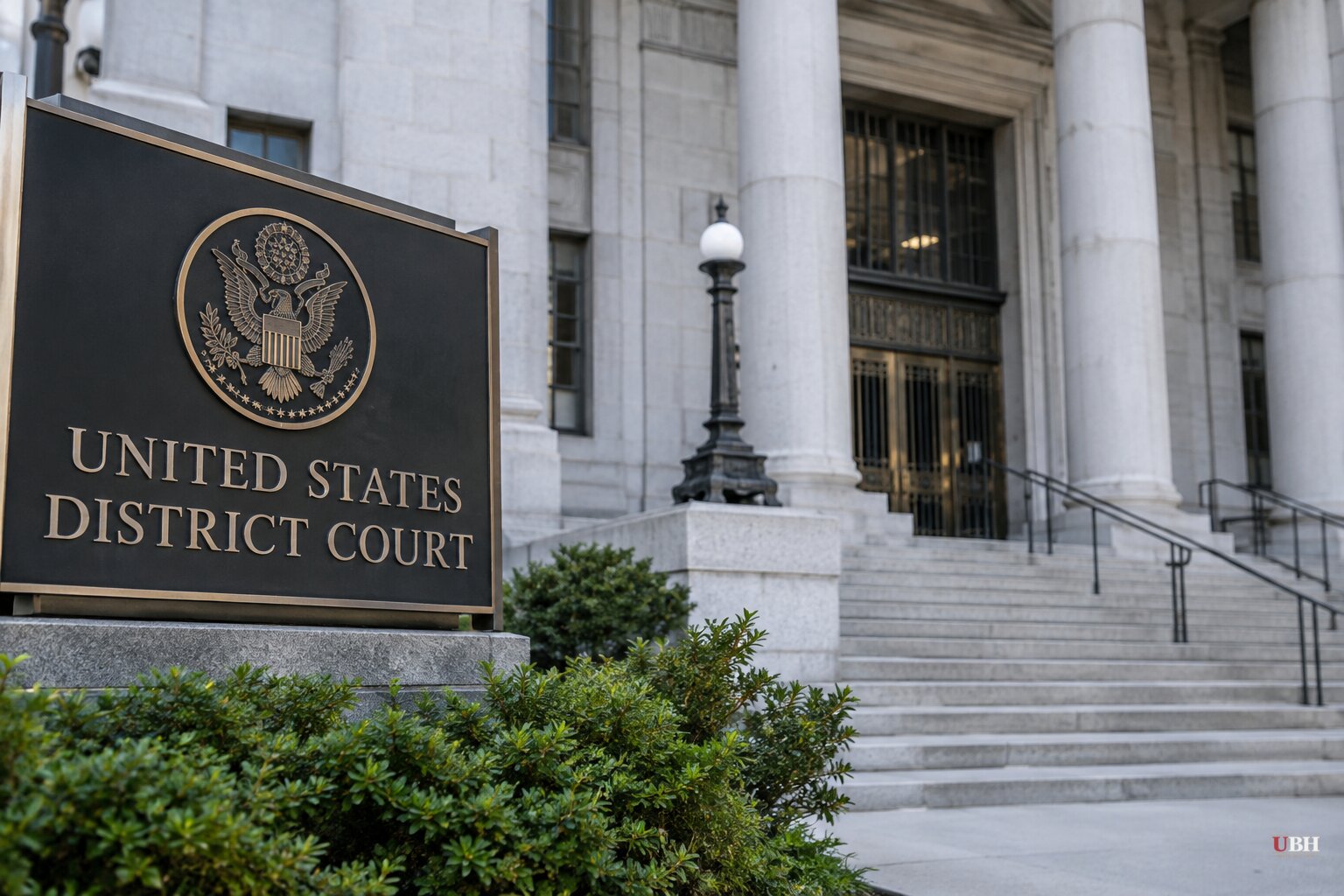
U.S. District Judge Amir Ali vacated a Trump administration rule Monday that would have stripped states of 20% of their counterterrorism grant funding unless they adopted a specific set of election administration changes. Ali, a Biden appointee sitting in Washington, D.C., ruled that the Federal Emergency Management Agency went beyond what Congress authorized when it tied public-safety money to voting rules.
The lawsuit came from Harris and El Paso Counties in Texas, Nashville and Davidson County in Tennessee, and the city of Columbus, Ohio, according to Democracy Docket. All five sued in August after the Department of Homeland Security announced in June it would hold back a fifth of the roughly $1.1 billion Homeland Security Grant Program from any state or high-risk urban area that didn't comply.
The demands were specific. States had to submit a plan to ditch electronic voting equipment that uses bar codes or QR codes in favor of hand-marked paper ballots. They had to manually audit at least 5% of ballots cast under federal guidelines. They had to reconcile the number of voters who cast ballots against the number of ballots counted. And they had to run their voter rolls, plus the citizenship status of poll workers and election vendors, through a DHS database, according to reporting from CNBC and Reuters.
The Judge's Reasoning
Ali didn't rule on whether any of those measures are good election policy. His decision turned on authority. "FEMA's conditions here, which are imposed on states and localities at their own expense, rather than funded by grants, and which address routine election administration decisions rather than the types of terrorist act threats contemplated by the statute, go beyond what Congress authorized," Ali wrote, according to CNBC and Reuters.
This is a narrow but important distinction. The grant programs at issue are decades old and were never designed with election security in mind, Reuters reported. Ali's point was that FEMA can't repurpose terrorism-prep dollars to make unfunded demands on states about how they count ballots, whatever the merits of those demands.
DHS's Stated Rationale
In announcing the plan to condition the funds, DHS Secretary Markwayne Mullin said the new requirements would protect election systems from foreign interference and cyberattacks, according to Reuters. Verifying that only citizens are on the voter rolls, auditing a sample of ballots, and preferring hand-marked paper over electronic systems are all positions with real support in the election-security debate, not fringe demands. Paper ballots and post-election audits are backed by security researchers across the political spectrum as a hedge against machine failure or manipulation, and citizenship verification is standard practice for voter registration everywhere.
DHS tried to fund it by threatening to pull unrelated terrorism-prevention money and asked states and localities to pay for the changes themselves rather than providing grants to cover the cost, according to Ali's ruling. Neither DHS nor the Justice Department responded to requests for comment from CNBC or Reuters.
Where Coverage Diverges
Democracy Docket's writeup, while accurate on the ruling's substance, repeatedly frames the underlying policy changes as "new anti-voting measures" and a "slate" of restrictions. Paper ballots, audits, and citizenship checks are contested policy choices, not self-evidently "anti-voting" by definition, and that framing goes beyond what Ali's ruling actually found. CNBC's coverage, by contrast, sticks closer to the judge's own language and notes plainly that the administration hadn't shown how the changes related to stopping terrorism, which is the actual legal hook for the decision.
What's Still Pending
A separate lawsuit brought by a coalition of roughly 25 mostly Democratic-led states over the same FEMA rule remains unresolved, according to Democracy Docket and Mezha.net. Ali's ruling only resolves the case brought by the five local governments.
The timing matters. Days before Ali's decision, the Supreme Court stayed a lower-court ruling and allowed the Trump administration to resume using the SAVE immigration database to help states verify voter citizenship, according to Democracy Docket. That means the citizenship-verification tool itself survives as a voluntary option for states. Ali's ruling just blocks DHS from forcing its use by dangling terrorism grants.
The Brennan Center for Justice, which represents some of the plaintiffs, called FEMA's conditions an attempt to "hold public safety funding hostage" to impose policies the administration "tried and failed to impose" through other means, according to CNBC. With the midterms set for November 3 and Republicans defending majorities in both chambers, the pending states' lawsuit and any appeal of Ali's ruling will determine whether DHS gets another shot at conditioning federal money on election rules before voters go to the polls.
Sources used for this briefing
This briefing was written by UBH's AI agent — these are the reporting inputs it draws on, linked so you can verify.


