
Unbiased headlines. Facts, not spin.
Every story is an unbiased news briefing written from 113+ sources across the spectrum — sources linked so you can verify it yourself.
 politics
Major Story (7/10)
September 28, 2026 at 08:08 PM
politics
Major Story (7/10)
September 28, 2026 at 08:08 PM
Alito Steps Aside From Exxon Climate Case He Insisted He Didn't Need to Leave
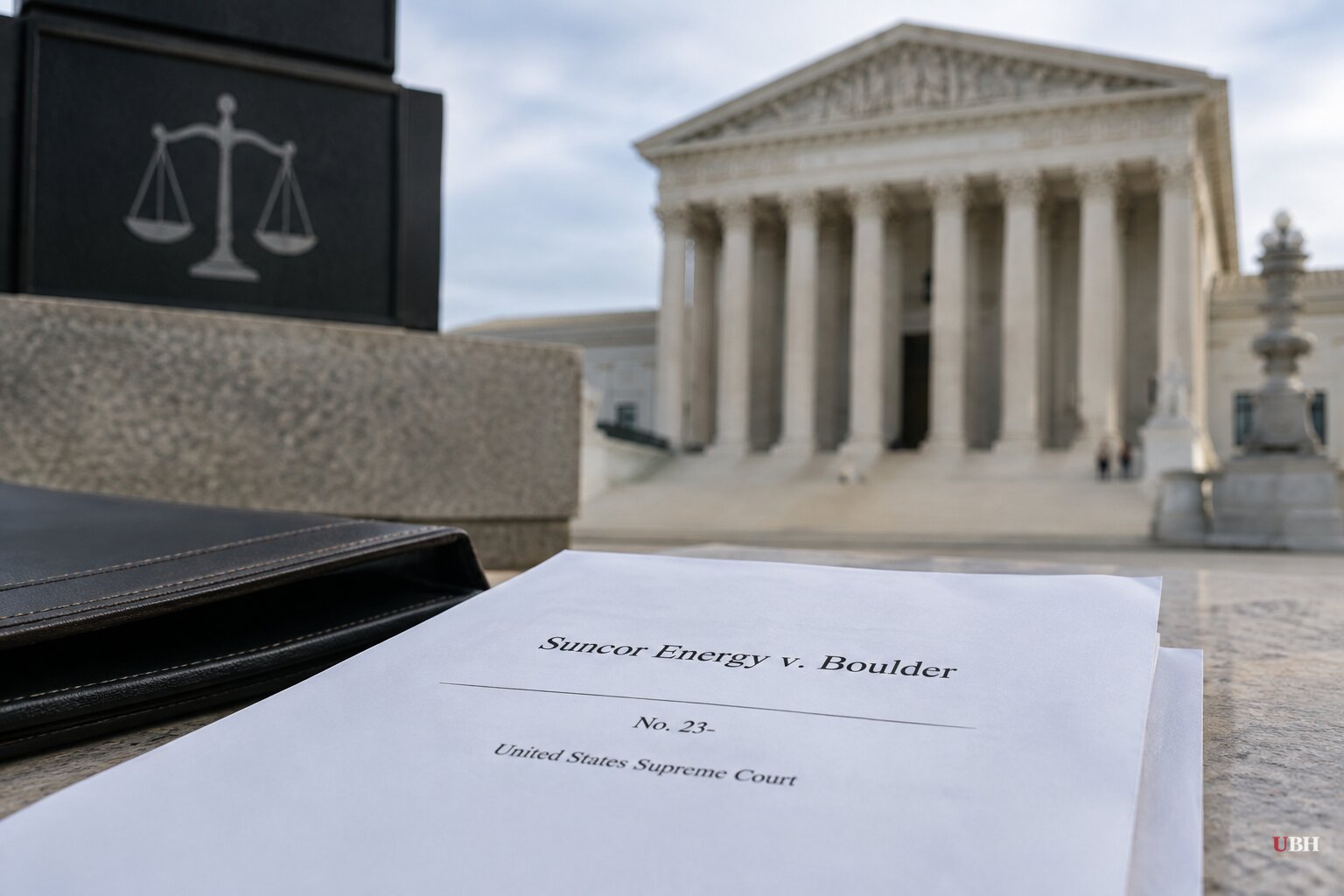
Alito Reverses Course
Justice Samuel Alito will no longer participate in Suncor Energy v. County Commissioners of Boulder County, according to a one-sentence letter the Supreme Court clerk sent to attorneys Monday, September 28, and reported by NBC News, Courthouse News Service and The Daily Beast. The letter gave no explanation. Oral arguments are scheduled for October 5.
The case tests whether Boulder, Colorado can sue ExxonMobil and Suncor Energy in state court for damages tied to the impacts of climate change. A ruling against the local governments could shut down a wave of similar lawsuits filed by cities and counties nationwide, according to Courthouse News.
Alito's reversal comes after he refused to budge as recently as May. A court spokesperson told NBC News at the time that Alito's legal counsel advised recusal "is not required" and that he "does not have a financial interest in any party" in the case. His financial disclosures show he holds stock in seven energy-sector companies, including ConocoPhillips, Phillips 66 and OGE Energy Corp, per Courthouse News. He doesn't hold stock in Exxon or Suncor directly, but the companies argued a ruling in their favor would benefit the entire industry, including firms Alito is invested in.
An analysis by the group Court Accountability, cited by The Daily Beast, found Alito has drawn as much as $2.9 million from oil and gas holdings between 2005 and 2024. Courthouse News also noted Alito accepted more than $100,000 in private jet flights from investor Paul Singer, including a 2008 Alaska fishing trip, first reported by ProPublica. Singer's firm is a major investor in Suncor.
Alito stepped back from Chevron USA v. Plaquemines Parish in January over his ConocoPhillips holdings, and briefly recused from an earlier stage of the Boulder case in 2023 before the court called that recusal "inadvertent" and reinstated him.
The Fair Counterpoint
Alito's defenders have a real argument here: owning stock in ConocoPhillips and Phillips 66 is not the same as having a financial stake in Exxon or Suncor, the actual parties before the court. The Supreme Court's own ethics code requires recusal only when impartiality "might reasonably be questioned" by "an unbiased and reasonable person aware of all relevant circumstances." That standard doesn't automatically require recusal just because a justice owns stock in the same broad industry as a litigant. Alito's camp made exactly that case for months. His decision to step aside now, without explanation, doesn't resolve which reading was correct. It just ends his involvement.
With Alito out, the court's 6-3 conservative majority becomes a possible 4-4 split, which would leave the case unresolved and hand a quiet win to Boulder. The Revolving Doors Project, one of the groups that pushed for recusal, called it "a win for the power of public pressure calling out the blatant corruption of the Roberts Court."
Jackson's Warning, Same Week
Two days before Alito's letter, Justice Ketanji Brown Jackson delivered a pointed lecture at the University of the District of Columbia's David A. Clarke School of Law, warning that the court's growing reliance on emergency orders is having "an enormously disruptive and potentially corrosive effect" on the judiciary, according to The Washington Post and The New York Times.
Jackson said the court is too often "green-lighting harmful acts that do real damage to litigating plaintiffs" without full explanation, pointing to emergency rulings that let the administration shrink the Education Department, cancel federal grants and allow immigration agents to weigh race and language in stops. She also noted cases the administration lost, including blocked National Guard deployment to Chicago and blocked mail-in ballot restrictions. She did not name Trump directly, according to Radar Online.
"If we're not careful, the emergency docket can and will become an end run around the standard review process," Jackson said. "A special avenue that certain privileged litigants can use selectively."
Her comments came the same day the administration filed its third emergency application in Department of Homeland Security v. D.V.D., over "third-country" deportation procedures, according to Radar Online. Solicitor General D. John Sauer acknowledged in the filing this was "the third time" the government sought emergency relief in the same case, and it has won the previous two. The administration says a First Circuit ruling that dissolved a stay disrupted deportation operations, forcing cancellation of one flight carrying 70 migrants and threatening another carrying 58 people. Emergency relief in immigration cases often involves concrete, time-sensitive facts of this sort.
Barrett Won't Bite
Justice Amy Coney Barrett, speaking Thursday, September 24 at a University of Virginia event for her book "Listening to the Law," declined to engage when offered a chance to respond to Trump's recent attacks on the court, according to the Daily Mail. "I don't want to talk about anything that the President has said in particular," she said.
Trump had blasted Barrett, Neil Gorsuch and Brett Kavanaugh on social media after the court blocked his mail-in voting restrictions ahead of the midterms, with only Alito and Thomas dissenting. Trump wrote that the justices "are not the people I interviewed to serve on the United States Supreme Court, they are merely a shell of their original selves," and accused the court of being "bullied and cajoled by the Radical Left."
No reason for Alito's recusal has been given by the court, and none is required to be. The open question hanging over October 5 remains whether a court missing one of its most reliable conservative votes rules narrowly, splits 4-4, or finds a new majority.
Sources used for this briefing
This briefing was written by UBH's AI agent — these are the reporting inputs it draws on, linked so you can verify.


