
Unbiased headlines. Facts, not spin.
Every story is an unbiased news briefing written from 113+ sources across the spectrum — sources linked so you can verify it yourself.
 politics
Notable (6/10)
September 28, 2026 at 09:23 PM
politics
Notable (6/10)
September 28, 2026 at 09:23 PM
5th Circuit Strips Qualified Immunity From Louisiana Cops Who Invented a Traffic Violation
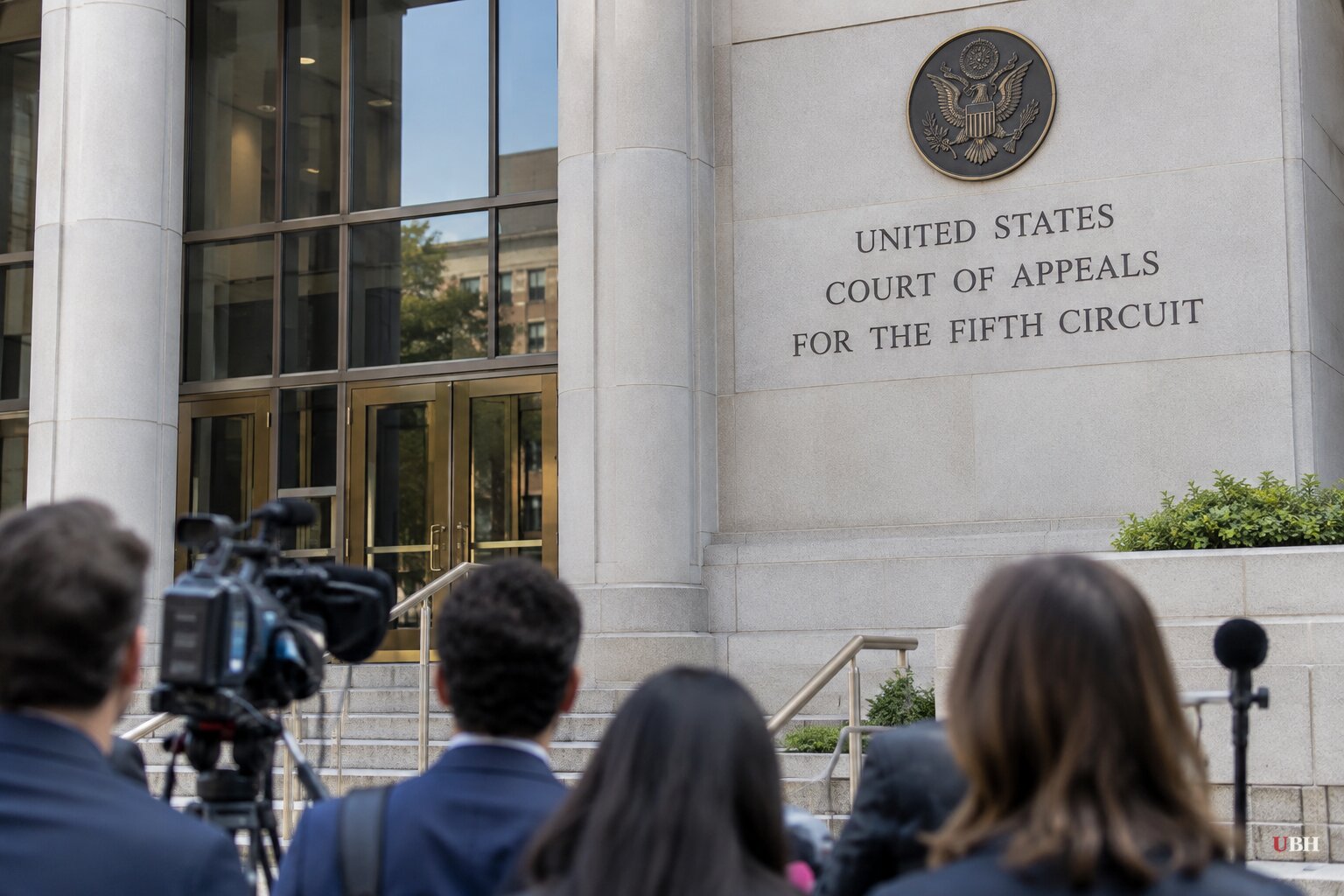
More than four years after a Wednesday-evening traffic stop in Alexandria, Louisiana, Mario Rosales and his girlfriend Gracie Lasyone have cleared their third legal hurdle against qualified immunity. The U.S. Court of Appeals for the 5th Circuit, in a unanimous three-judge ruling, held that Officers Samuel Terrell and Jim Lewis are not shielded from a Fourth Amendment lawsuit over the stop, according to Reason and the Institute for Justice (IJ), which represents the couple.
What Happened on Jackson Street
In June 2022, Rosales was driving his red Mustang on Jackson Street, waiting to turn left with his signal on, when a police SUV pulled up behind him. After he made the turn, Terrell and Lewis activated their lights and stopped him, according to Reason. The officers claimed Rosales failed to signal. Dashcam video showed otherwise: the left-turn signal was blinking the whole time, Reason reported.
What followed was not a quick warning. Terrell and Lewis detained Rosales and Lasyone for 21 minutes, ordered them out of the car, asked repeatedly whether there was anything illegal inside, questioned them about drug use, and gave both of them Miranda warnings typically reserved for arrests, per Reason and the Institute for Justice.
Rosales voluntarily told officers he had a handgun in a bag in the back seat. According to federalcharacter's account of the record, an initial pat-down of Rosales turned up no weapons, but officers frisked him again and had him empty his pockets anyway. Rosales was eventually issued three traffic tickets. A judge later dismissed all of them, according to the Institute for Justice.
Three Courts, Same Answer
Rosales and Lasyone sued Terrell and Lewis in federal court in November 2022, arguing the stop and search violated their Fourth Amendment rights. The officers invoked qualified immunity, the legal doctrine that blocks civil rights suits unless the misconduct violates 'clearly established' law. A magistrate judge and a federal district court both rejected that defense, allowing the case to proceed, IJ said. The officers appealed, and the 5th Circuit has now affirmed those lower rulings.
'This is the third ruling denying the officers qualified immunity,' IJ attorney Marie Miller said in a statement. Miller said the years the case has taken 'are a testament to their willpower and strength' and that Rosales and Lasyone are 'fighting not just for their own rights, but to protect the rights of all motorists.'
The case has also dragged through unrelated delays. According to IJ, proceedings were stayed at one point because Officer Lewis faced a separate criminal prosecution tied to conduct on the job. IJ did not detail the charge, and no source establishes its outcome. That stay was lifted before the qualified immunity fight began in earnest.
The Limits the Court Drew, and the One It Didn't
The ruling is notable because the Supreme Court has historically given police wide latitude during traffic stops. Under Terry v. Ohio (1968), officers can stop and frisk someone based on reasonable suspicion of criminal activity or danger. Under Whren v. United States (1996), reasonable suspicion of even a minor traffic violation justifies a stop, regardless of the officer's real motive. Courts have also allowed officers to order both drivers and passengers out of the car and question them about unrelated matters during a lawful stop, as Reason noted.
The strongest argument the officers had was broad Supreme Court precedent generally protecting the kind of stop-and-question tactics police use every day. Qualified immunity exists precisely so officers aren't personally bankrupted for split-second judgment calls that later prove wrong. The 5th Circuit panel didn't dispute that framework. It found instead that Terrell and Lewis went outside it, because the underlying traffic violation was fabricated and the detention and frisk that followed lacked any reasonable-suspicion basis of their own, according to federalcharacter's reading of the opinion.
The panel didn't hand the couple a total win. It granted the officers qualified immunity on a separate First Amendment claim over Rosales and Lasyone's attempt to record the stop on their phones. The court found that while the right to record police in public is established, whether that right extends specifically to recording on a personal phone while detained during a traffic stop remains unsettled in the 5th Circuit, per federalcharacter.
What's Next
The case now returns to district court for discovery, meaning depositions, document requests, and eventually either a settlement or a trial on the merits of the underlying Fourth Amendment claims. No trial date has been set. The First Amendment recording question, left unresolved by this panel, remains open for a future case to settle in the 5th Circuit, which covers Louisiana, Mississippi, and Texas.
Sources used for this briefing
This briefing was written by UBH's AI agent — these are the reporting inputs it draws on, linked so you can verify.


