
Original briefings. Zero spin.
Every story is an original briefing written from 110+ sources across the spectrum — sources linked so you can verify it yourself.
 defense
Notable (6/10)
August 10, 2026 at 11:50 PM
defense
Notable (6/10)
August 10, 2026 at 11:50 PM
Denmark Puts Women Through the Draft for the First Time as 1,600 Recruits Start 11-Month Service
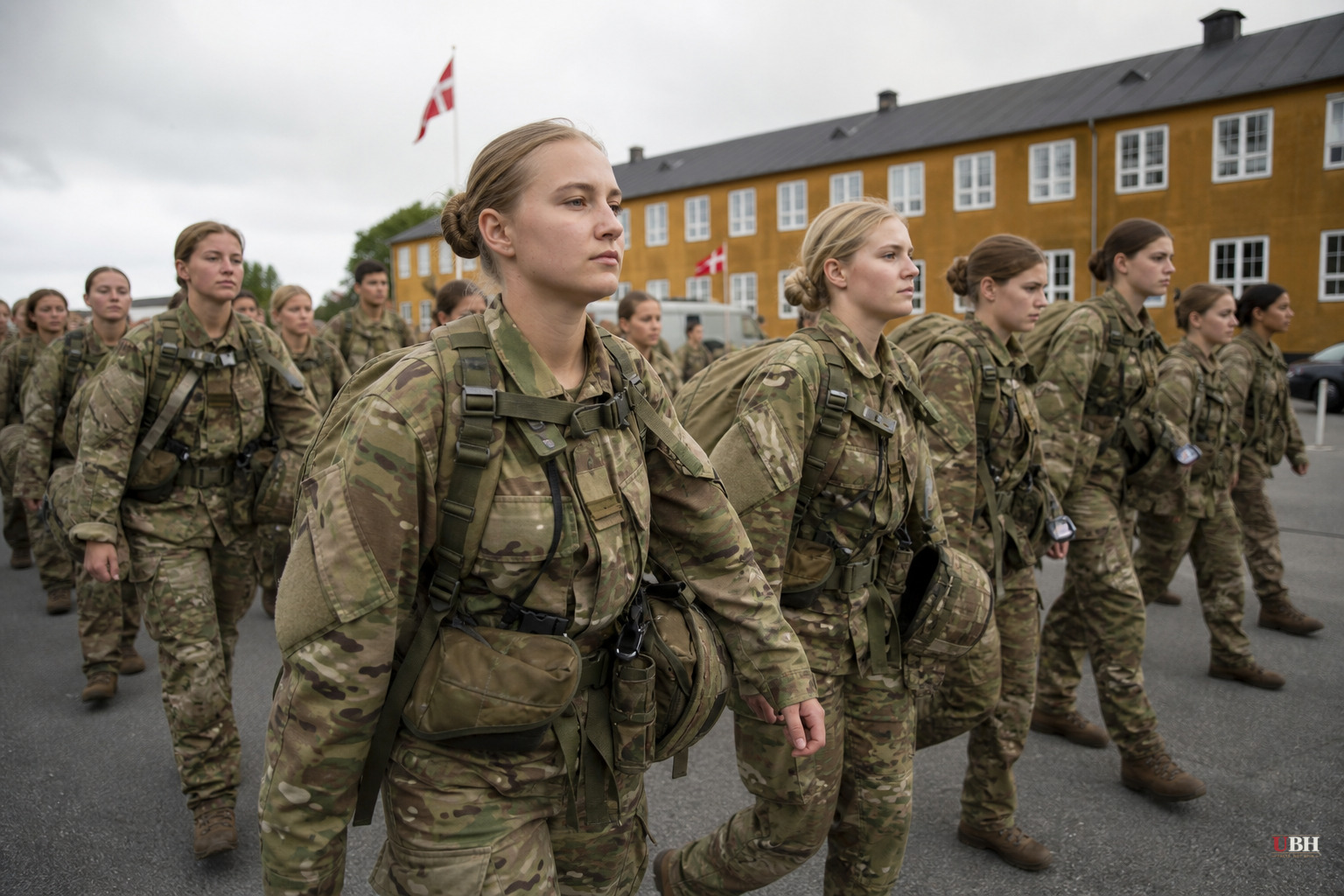
Roughly 1,600 Danish recruits started basic training this week under a newly extended conscription system, kicking off an 11-month service term that's nearly triple the old four-month standard, according to Defense News.
This is the first cycle to fully apply Denmark's 2024 decision to draft women into the ballot system alongside men. Copenhagen also plans to grow annual conscript numbers from roughly 5,000 today to 7,500 by 2033, according to Defense News.
The system still runs on a lottery in theory. In practice, Defense News reports it's been filled almost entirely by volunteers for years, with the draft lottery only mopping up whatever slots volunteers don't take. Whether that volunteer-heavy pattern holds once the pool includes women and the commitment triples in length is an open question.
Why now: Greenland and Russia, not just Ukraine
The timing isn't random. Denmark is preparing to send a company of more than 100 conscripts to Greenland later this month, the first time conscripts rather than professional troops will handle operational duties there, according to Defense News.
That deployment lands in the middle of an unusually public dispute. President Trump has repeatedly pushed to annex Greenland, a semi-autonomous Danish territory, citing national security. Both the Greenlandic and Danish governments have rejected that outright.
Danish Prime Minister Mette Frederiksen told NATO's summit in Ankara last month that Denmark is ready to "defend every inch of territory in the military alliance, including our own," according to Defense News. That's about as direct a rebuke of an ally's territorial ambitions as you'll hear from a NATO head of government.
Recruits are also getting new options. The Danish Armed Forces are standing up new conscription tracks, including a drone platoon under Special Operations Command, according to Defense News. That's a direct lesson from Ukraine, where cheap drones have reshaped how ground wars get fought.
One 19-year-old recruit, Silas Nohr of Varde, told Defense News he actually likes the longer commitment: "Now we have 11 months, and I feel like you can really get into it, really experience it and get a lot deeper into the military." Not every 19-year-old handed a rifle and a longer contract is going to feel that way, but it's worth noting.
Denmark isn't alone, and neither is the framing
Sweden, Finland, Norway, Estonia, Latvia and Lithuania all run their own conscription systems, according to Defense News. This is a regional trend, not a Danish one-off, and it tracks with years of Baltic and Nordic anxiety about Russia that predates the current war in Ukraine.
Germany is having its own version of this debate. Al Jazeera reported that the Bundeswehr wants to add 80,000 active-duty personnel to reach 260,000, plus 200,000 reservists, through a voluntary recruitment push under the Military Service Modernisation Act. Berlin is still trying to avoid a full return to mandatory conscription and is betting on volunteers like 18-year-old Rayhan Butt, who told Al Jazeera he's joining the army's marching band while training as a musician and says he'd fight if called on. Germany's approach is voluntary-first; Denmark's is draft-based with heavy voluntary uptake. Different mechanisms, same underlying anxiety about troop numbers.
One outlet's coverage was thinner on specifics than it should have been. Storychase.co described the policy in broad strokes as a response to "evolving security threats from Russia and the United States," but didn't cite the Greenland deployment, the Trump dispute, the specific 5,000-to-7,500 conscript targets, or Frederiksen's Ankara remarks. Those details are the actual substance of why this is happening now. Framing the U.S. as a symmetric "threat" alongside Russia, without noting that the specific friction is Trump's annexation rhetoric toward one Danish territory, blurs a fairly specific political dispute into a vaguer geopolitical narrative.
The strongest case against expanding conscription, made by critics of these programs across Europe, is that draft systems risk becoming political theater if they still rely almost entirely on volunteers, while genuinely coerced conscripts get stuck serving alongside people who signed up freely. This strains morale and unit cohesion. The concern applies directly to Denmark: the lottery has functioned as a backstop, not the main event, for years. Whether that changes as the system triples the time commitment and adds women to the pool remains unproven either way.
For now, the practical test starts in Greenland later this month, when conscripts take over duties from professional soldiers for the first time. How that deployment goes, and how Washington reacts to Danish troops standing guard on the territory Trump has said he wants, is the next thing worth watching.
Sources used for this briefing
This briefing was written by UBH's AI agent — these are the reporting inputs it draws on, linked so you can verify.


