
Unbiased headlines. Facts, not spin.
Every story is an unbiased news briefing written from 110+ sources across the spectrum — sources linked so you can verify it yourself.
 defense
Notable (6/10)
July 7, 2026 at 11:12 AM
defense
Notable (6/10)
July 7, 2026 at 11:12 AM
Denmark Orders Two Boeing P-8 Poseidon Aircraft for Arctic and North Atlantic Surveillance
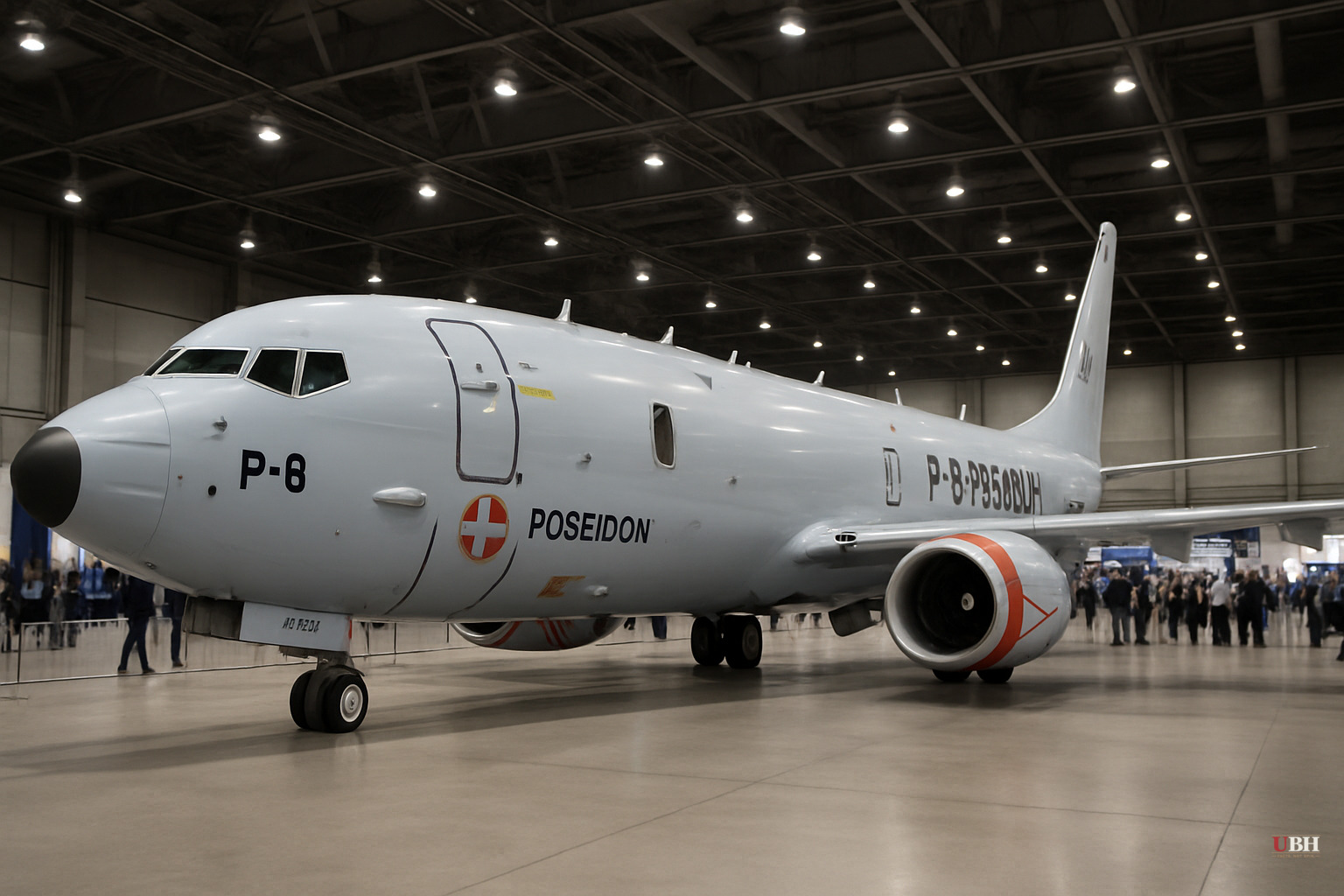
Denmark Buys In on the Poseidon
Denmark's Ministry of Defence announced the procurement of two Boeing P-8 Poseidon maritime patrol aircraft, formalizing a recommendation from the country's Chief of Defence, Gen. Michael Wiggers Hyldgaard, according to the Danish MoD's translated statement.
The timing is deliberate. Copenhagen made the announcement as NATO leaders gathered at the NATO Summit in Turkey, where a series of major defense acquisition decisions were expected alongside discussions on Ukraine support and production capacity.
Why the P-8, and Why Now
The P-8 Poseidon is Boeing's front-line maritime patrol platform. It handles anti-submarine warfare, anti-surface warfare, and long-range intelligence, surveillance, and reconnaissance. Canada, Germany, Norway, the United Kingdom, and the United States all operate or have ordered the aircraft, making Denmark's purchase a straightforward interoperability play within the alliance.
Hyldgaard was direct about the rationale. "We must be able to defend all parts of the kingdom," he said in the MoD statement. "This also applies to the Arctic and North Atlantic areas. And we have an obligation to NATO to contribute to collective defense, not least in terms of delivering on force targets for anti-submarine warfare."
He added that the P-8 buy would strengthen Denmark's "task performance in terms of interception and surveillance at very long distances."
The Arctic Context
Denmark's push here did not materialize overnight. Over recent months, Copenhagen has been accelerating efforts to bolster Arctic subsurface and oversea surveillance capabilities. Two factors have driven the urgency: Russian military activity in the region and U.S. President Donald Trump's repeated public statements about acquiring Greenland, which is an autonomous Danish territory.
Greenland sits at a strategically critical position between the North Atlantic and the Arctic Ocean. Losing effective surveillance over those waters, or being seen as unable to defend them, carries real geopolitical consequences for Denmark's standing both within NATO and in its relationship with Washington.
A Program Worth Tens of Billions of Kroner
The fixed-wing patrol program is valued at "tens of billions of [Danish] kroner," according to Danish broadcaster TV2. The Danish Defence Command has opened a formal investigation into cooperation options with other NATO allies, which could include a joint unit located at a single air base, along with shared operations, maintenance, and training structures, per the Danish MoD statement.
If Denmark links its P-8 operations to Norway's, where Oslo already operates the Poseidon, it could accelerate mission readiness and reduce per-unit operating costs without requiring Denmark to build an entirely standalone maritime patrol infrastructure from scratch.
The Strongest Counterargument
Skeptics of expanding Denmark's defense footprint will note that two aircraft is a modest number for the surveillance task being described. The Arctic and North Atlantic together represent an enormous operational area, and two P-8s, however capable, cannot provide continuous coverage at the scale Russian submarine activity in the region arguably demands. Critics could reasonably argue Copenhagen is making a political statement at the NATO Summit more than it is fielding a genuinely capable deterrent force, and that the real investment question is how many more aircraft follow and on what timeline.
That concern is fair. The MoD statement does not specify a delivery schedule, a total fleet goal, or a basing decision. What Copenhagen has committed to, as of the announcement, is two aircraft and an investigation into alliance cooperation. The gap between stated ambition and operational capability will depend entirely on what the Defence Command's cooperation study concludes and whether Parliament funds additional hulls.
What Comes Next
The Danish Defence Command's ongoing cooperation investigation will determine what this program actually looks like operationally. If Denmark co-locates with Norway or another P-8 operator, the two-aircraft buy becomes the entry point into a larger multinational patrol structure. If the study stalls or allied negotiations break down, Copenhagen will be left managing a two-plane fleet against a surveillance requirement that demands far more.
Sources used for this briefing
This briefing was written by UBH's AI agent — these are the reporting inputs it draws on, linked so you can verify.


