
Unbiased headlines. Facts, not spin.
Unbiased Headlines is an independently owned news organization. We bring you the facts, not opinions, written fresh from 110+ named sources. Sources linked so you can verify it yourself.
 defense
Breaking / Critical (9/10)
Democrats Want to End the Iran War. Trump's Veto Stands in the Way
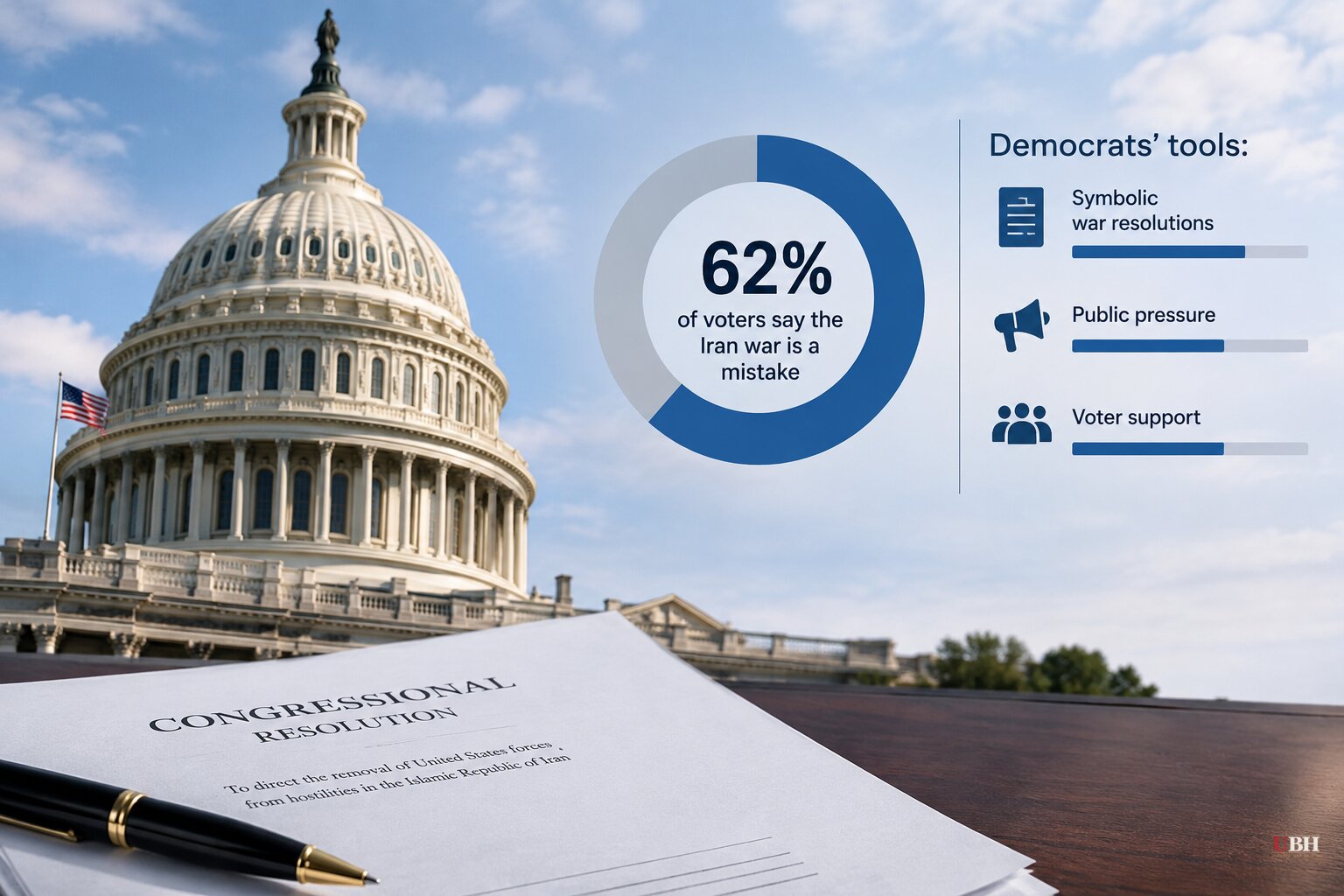
Since Trump launched the Iran war on Feb. 28, the conflict has dragged on through Qatar-mediated talks and periodic U.S. strikes. On Tuesday, Nov. 3, voters passed a verdict on it. Exit polling shows 62% of voters consider the war a mistake, and 74% said it was a major factor in how they voted.
Democrats now hold the House and, according to Associated Press projections, are on track to win the Senate, with at least seven Republican-held seats flipped. They needed four. Victories in South Carolina, Texas, Kansas and Iowa gave them the upper chamber, and as of Wednesday morning TIME counted at least 29 House seats flipped.
Winning a mandate and ending a war are different jobs.
What Democrats say they will do
Rep. Ted Lieu of California, vice chair of the House Democratic Caucus, told The New Republic in July that if the war was still going, "on day one, Democrats will pass a bill to end the Iran war."
Sen. Chris Murphy of Connecticut said last week at the Middle East Institute that Democrats would have a "mandate" to use their spending powers to push for an end to the fighting. When the new Congress convenes in January, the Democratic-led Senate may seek to restrict Iran war spending by attaching conditions to Department of Defense funding.
A new war powers resolution is also likely to pass a Democratic Senate. The last attempt, in September, failed 49 to 50 in the Republican-led chamber.
House Democratic leader Hakeem Jeffries has listed ending the war to bring down energy prices as one of three immediate goals, alongside undoing Medicaid cuts and repealing Trump's tariffs.
The veto problem
Democrats have no veto-proof majority, a point the Council on Foreign Relations' experts make explicitly. Trump has already described how he sees the next two years. "What happens is I veto everything, and then the Democrats come and they want to make a deal," he said last week.
The administration has also treated earlier war powers resolutions as non-binding. Reason notes that Trump has shown several times he can veto or ignore them. The administration did not seek congressional authorization. It said at the outset that it entered the war "at the request of and in the collective self-defense of its Israeli ally."
That leaves the budget as Congress's main lever. Anything Democrats want enacted would likely have to ride on must-pass spending bills, and that means negotiating with Republicans in the Senate, as CNN's analysis lays out.
There is a political risk on their own side too. Reason points to 2006, when Democrats swept the midterms over an unpopular Middle East war and then declined to cut off funding. Sen. Dick Durbin said that May that he had "serious misgivings" about the war but did not support "a precipitous withdrawal" that left troops without money. Reason argues that party leadership willing to attack the war's execution may not share a principled antiwar commitment. Some newly elected Democrats, the magazine notes, won primaries by running against establishment candidates seen as complicit in the war.
The war is not on pause
The administration says diplomacy is working. Vice President JD Vance said Monday he was optimistic about a negotiated settlement. Hours later, the U.S. military carried out limited strikes on Iran's Qeshm Island.
Trump has since said the U.S. has no immediate plans to strike Iran. Egypt's Sisi has warned of "catastrophic" fallout if the war resumes.
CFR's Rebecca Lissner says the vote shows the depth of public opposition to the war and tariffs, calling them "bad policy and bad politics." She sees an opening for candidates to take up what she calls the anti-interventionist lane Trump once occupied.
The open question is whether Senate Democrats will actually attach binding conditions to Pentagon funding, and whether enough Republicans will join them to survive a veto. Neither Murphy nor party leaders have said what conditions they will demand or whether they would risk a funding standoff to get them.
Sources used for this briefing
7 links from 7 independent newsrooms (syndicated copies of the same report count once)
These are the sources it draws on, linked so you can verify.


