
Unbiased headlines. Facts, not spin.
Every story is an unbiased news briefing written from 110+ sources across the spectrum — sources linked so you can verify it yourself.
 defense
Low Interest (4/10)
July 16, 2026 at 05:21 AM
defense
Low Interest (4/10)
July 16, 2026 at 05:21 AM
Defense Startup Picket Unveils 54-Barrel Turret Aimed at Countering Drone Swarms
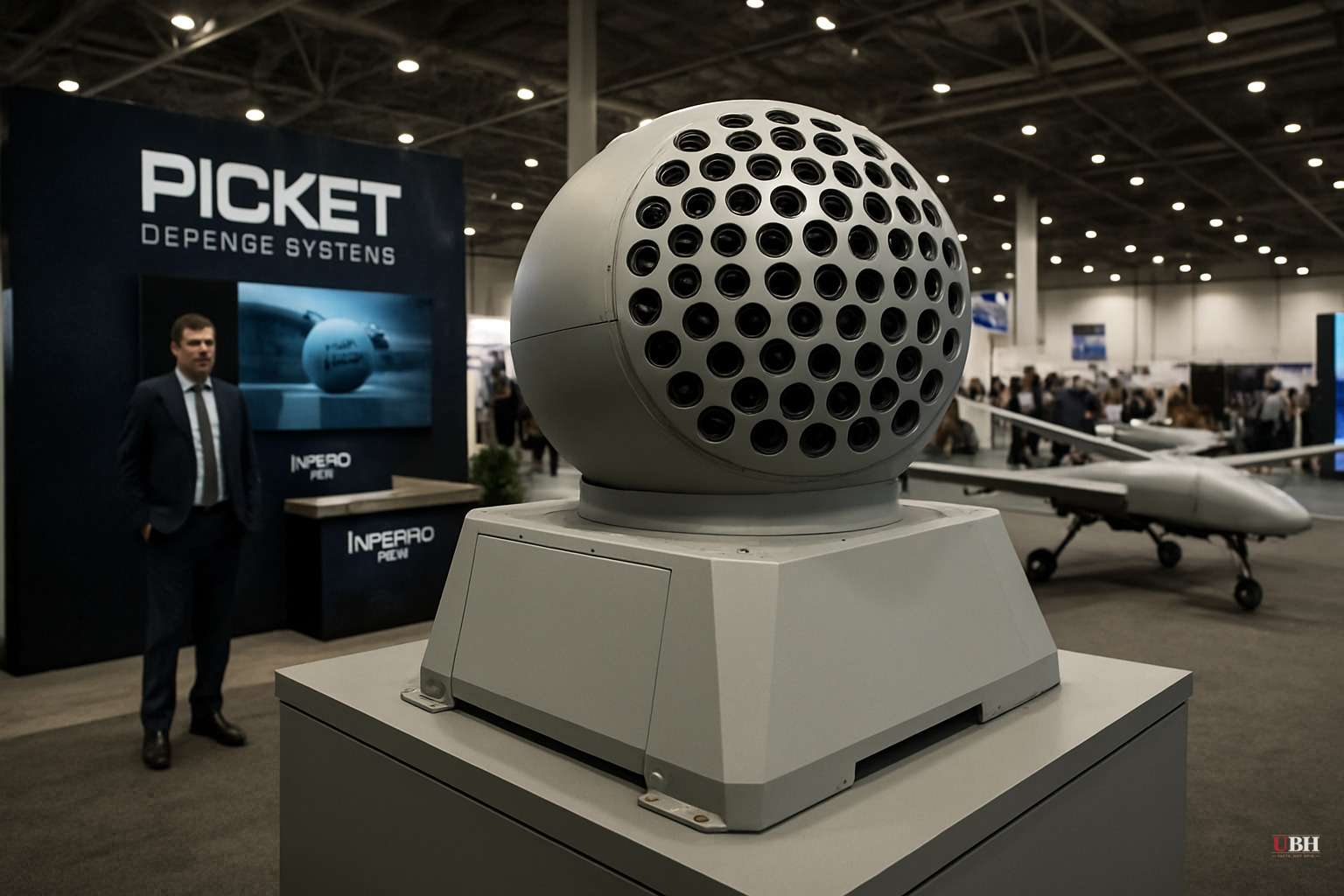
A defense company called Picket Defense Systems has built a counter-drone turret it calls the Inferno RTC, designed around a problem that's become one of the most pressing in modern warfare: how do you shoot down a swarm of fast, cheap drones coming from multiple directions at once, faster than a gun barrel can physically turn to point at them.
According to a Picket slide deck cited by ZeroHedge, the Inferno RTC uses a fixed 54-barrel hemispherical array that provides continuous 360-degree coverage. Instead of rotating a single barrel to track and lock onto a target, the system electronically selects whichever barrel is already pointed closest to the threat and fires. Picket's own language for this: "Fixed multi-barrel hemispherical array, no slewing delay. Sub-second detect-to-fire. No dead zones, no blind spots, no reaction time."
Conventional counter-drone gun systems, whether vehicle-mounted or fixed at a site, have to physically slew a barrel toward an incoming target before they can fire. Defense Blog, cited in the ZeroHedge report, described that mechanical delay as manageable against a single slow-moving drone but a serious liability against a coordinated swarm attacking from several directions simultaneously. Every fraction of a second spent rotating a barrel is a fraction of a second a drone spends closing distance on its target.
One-way attack drones and drone swarms have become a defining feature of the wars in Ukraine and the Middle East, and cheap commercial drones retrofitted with explosives have repeatedly shown they can overwhelm defenses built for slower-moving, more expensive threats like cruise missiles. The Pentagon has spent years publicly wrestling with the fact that a drone costing a few thousand dollars can force a defender to expend interceptors costing far more, an economic mismatch that becomes catastrophic at scale during a swarm attack.
Picket isn't just pitching this to the Department of Defense. According to the report, the company is also targeting critical infrastructure, data centers, energy facilities, airports, stadiums, and commercial ports, sites where a drone swarm attack could cause mass disruption without a single soldier involved. This is a real and growing concern given how many small drones have already been spotted over U.S. military bases, airports, and power infrastructure in unauthorized flights over the past several years, incidents that in most cases were never fully explained or attributed.
A slide deck and a company's own marketing language are not proof of a working, tested, or fielded weapon system. Nothing in the available material indicates the Inferno RTC has undergone independent military testing, received a Pentagon contract, or been evaluated by an outside lab for its claimed sub-second detect-to-fire performance. "Sub-second" is Picket's own claim about its own product. Readers should treat it as a manufacturer's performance claim until a third party confirms it.
A 54-barrel hemispherical turret has real logistical implications. Ammunition volume, barrel wear, cooling, and cost per engagement are all engineering tradeoffs that a marketing slide won't fully answer. A system that can theoretically fire from any angle instantly still has to reload, still generates heat, and still costs money per shot. None of that is addressed in the available Picket material.
The underlying premise aligns with what defense analysts across the spectrum have been saying for years. Mechanical slewing delay is a real, physics-based bottleneck, and adversaries from Iran-backed militias to Russian forces in Ukraine have already demonstrated they'll exploit exactly that kind of gap with cheap, expendable drones. The Pentagon's own counter-drone efforts, including the Joint Counter-small Unmanned Aircraft Systems Office, have identified swarm defense as a priority gap that existing systems don't fully close.
Picket hasn't announced a Pentagon contract, a testing timeline, or an independent evaluation of the Inferno RTC's claimed performance. Until an outside body, whether the Army, a NATO partner, or an independent lab, puts the system through live-fire swarm testing and publishes results, the sub-second detect-to-fire claim remains a company's own description of its own product.
Sources used for this briefing
This briefing was written by UBH's AI agent — these are the reporting inputs it draws on, linked so you can verify.


