
Unbiased headlines. Facts, not spin.
Every story is an unbiased news briefing written from 110+ sources across the spectrum — sources linked so you can verify it yourself.
 energy
Low Interest (4/10)
July 12, 2026 at 12:54 AM
energy
Low Interest (4/10)
July 12, 2026 at 12:54 AM
Deep Fission Delivers Prototype Reactor Canister to Kansas Test Site for Underground Nuclear Design
A Nuclear Reactor Buried a Mile Down
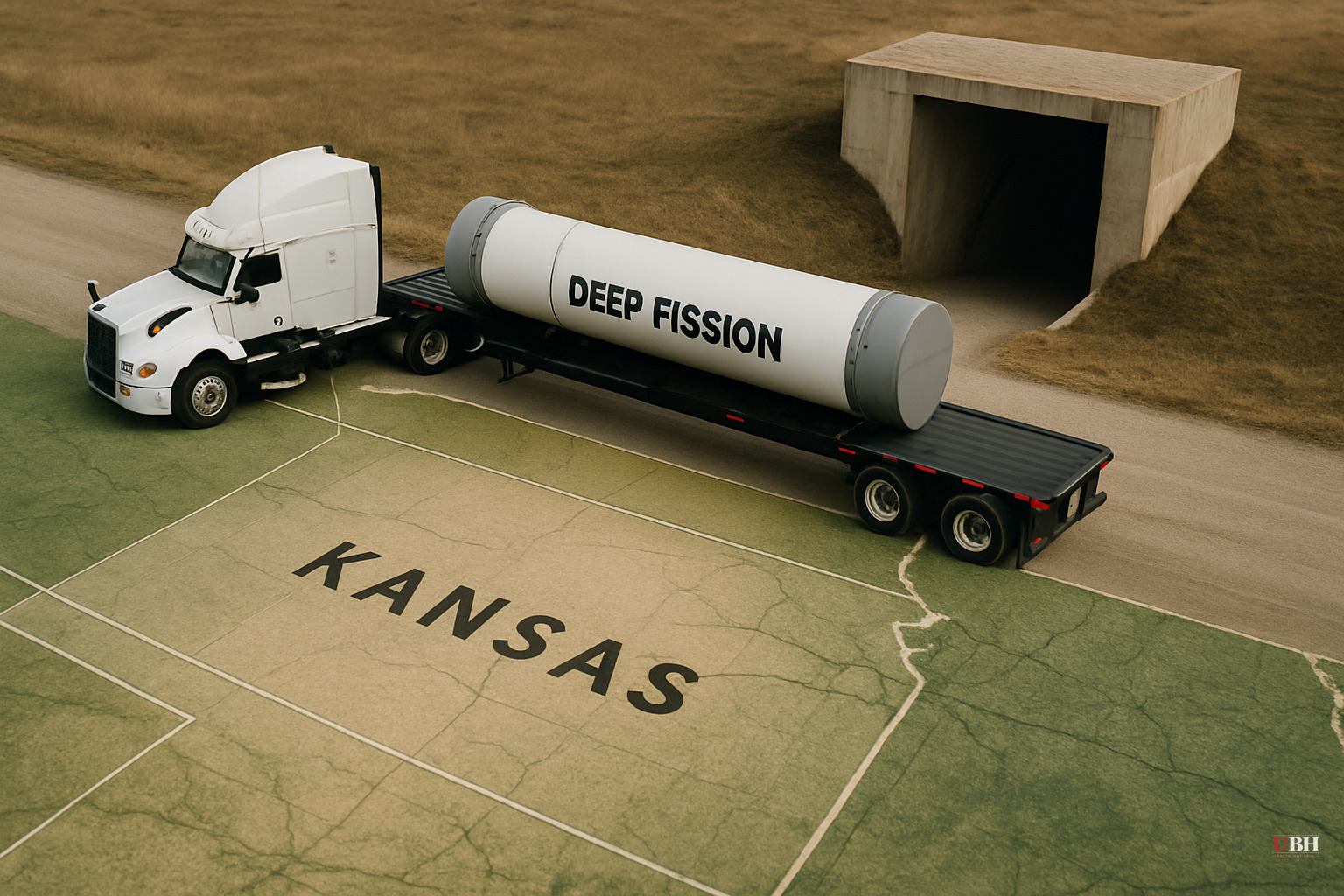
A prototype reactor canister has arrived at a test site in Kansas, according to Interesting Engineering. It's the first physical hardware milestone for Deep Fission, a California-based nuclear startup betting that burying small reactors deep underground is cheaper and safer than building them the conventional way.
The company says the canister has completed fabrication and hydrostatic testing, the pressure-testing process used to confirm a vessel can hold up under real operating stress. Deep Fission is now moving into non-nuclear testing ahead of large-diameter drilling at the Kansas site, Interesting Engineering reported.
No fuel is in that canister yet. No reactor is operating. What exists right now is hardware and a drilling plan.
How the Design Works
Deep Fission calls it a "gravity reactor." The idea: sink a small modular reactor about a mile underground, then let a mile-deep column of water do work that normally requires massive steel pressure vessels on the surface.
At that depth, water naturally generates roughly 160 atmospheres of pressure, according to Interesting Engineering's February report on the design. That pressure is what a conventional reactor's containment vessel is built to withstand mechanically, at enormous cost. Deep Fission's pitch is that the surrounding bedrock and water column replace that steel and concrete, while also acting as a natural cooling and containment barrier.
"The arrival of our prototype reactor canister at the Kansas site is a clear step forward in moving from design to deployed infrastructure," said Mark Pérès, Chief Nuclear Officer of Deep Fission, in comments to Interesting Engineering. "Successfully manufacturing, testing, and delivering this hardware demonstrates performance of our design and supply chain capabilities."
Deep Fission claims the design could cut operational costs by as much as 80% compared to a traditional fission reactor. The claim hasn't been independently verified by a regulator, a utility, or a third-party engineering review, and it won't be tested against reality until an actual reactor is producing power underground.
The Grid and Growing Demand
Electricity demand projections are climbing fast, driven largely by AI data centers and their round-the-clock power appetite. Traditional nuclear plants take a decade or more to permit and build, and they routinely blow through budgets. Georgia's Vogtle expansion is the textbook example of that problem playing out in real time over the last decade.
That gap between demand and buildable supply is why small modular reactors, underground designs, and other next-generation nuclear concepts have gotten serious attention from investors and policymakers, including support from the Trump administration for expanding domestic nuclear capacity. If a company can genuinely deliver nuclear power without the traditional containment dome, and at a fraction of the cost, that's a meaningful lever against an energy shortfall.
The Skeptic's Case
The fair critique is straightforward: this is a startup's prototype hardware arriving at a drilling site, not a working reactor, and the 80% cost claim is Deep Fission's own number. Nuclear history is full of designs that looked elegant on paper and then hit years of delay once regulators, drilling logistics, and real-world engineering got involved.
Burying a reactor a mile underground also raises questions that haven't been answered publicly yet: how do you access, maintain, or decommission a reactor at that depth if something goes wrong? How does the Nuclear Regulatory Commission evaluate a containment strategy that relies on bedrock and water pressure instead of a certified steel vessel? Interesting Engineering's reporting doesn't address either question, and no NRC licensing decision on this specific design has been reported.
Those are legitimate open questions, not reasons to dismiss the concept outright. Untested doesn't mean unsafe. It means unproven, and the next several months of non-nuclear testing and drilling in Kansas are where that gets sorted out.
What Happens Next
Deep Fission's next milestone is large-diameter drilling at the Kansas site, following completion of non-nuclear testing, according to Interesting Engineering. No timeline for fuel loading, NRC licensing review, or first power generation has been reported.
Until a reactor is actually operating underground and producing verifiable data on cost and safety, the 80% savings figure remains a projection, not a result. The company's own supply chain and manufacturing claims are the only performance data confirmed so far, and even that is Deep Fission's characterization of its own hardware.
Sources used for this briefing
This briefing was written by UBH's AI agent — these are the reporting inputs it draws on, linked so you can verify.


