
Unbiased headlines. Facts, not spin.
Every story is an unbiased news briefing written from 110+ sources across the spectrum — sources linked so you can verify it yourself.
 energy
Major Story (7/10)
July 22, 2026 at 03:08 AM
energy
Major Story (7/10)
July 22, 2026 at 03:08 AM
Data Centers Drove 46% of PJM's Last Four Capacity Auction Costs, Grid Monitor Says
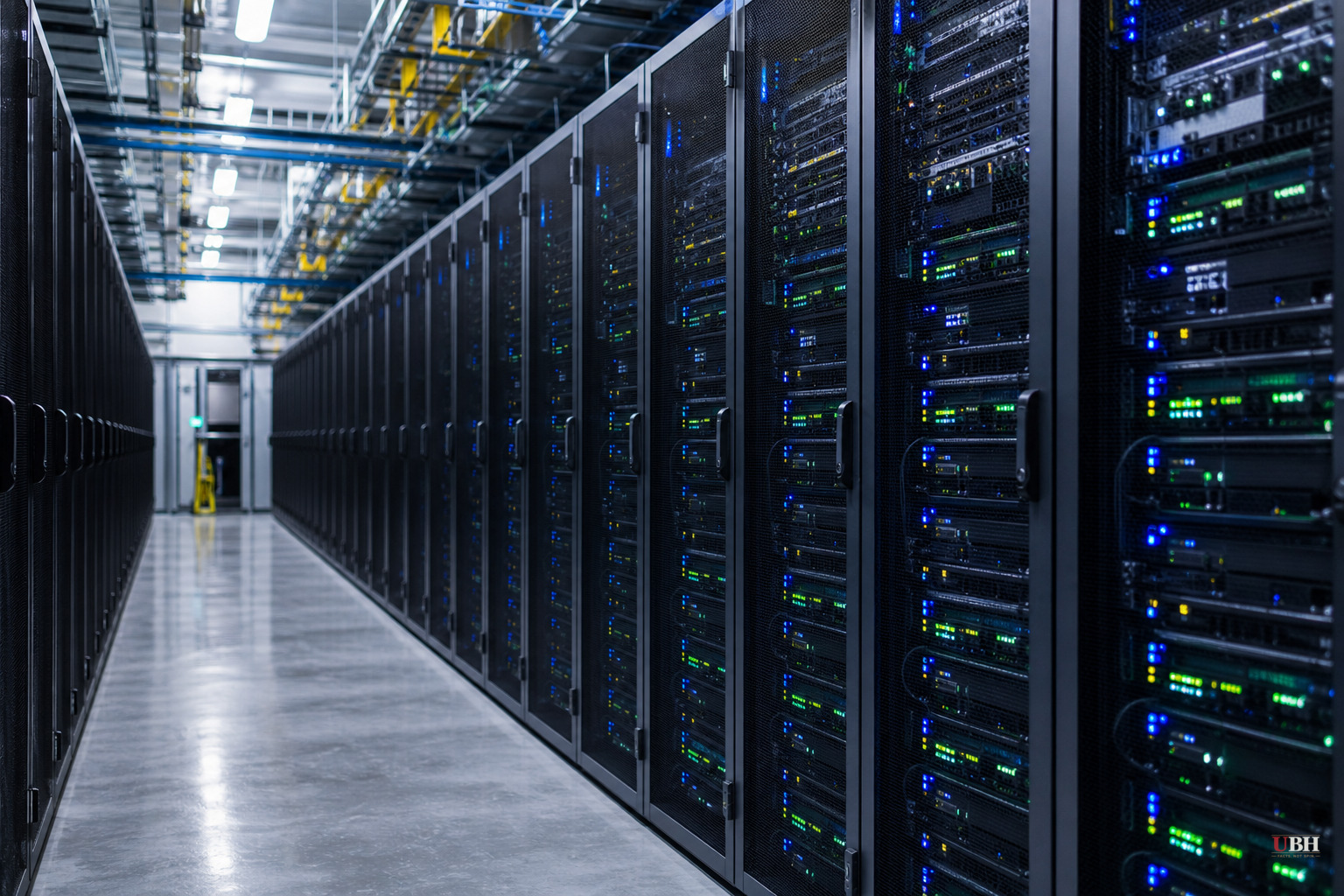
Data centers are now the single biggest driver of rising electricity capacity costs across a huge swath of the country, according to Joseph Bowring, president of Monitoring Analytics, the independent market monitor for PJM Interconnection.
PJM runs the power grid for 13 Mid-Atlantic and Midwestern states plus Washington, D.C. Bowring told Utility Dive that data centers were responsible for $6.3 billion, or 38%, of the $16.4 billion in charges from PJM's most recent base capacity auction. Zoom out to the last four auctions combined, and data centers accounted for $29.4 billion of $63.6 billion in total capacity charges, or 46%.
Monitoring Analytics plans to publish a full breakdown of the most recent auction in the coming weeks. But Bowring's preliminary numbers, shared directly with Utility Dive, are already fueling a political fight over who pays for the AI boom's power appetite.
What a capacity auction actually does
PJM's capacity auctions are how the grid operator secures enough power generation to meet future demand, years in advance. Every utility customer in PJM's footprint pays into this system through their electric bills, whether or not they use a data center's services.
When demand forecasts spike because tech companies are building massive AI and cloud computing facilities, the auction clears at a higher price. That higher price gets spread across all ratepayers, not just the data centers driving the demand.
Bowring's point is that this isn't just about capacity charges. He told Utility Dive that ratepayers are also absorbing higher energy and transmission costs that data center growth has caused. The capacity numbers are just the most quantifiable piece of a bigger cost shift.
"Business as usual" isn't going to cut it, monitor says
"PJM is continuing to act like it's business as usual," Bowring said in an interview. "You have to open your eyes and recognize that it is really a paradigm shift, and failing to do that imposes costs on other customers."
Monitoring Analytics exists specifically to police whether PJM's market rules are producing fair, competitive outcomes. When the grid's independent market monitor says the rules aren't keeping up with reality, that carries weight with state regulators and lawmakers.
The tech pledge that can't be kept under current rules
In March, Google, Meta, Microsoft and other data center operators stood at the White House and pledged to protect ordinary consumers from price hikes tied to their energy and infrastructure needs.
Bowring says that promise is currently impossible to keep inside PJM's existing market structure. "There's only one way to do what hyperscalers agree is the right thing to do, and that is to run a separate auction," he told Utility Dive.
His proposal: create a separate capacity auction just for data centers and other large loads, so their costs are isolated instead of blended into the pool everyone pays into. "That's good for the hyperscalers because it allows them to get capacity and be served reliably, and it's good for other customers because it separates out the impact from the data center," Bowring said.
He also floated a first step, before you even get to a separate auction. Data centers and other large loads should be required to contract for their own generation, rather than relying on the shared capacity market to backstop them.
It's already a political fight in 13 states
This isn't an abstract market design debate anymore. In September, governors from states inside PJM's footprint formed a collaborative specifically to push back on the grid operator over rising costs. That's a bipartisan group of state executives from both parties, organizing against a regional grid operator over electric bills, which tells you how much heat this issue is generating on the ground.
The fairness argument here isn't complicated. Ordinary ratepayers in Ohio, New Jersey, Virginia and elsewhere didn't ask for a data center boom next door, and they're not the ones profiting from it. A hyperscaler's capacity needs get bundled into the same auction as a retiree's electric bill, and the auction price rises for both.
The tech industry's defenders would counter that data centers also bring jobs, tax revenue, and investment to host communities, and that some companies are already signing deals to build or fund their own power generation, including nuclear and gas projects, specifically to avoid straining the shared grid. Whether those private deals scale fast enough to matter is an open question Bowring's numbers don't answer.
What happens next depends on PJM itself, and on the Federal Energy Regulatory Commission, which would have to approve any structural change like a separate data center auction. PJM has not adopted Bowring's proposal. Whether the governors' collaborative, state regulators, or FERC push PJM toward a rule change, or whether the grid operator sticks with its current market design through the next auction cycle, remains unsettled.
Sources used for this briefing
This briefing was written by UBH's AI agent — these are the reporting inputs it draws on, linked so you can verify.


