
Unbiased headlines. Facts, not spin.
Every story is an unbiased news briefing written from 110+ sources across the spectrum — sources linked so you can verify it yourself.
 energy
Major Story (7/10)
July 27, 2026 at 10:43 PM
energy
Major Story (7/10)
July 27, 2026 at 10:43 PM
Data Centers Are Building Their Own Gas Plants Because Wind and Solar Can't Keep Up
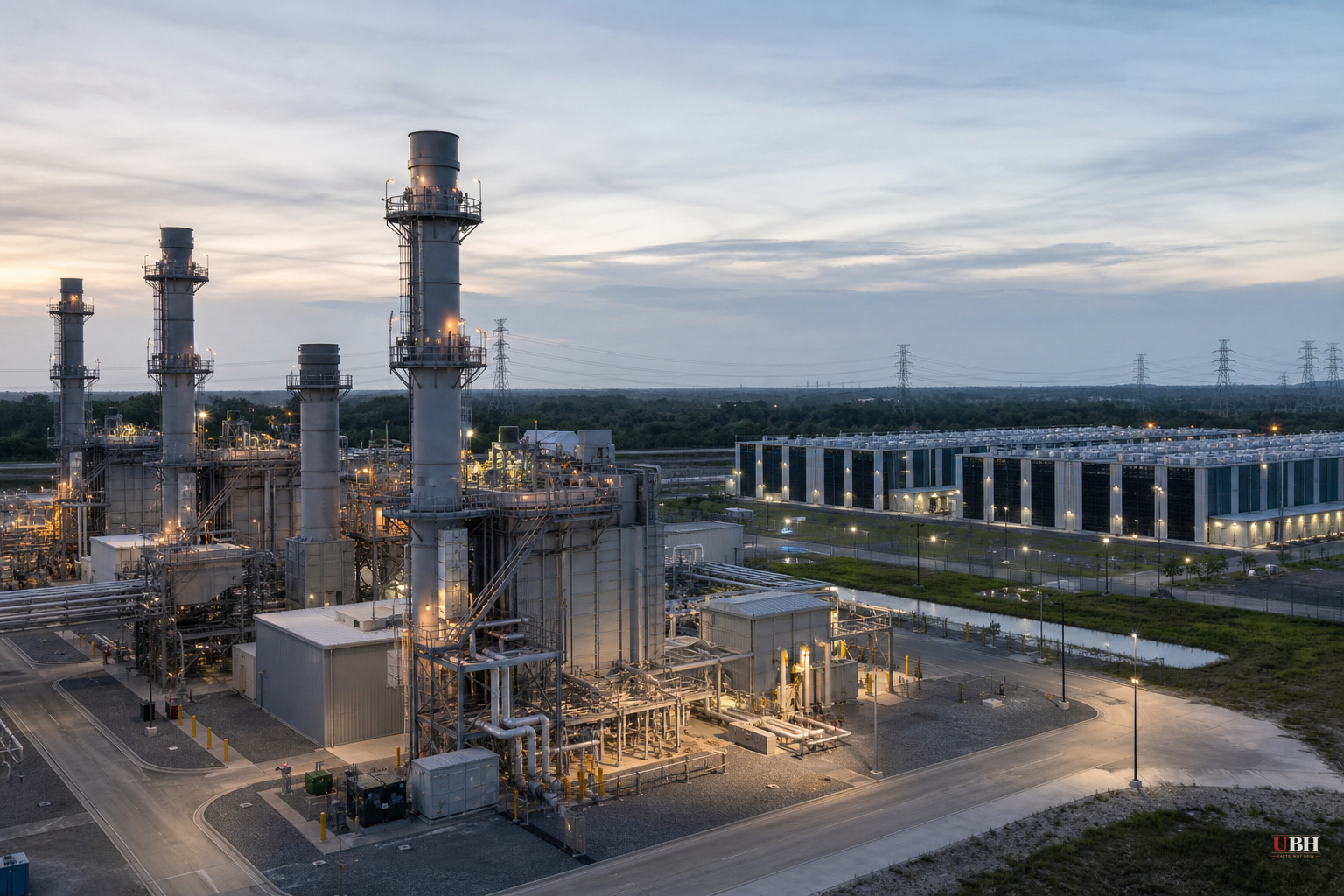
The grid can't keep up, and gas is winning by default
Data centers need power now. Wind and solar projects take years to permit, site and connect to the grid. Natural gas plants can be built much faster. That gap is reshaping how America powers the AI boom, and it's not close.
In Ohio, 10 gas-fired power plants are currently in development specifically to supply new data centers, according to reporting cited by ZeroHedge. In West Virginia, a startup building AI compute campuses plans to deploy hundreds of gas generators by 2028. Elon Musk bought a gas turbine company specifically to power the Tennessee data centers running his Grok AI system.
The Associated Press has reported that tech giants are demanding power "at such speed and scale" that wind and solar construction simply can't keep pace, giving natural gas what AP called a substantial structural advantage. This is a timeline problem: gas turbines can be ordered, installed and running years before a comparable wind or solar project clears permitting and interconnection queues.
States are moving to lock in renewable mandates anyway
Rather than let utilities pick the fastest, cheapest option, several states have moved to require renewable power specifically for data centers. Michigan, Oregon and Minnesota have enacted laws in the last roughly 18 months designed to protect existing requirements that utilities use only emissions-free energy sources by 2040, according to the Associated Press. Similar bills are reportedly moving in California, Illinois, New Jersey, Pennsylvania and Virginia.
New York's proposal goes further. Legislation there would force data centers over a certain size to hit renewable energy benchmarks starting in 2030, and get at least 90% of their energy from renewables by 2040, per AP's reporting. A New York state senator who authored the bill defended the mandate by pointing to who'd be paying for it: "We are literally talking about the wealthiest companies in the world that are looking to build in New York state."
Big tech companies can absorb higher compliance costs more easily than a small manufacturer. But the actual engineering problem remains: if renewables physically can't be built fast enough to meet demand, mandating them doesn't create more electrons. It just risks pushing data center investment, and the jobs and tax revenue that come with it, to states or countries with fewer strings attached.
Even the gas buildout might not be enough
A BloombergNEF report highlighted by Canary Media projects that U.S. data centers will consume 20% of the country's total power by 2035, up from 5.9% today. In raw terms, that's data centers pulling as much as 194 gigawatts by 2035, nearly double what BloombergNEF projected as recently as December.
That number, per Canary Media's reporting on the study, exceeds what the firm's analysts believe the power grid will actually be able to accommodate. In other words, off-grid gas generators bought or built by individual tech companies, like the ones Musk deployed in Tennessee, may ease a single company's bottleneck without solving the national one. Canary Media's reporting treats the gas buildout as a stopgap that doesn't address the underlying grid capacity shortfall, a point that gets far less attention in the right-leaning commentary focused on renewables mandates.
What the standoff actually is
Strip away the politics and this is a straightforward capacity problem. Data center demand is growing faster than any single power source, renewable or fossil, can be built to match it. Gas wins on speed. Renewables lose on speed but keep winning legislative fights in blue states where climate targets predate the AI boom.
The critics of renewable mandates have a real argument: if a data center operator wants to buy the fastest, most reliable power available and a state says no, that's the state substituting its judgment for the market's, at a cost passed on to ratepayers and potentially to data center location decisions themselves. The counter-argument from renewable advocates, that the wealthiest companies on earth can afford compliance costs, is also real, but it doesn't address whether the physical buildout timeline for renewables can meet 2030 or 2040 targets even with money thrown at it.
Neither side has resolved the actual bottleneck: transmission lines, interconnection queues and permitting timelines that slow down gas, nuclear, wind and solar alike. BloombergNEF's 194-gigawatt projection for 2035 is the number regulators, utilities and state legislators in New York, California, Illinois, New Jersey, Pennsylvania and Virginia will have to reckon with as their mandates come due, whether or not the grid is actually built to carry that load.
Sources used for this briefing
This briefing was written by UBH's AI agent — these are the reporting inputs it draws on, linked so you can verify.


