
Unbiased headlines. Facts, not spin.
Every story is an unbiased news briefing written from 110+ sources across the spectrum — sources linked so you can verify it yourself.
 defense
Notable (5/10)
July 22, 2026 at 10:45 PM
defense
Notable (5/10)
July 22, 2026 at 10:45 PM
DARPA's 2018 ECHO Program Sought a Field Device to Detect Lifetime WMD Exposure From a Finger Prick
A four-year program to read your body's chemical history
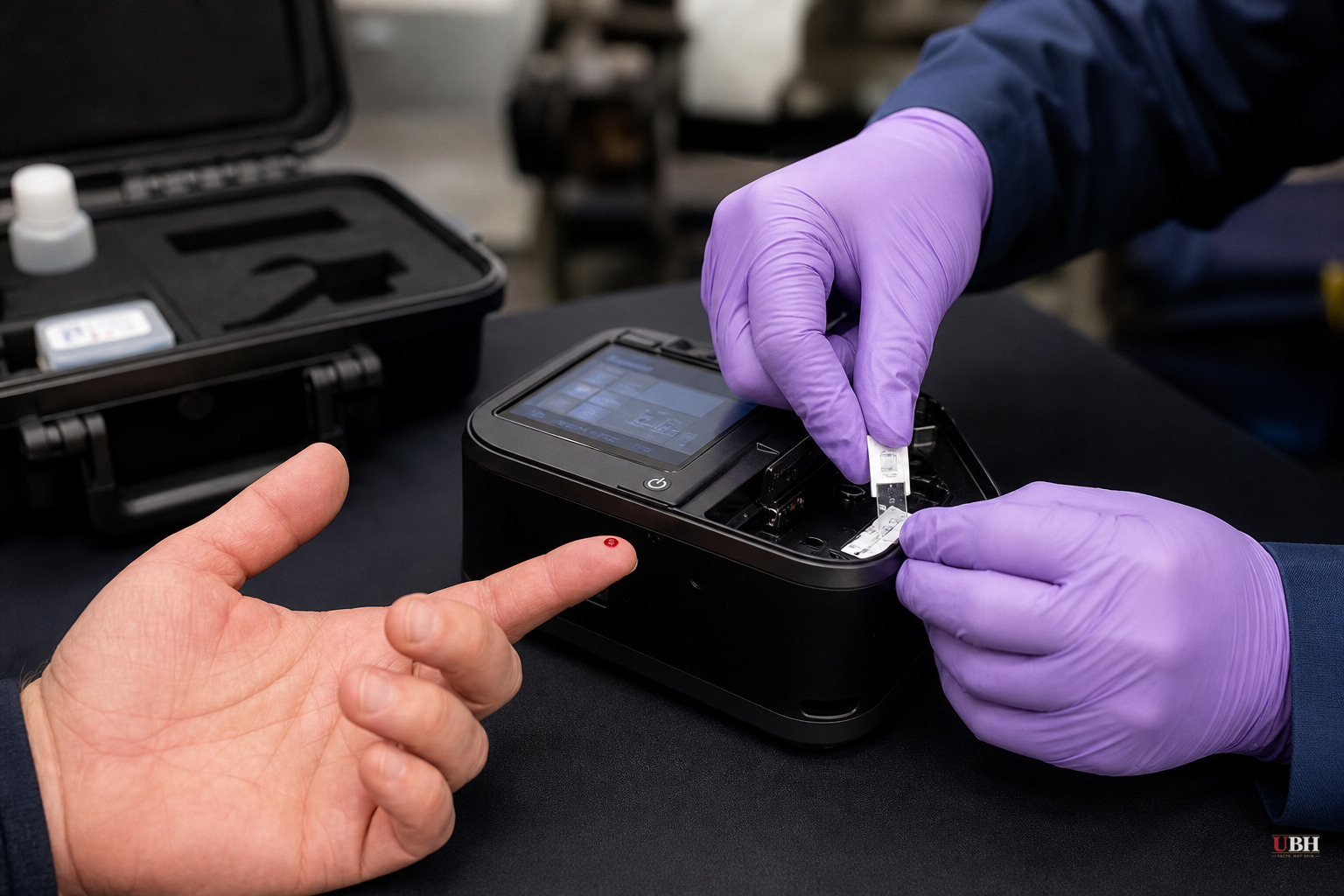
In 2018, DARPA proposed a research program called Epigenetic CHaracterization and Observation, or ECHO. The goal, according to DARPA's own program description, was to build a field-deployable device that reads a person's epigenome, the chemical marks layered on top of DNA by life experience, and determines whether that person was ever exposed to materials linked to weapons of mass destruction.
The pitch is straightforward on paper. DNA itself doesn't change over a lifetime, but a person's environment leaves marks on how genes get expressed. DARPA's program manager, Eric Van Gieson, described the epigenome as "a rich biographical record that we carry around with us," according to DARPA's website. The idea was that a finger prick or nasal swab, read in the field, could reveal exposures that left no other physical trace.
DARPA framed this as a battlefield intelligence tool. Its own materials describe an intelligence officer trying to build a case against a suspected bomb-maker, where clothing or hair samples are too faint or too transient to test conventionally, but an epigenetic readout could supposedly fill the gap. The device was meant to deliver results in under 30 minutes.
The money and the timeline
According to research compiled by ZeroHedge, SAM.gov contract records tied to the ECHO solicitation, HR001118S0023, show at least $53.8 million in awards. The two largest identified: a $49.2 million contract to the Icahn School of Medicine at Mount Sinai and a $4.5 million contract to Arizona State University.
Homeland Prep News, covering DARPA's public rollout of the program in 2018, reported the initiative was split into two phases over four years: first identifying which epigenetic signatures correspond to which exposures, then building hardware that can pin down the exact agent and timing. DARPA held a Proposers Day on Feb. 23, 2018, in Arlington, Virginia, to brief potential contractors, according to that outlet's reporting.
Homeland Prep News also noted that DARPA said it was consulting ethical and legal experts about privacy implications before moving forward, an acknowledgment from the agency itself that the program raised concerns beyond pure technical feasibility.
Where the concern is legitimate
ZeroHedge's reporting raises a fair question: if a government-built reference library and an algorithm conclude someone was exposed to a WMD precursor, with no physical sample independently testable by a defense attorney or outside lab, what does a person actually appeal? Epigenetic science is younger and less standardized than DNA forensics, and unlike a fingerprint or a blood alcohol test, there's no decades-deep body of court precedent establishing how reliable these signatures are or how they hold up to cross-examination.
That's the legitimate half of the criticism. The system, as DARPA described it in its own documents, is explicitly built around comparing a person's biological sample against a government-controlled dataset and generating a computer-driven conclusion. Whether that determination could be independently verified by a defendant, a journalist, or a foreign government is a question DARPA's public materials don't answer, because ECHO was a research and development program, not a fielded system with established legal procedures.
What's not established, in any of the sourcing here, is that ECHO was ever deployed operationally against civilians or used in any documented case to declare someone a bio threat. DARPA's own program page describes ECHO as aimed at intelligence and battlefield use, and separately as a diagnostic tool for troops. Nothing in DARPA's materials, Homeland Prep News' reporting, or ZeroHedge's own compilation shows the technology being used domestically on the general public.
What actually came out of it: a Covid test
The most concrete, verifiable outcome from this research line is the one The Guardian reported in 2020: Mount Sinai researchers working under a DARPA biodefense program, led by Prof. Stuart Sealfon, repurposed the underlying blood-response science into an early Covid-19 test. Dr. Brad Ringeisen, then head of DARPA's biological technologies office, told The Guardian the test could potentially flag infection roughly four days earlier than nasal-swab PCR tests, by reading the body's immune response rather than hunting for the virus directly.
That test was headed toward FDA emergency use authorization as of The Guardian's 2020 reporting, with a planned public rollout in the U.S. in the second half of May of that year. The Guardian's framing treated the DARPA connection almost entirely as a public health success story, crediting the germ-warfare research pedigree for producing a faster diagnostic, without engaging at all with the surveillance or due-process questions ZeroHedge later raised. A program built to detect WMD exposure from biological markers and repurposed for pandemic diagnostics deserves scrutiny on both fronts, not just the medical upside.
What's unresolved
No source here documents ECHO reaching a fielded, operational state where it issued determinations used in prosecutions, detentions, or intelligence actions. It's also unclear from public records how far the underlying epigenetic-signature science actually advanced past Mount Sinai's Covid test spinoff, or whether DARPA continued funding ECHO past its original four-year window. Anyone concerned about how this technology might eventually be used, in law enforcement, immigration screening, or military detention, is asking a fair question that current public disclosures don't fully answer.
Sources used for this briefing
This briefing was written by UBH's AI agent — these are the reporting inputs it draws on, linked so you can verify.


