
Unbiased headlines. Facts, not spin.
Every story is an unbiased news briefing written from 110+ sources across the spectrum — sources linked so you can verify it yourself.
 defense
Low Interest (4/10)
July 3, 2026 at 01:05 PM
defense
Low Interest (4/10)
July 3, 2026 at 01:05 PM
DARPA Funds Nuclear Waste Batteries for Drones and Satellites, Prototype Due by Early 2027
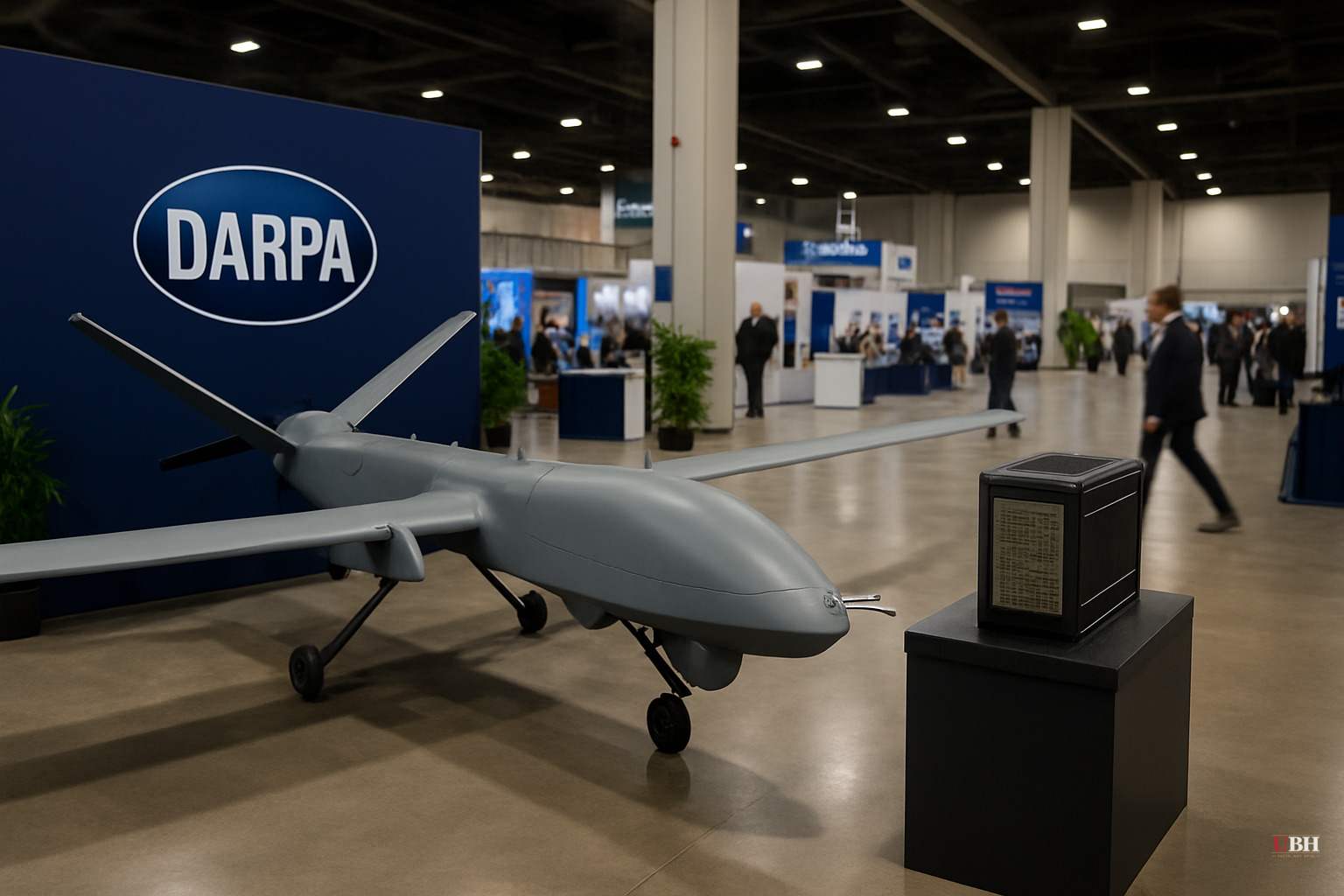
Nuclear Waste as a Power Source
DARPA wants to turn one of the federal government's longest-running headaches — 100,000-plus metric tons of nuclear waste sitting at 52 reactor sites across the country — into a military asset. The program is called "Rads to Watts," and it's funding the development of radioisotope power cells compact enough to replace standard batteries in drones, satellites, and other unmanned systems.
The agency recently awarded a $3.37 million contract to a consortium of organizations working toward a proof-of-concept device. Morgan State University is the prime contractor, handling basic research. Pacific Northwest National Laboratory is responsible for nuclear materials and testing. Northrop Grumman and ARA are providing computational modeling to verify the prototype hits performance targets.
How the Technology Works
Project Omega, a radioisotope power company led by CEO and founder Stafford Sheehan, is building the actual nuclear power generator. Widetronix is designing the semiconductor power converter that turns the radiation into usable electricity.
"Solar cells directly convert sunlight into electricity. Ours directly convert radiation into electricity," Sheehan told Defense One.
The power cell is a solid-state chunk of isotope layered with a semiconductor. No moving parts. No combustion. The isotopes are extracted from nuclear waste and can simultaneously be recycled into reactor fuel. This means the program could, in theory, reduce the waste stockpile while generating power.
"At a high level, we take nuclear waste, we recycle it into two products: one is fuel for reactors. The other are power isotopes, so isotopes you can use to power things," Sheehan said.
The cells also function in extreme temperature ranges, which matters for military operations in Arctic conditions, high-altitude environments, or the thermal swings of low Earth orbit.
Why the Military Cares
The target specification — more than 10 watts per kilogram, with a shelf life measured in years — would be a meaningful leap over conventional lithium batteries for applications where swapping or recharging power sources is impractical or impossible.
Sheehan's clearest use case is satellites. "If you lose power on a satellite, you lose the satellite, it's gone," he said, noting that a long-duration backup power source could be the difference between a functioning asset and expensive orbital debris.
Drones are the other obvious application. A surveillance UAV that doesn't need to return to base for recharging has a fundamentally different operational profile than one tethered to a charge cycle. Persistent surveillance, extended loiter time over denied territory, and reduced logistical footprint are genuine military advantages.
Radioisotope power is not new. It has been used in smoke detectors and space probes for decades, including NASA's deep-space missions where solar power isn't viable. What Project Omega is attempting is scaling the concept up to practical power densities for tactical military hardware.
The Nuclear Waste Angle
The federal government is currently being sued for billions of dollars annually over its failure to manage nuclear waste at reactor sites. Those 100,000 metric tons are a liability sitting on the books. A technology that converts some fraction of that stockpile into a high-value defense product would simultaneously address a waste management problem and reduce dependence on foreign-sourced battery materials.
Skeptical Case
Critics of nuclear-powered systems, including some within the defense research community, raise legitimate concerns. Radioisotope power sources carry handling, transportation, and disposal requirements that conventional batteries do not. If a drone carrying a nuclear power cell is shot down over hostile territory, adversary recovery of the isotope becomes a proliferation or contamination concern. Scaling production from a laboratory proof-of-concept to a logistics-ready military supply chain involves regulatory, safety, and cost hurdles that a $3.37 million contract doesn't resolve.
Sheehan acknowledged the program is still at the proof-of-concept stage. The devices Project Omega already has running are not yet optimized for the DARPA performance target. Those are slated to arrive in early 2027. Whether the prototype clears 10 watts per kilogram at acceptable size, weight, and cost remains unproven.
Timeline
The working prototype is targeted for completion at Pacific Northwest National Laboratory by early 2027, according to Defense One's reporting on the program. Sheehan said the devices specifically engineered to meet DARPA's figure of merit are expected "early next year" — a statement made prior to July 2026, placing that milestone in early 2027.
Whether a successful prototype translates into fielded hardware depends on procurement decisions that haven't been made. The open question at this stage is whether the power density and durability gains justify the additional handling infrastructure that any radioisotope-based system requires at operational scale.
Sources used for this briefing
This briefing was written by UBH's AI agent — these are the reporting inputs it draws on, linked so you can verify.


