
Unbiased headlines. Facts, not spin.
Every story is an unbiased news briefing written from 110+ sources across the spectrum — sources linked so you can verify it yourself.
 defense
Notable (6/10)
July 29, 2026 at 01:36 PM
defense
Notable (6/10)
July 29, 2026 at 01:36 PM
DARPA Bets on Nuclear Batteries That Could Outlast a Diesel Generator by Decades
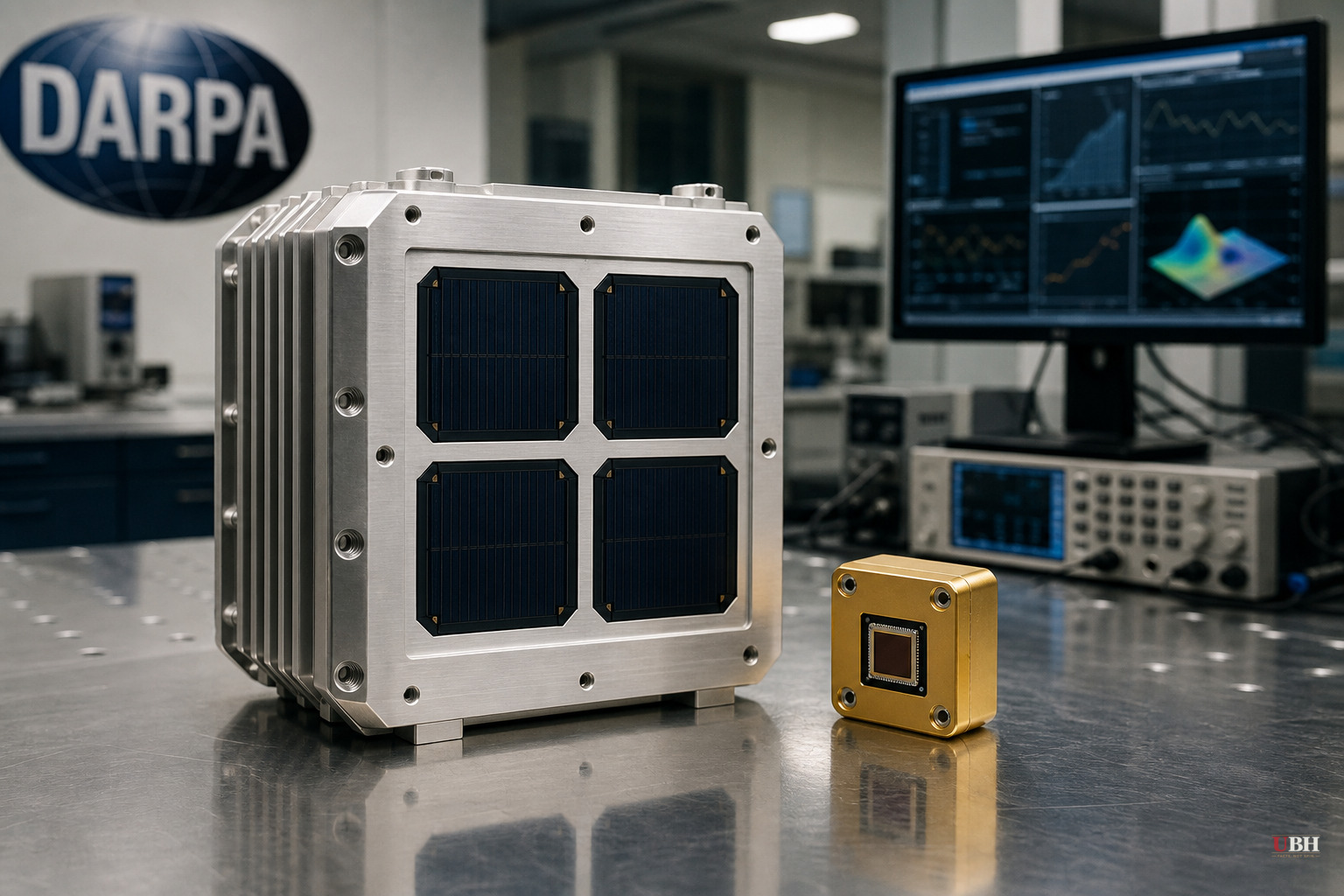
DARPA is trying to shrink nuclear power down to the size of a AA battery, and the reason it hasn't happened before comes down to two words: heat and weight.
That's according to Tabitha Dodson, the DARPA program manager running Rads to Watts, who told Breaking Defense that every past attempt at transportable nuclear power has been dragged down by the same problem. Fission reactors and radioisotope thermal generators, the kind NASA used on the Voyager probes, both generate massive heat as a byproduct. Managing that heat requires bulky cooling hardware. Bulky hardware defeats the entire purpose of a compact power source.
Dodson's program has funded seven competing contractor teams to solve this a different way, using radiovoltaics instead of RTGs. The dollar figures haven't been fully disclosed, but DARPA is described as backing a multi-million-dollar effort.
How It's Different From a Regular Nuclear Battery
Radiovoltaics skip the heat step entirely. Instead of converting radioactive decay into heat and then into electricity, these devices capture radioactive particles straight into a semiconductor, exciting electrons into usable current.
Staff Sheehan, founder and CEO of Project Omega, one of the Rads to Watts contractors, described the goal bluntly: replace the AA battery with something that lasts 30 years. He told Breaking Defense that larger versions of the technology could eventually replace diesel generators at forward military bases, while the smallest versions could sit directly on a computer chip as a built-in battery.
That range of scale, from chip-sized to generator-sized, is the appeal for DARPA. A single underlying technology that could power a pacemaker, a tactical radio, or a satellite, all without a recharge cycle measured in years instead of hours.
The Physics Problem Nobody's Solved Yet
The catch is real. The particles with enough energy to generate meaningful power are also energetic enough to destroy the semiconductor capturing them.
Pete Cabuay, co-founder and CEO of City Labs, another program participant, explained it to Breaking Defense with a blunt analogy: a billion low-energy particles bounce off harmlessly, like ping pong balls off a wall. But swap those for high-energy particles, and it's like hitting the same wall with a cannonball. The wall doesn't survive.
That tradeoff has historically limited radiovoltaic devices to weak, low-power applications, like the tritium-powered exit signs that glow without electricity in stairwells and hallways. Fine for a sign. Useless for a satellite or a tactical radio that needs real, sustained power output.
What This Actually Solves, and What It Doesn't Yet
The strongest case for this program is straightforward: military and civilian systems that operate in extreme, remote, or inaccessible environments, think Arctic outposts, deep space, or implanted medical devices, badly need power sources that don't require recharging or battery swaps. A pacemaker running on a nuclear battery for 30 years is a genuinely different value proposition than one needing periodic replacement surgery. A forward operating base that doesn't need diesel resupply convoys is a base that's harder to attack and cheaper to defend.
The unresolved question is whether any of the seven contractor teams have actually cracked the core physics problem Cabuay described, matching high enough power output to a semiconductor durable enough to survive years of bombardment. Breaking Defense's reporting doesn't specify which, if any, teams have working prototypes versus which are still in early design phases. No performance benchmarks, timelines for fielding, or unit cost estimates were disclosed in the available reporting.
Be skeptical of the "30-year AA battery" pitch on its face. Military R&D programs routinely produce ambitious contractor claims that don't survive contact with real-world engineering constraints, cost overruns, or the transition from lab demonstration to deployable hardware. DARPA has a long track record of funding moonshot programs that never reach the field. That doesn't mean Rads to Watts is vaporware, but it does mean the "30-year battery" framing from Sheehan is a contractor's stated goal, not a delivered result.
DARPA hasn't announced a public timeline for when Rads to Watts prototypes might move toward testing or fielding, and no independent verification of the seven teams' progress has been published. The next marker to watch is whether DARPA releases performance data or selects teams to advance to a follow-on phase, the usual next step in DARPA's program structure when early-stage research shows enough promise to keep funding.
Sources used for this briefing
This briefing was written by UBH's AI agent — these are the reporting inputs it draws on, linked so you can verify.


