
Unbiased headlines. Facts, not spin.
Every story is an unbiased news briefing written from 110+ sources across the spectrum — sources linked so you can verify it yourself.
 energy
Major Story (7/10)
July 30, 2026 at 07:04 PM
energy
Major Story (7/10)
July 30, 2026 at 07:04 PM
Danube Hits Lowest Levels in Decades, Forces Hungary's Only Nuclear Plant Toward Full Shutdown
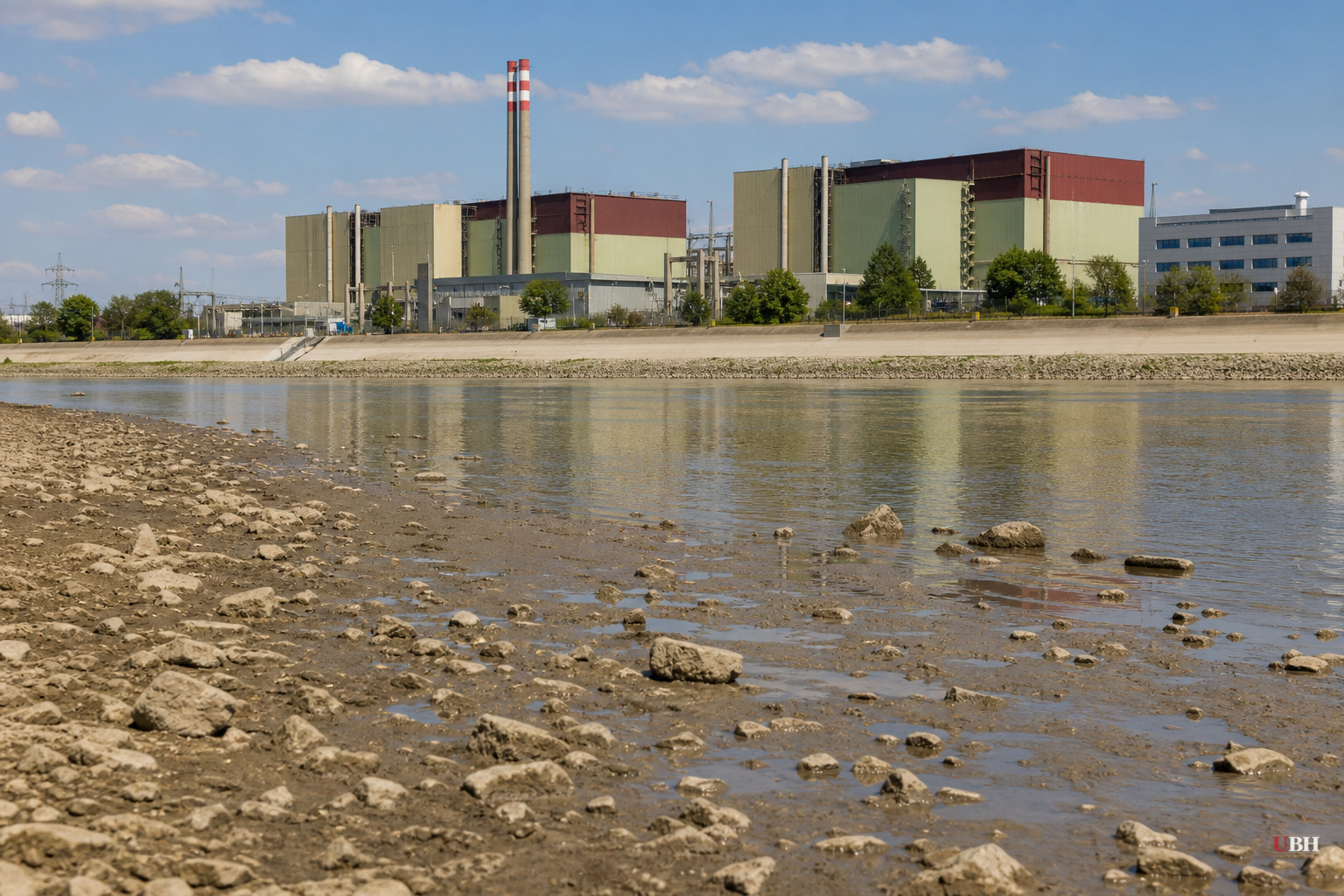
The Danube River is running so low that Hungary's only nuclear power plant may have to shut down completely for the first time in its 44-year history.
Prime Minister Peter Magyar said Thursday, July 30, that the Paks Nuclear Power Plant could be powered down as soon as that day or the next, according to Hungarian news agency MTI. The plant's operator later said a full shutdown would be "unavoidable" within 24 to 72 hours, according to CEEnergyNews.
Paks needs Danube water to cool its reactor condensers. The plant's water intake pumps sit at a fixed height. The river has dropped below that height. There's technically enough water flowing to do the cooling job, but the pumps physically can't reach it anymore, according to the plant's own statement reported by CEEnergyNews. Crews are racing to lower the intake pipes, but the math on the shutdown clock hasn't changed.
How bad is the water situation
The Danube's level is now 28 centimeters below the previous record low set in 2018, according to CEEnergyNews. That's more than a full meter below the 100-year minimum engineers accounted for when Paks was designed over 40 years ago. Nobody built this plant expecting a river this shallow.
Romania's National Institute of Hydrology says the Danube normally flows at 4,700 cubic meters per second in July at the point it enters the country. On Wednesday it was down to 1,600, according to the BBC. The institute expects it to fall further, to 1,500, by next Tuesday.
What's already offline
Paks runs four Russian-built reactors with roughly 2 gigawatts of total capacity and generates nearly half of Hungary's electricity, according to the Straits Times. It started cutting output on July 27 and is already running below 50% capacity, per aa.com.tr.
Next door in Romania, the Cernavoda plant provides about 20% of that country's power. One of its two reactors already shut down earlier this week because of the same low-water problem, according to the BBC. State-owned operator Nuclearelectrica said Thursday its second reactor was still connected to the grid and operating for now, according to the Straits Times, but a full shutdown of both units would mirror what's happening at Paks.
This isn't just an Eastern European problem. France, which gets roughly two-thirds of its electricity from nuclear power, has also had to cut output because its rivers can't supply enough cooling water, the Straits Times reported. Researchers cited in that report say this has become a recurring seasonal risk as climate change drives more frequent heat and drought.
Engineering constraints and safety
Critics of rapid nuclear buildout have long argued that cooling-water dependency is a real vulnerability. Paks was designed around a 100-year minimum water level that the Danube has now blown past by over a meter, according to CEEnergyNews's own account of the plant's engineering assumptions. Infrastructure built on historical climate assumptions can be overtaken by conditions those assumptions never priced in. This is what the plant operator itself is saying happened.
At the same time, the operator insists the reactors can be kept safe even in a full shutdown. Standby pumps, 12 of which can run continuously with four more in reserve and 13 on standby, will maintain cooling on the idle units using a fraction of the water needed during normal operation, roughly 5 cubic meters per minute versus 100 cubic meters per second at full output, according to CEEnergyNews. Restarting could take just a few days once water levels recover.
What happens next
Magyar is telling Hungarians to cut electricity use between 5 p.m. and 10 p.m., avoid charging EVs and running AC during peak hours, and is warning of possible rotating blackouts if voluntary cuts aren't enough, according to the BBC. Hungary has 3,600 to 3,800 megawatts of import capacity to cover the gap if Paks goes fully dark, Magyar said, according to the Straits Times.
Forecasters expect Hungary's peak temperature Thursday to hit 35 degrees Celsius, nearly 9 degrees above the normal high for this time of year, per Reuters Climate Monitor data cited by the Straits Times. That heat is exactly what's driving the air-conditioning demand straining the grid at the same moment supply is getting cut. Whether Paks actually reaches a full shutdown in the next three days, or whether crews get those intake pipes lowered in time, remains an open question the plant's own operator says will be resolved within days, not weeks.
Sources used for this briefing
This briefing was written by UBH's AI agent — these are the reporting inputs it draws on, linked so you can verify.


