
Unbiased headlines. Facts, not spin.
Unbiased Headlines is an independently owned news organization. We bring you the facts, not opinions, written fresh from 110+ named sources. Sources linked so you can verify it yourself.
 finance
Low Interest (4/10)
Event date: November 14, 2026 ·
Czech National Bank Completes Tokenized Koruna Bond Tests, With Cash Settlement Method Undisclosed
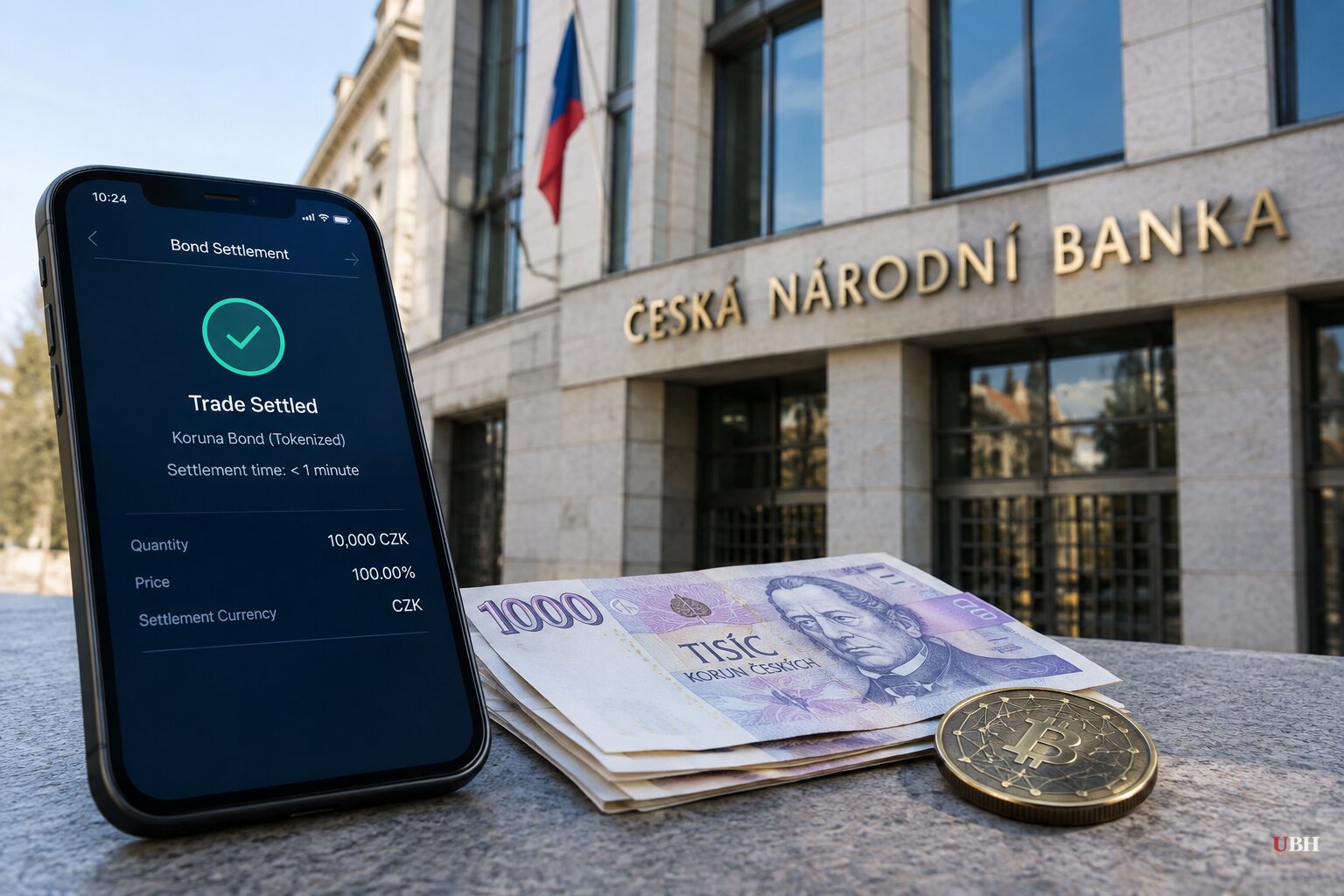
The Czech National Bank (CNB) announced on Nov. 10 that it had issued koruna-denominated bonds in tokenized form using distributed ledger technology (DLT) and run them through a full lifecycle of tests. Five days later, the open questions are about the money, not the bonds.
What the CNB tested
The work ran through CNB Lab, the bank's in-house innovation unit. The bonds sat on a DLT platform operated by the Central Securities Depository, CSD Prague. That platform was the first infrastructure in the European Union to receive a license under the EU's DLT Pilot Regime.
During October and November, the CNB tested simple transfers, purchases and sales against payment, interest payments and repo transactions. According to the CNB, everything settled almost instantly.
Each bond had a nominal value of CZK 10,000. Total test volume came to tens of thousands of koruna. That is a rounding error in a sovereign bond market.
The CNB said the tests confirmed the instruments' end-to-end lifecycle, and that getting there required changes to contracts and rules. Česká spořitelna was the only commercial-bank counterparty, as Governor Michl said in a Nov. 10 speech.
The CNB also said that, as part of testing its reserve management, it bought a euro-denominated government bond that exists only on DLT.
Closed network, small scale
Access to the network is limited to approved financial institutions, the CNB says. Only the counterparties to a transaction can see its records. This is a permissioned setup, not an open public blockchain.
Michl described the project as part of preparing financial infrastructure for the future. He said the central bank should be conservative in monetary policy and innovative everywhere else.
He has two stated goals. One is a much larger market for koruna-denominated assets that trade more easily than alternatives such as German Bunds. The other is that settlement of tokenized securities should rest on central bank money, not private instruments.
A test of tens of thousands of koruna with one commercial bank does not by itself deliver the first goal.
The cash leg is the open question
The CNB has not said how the cash side of the trades was settled. It has not identified the cash instrument used in the pilot.
A Nov. 5 presentation by Michal Vodrážka, the CNB's payments-regulation director, said settlement in CNB money on DLT was not yet available. The Nov. 10 announcement did not say whether that had changed. The same presentation said the CNB Board has made no decision to issue a Czech retail central bank digital currency.
The distinction matters because a bond on a shared ledger does not determine who supplies the money used to buy it. CSD Prague's general transfer guidance says receipt of the buyer's money triggers the securities transfer and generates a payment order to the seller. Whether the seller is credited quickly then depends on the receiving bank, its support for instant payments and the timing of the transfer.
Stablecoins and the euro-area comparison
CryptoSlate argued that Michl's preference for public-money settlement could limit the institutional payment balances available to stablecoin issuers. If eligible institutions can pay through usable central-bank-money infrastructure, that outlet's analysis goes, tokenized-bond trades would not need to generate stablecoin demand. CryptoSlate itself notes the point is forward-looking, since the CNB has not named the pilot's cash instrument.
The CNB's own lab has not been hostile to private tokens. A year ago it began testing Bitcoin, a dollar stablecoin and a tokenized deposit.
The euro area is further along on the cash side. The Eurosystem launched Pontes on Sept. 21 to settle wholesale tokenized-asset transactions in central bank money. An initial group of market participants and DLT operators has completed onboarding, with more expected. In an Oct. 29 speech, the ECB laid out plans to extend Pontes operating hours substantially by mid-2027 and to offer round-the-clock availability in 2028.
Pontes handles euro only. Ledger Insights noted that the koruna therefore needs its own route to central bank settlement on a ledger.
What comes next
The CNB has announced no timetable for moving beyond the pilot. It has not said when it would issue tokenized bonds at real scale, or open the platform to more counterparties than Česká spořitelna. Nor has it said when koruna settlement in central bank money on DLT would become available.
That last piece is the one Michl himself says the system depends on.
Sources used for this briefing
7 links from 7 independent newsrooms (syndicated copies of the same report count once)
These are the sources it draws on, linked so you can verify.


