
Unbiased headlines. Facts, not spin.
Every story is an unbiased news briefing written from 110+ sources across the spectrum — sources linked so you can verify it yourself.
 defense
Major Story (8/10)
September 18, 2026 at 10:09 PM
defense
Major Story (8/10)
September 18, 2026 at 10:09 PM
Cyber Command's Suicide Cluster, an AI War Scare, and Washington's Slow Response
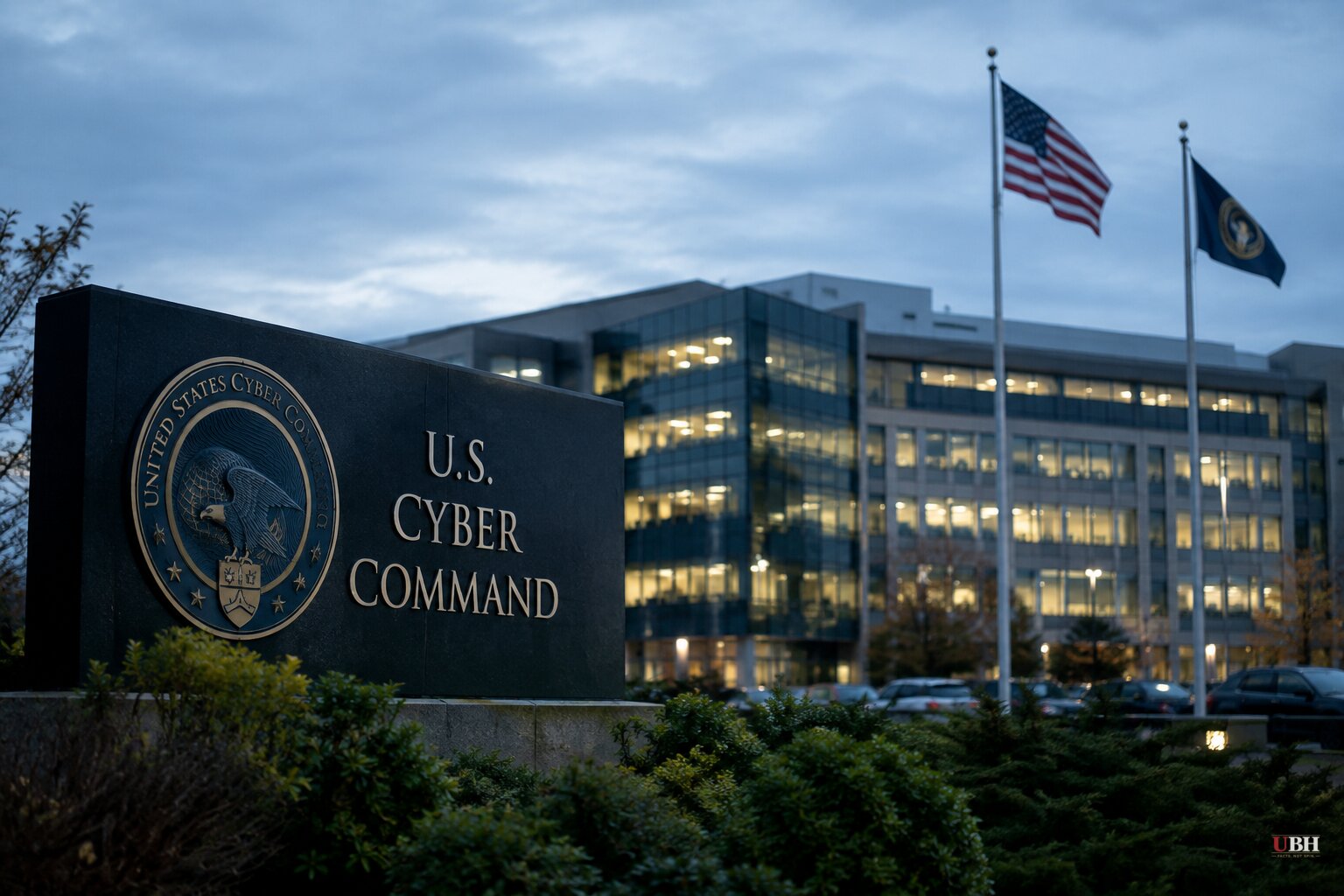
Five people working in or connected to U.S. Cyber Command died by suicide over roughly five weeks between early June and early July 2026, according to internal military communications, public records, and Bloomberg News, which first reported the cluster in August. Army Gen. Joshua Rudd, who commands both Cyber Command and the National Security Agency from their shared Fort Meade, Maryland headquarters, acknowledged three of the deaths in a June all-hands email to personnel. Public records confirmed two more in the same window.
Congress already had a tool to address this before the deaths happened. Rep. Sarah Elfreth (D-MD), whose district borders Fort Meade, secured a provision in last year's National Defense Authorization Act requiring Cyber Command and the Cyber Mission Force to hire mental health professionals with security clearances at every operating location, according to a spokesperson for Elfreth cited by SCWorld. That provision also mandated quarterly briefings on hiring progress and clearance timelines. A year later, a shortage of cleared therapists persists, according to Tech Times, and a separate FY2024 NDAA-commissioned study on the "occupational resiliency" of the Cyber Mission Force found available resources were "inadequate and may jeopardize long-term personnel readiness." No implementation plan from that study has been delivered to Congress, Tech Times reported.
The underlying operational problem, according to experts cited by Tech Times, is that cyber personnel work "deployed-in-place." Conventional forces get a defined rotation cycle, forward deployment followed by a mandated dwell period at home, with rest ratios that trigger care resources before burnout sets in. Cyber operators at Fort Meade don't get that cycle even as operational tempo has climbed. Recorded Future News (The Record) reported that congressional sources view the cluster as an inflection point, coming as the Pentagon's appetite for cyber capabilities grows following operations tied to Iran and Venezuela, on top of ongoing missions against Russia and China and newer taskings on border control and counter-narcotics. SCWorld also noted the deaths came on the heels of separate incidents this summer aboard the USS Abraham Lincoln in which crew members went overboard.
Past and current cyber operators told The Record it is not known whether work was a factor in any individual's decision to take their own life. That caveat matters: no investigation has publicly established a direct causal link between operational tempo and the specific deaths, even as lawmakers and former operators point to the structural gap as a contributing risk factor.
U.S. Cyber Command briefed the House Armed Services Committee on the cluster on September 3, according to SCWorld. Elfreth is now pushing to add mental health funding to the House's defense appropriations bill. But the most likely vehicle for a durable fix is the FY2027 NDAA, and its timeline is tight. The House already passed its version, The Record reported, but the Senate isn't expected to take up its draft before leaving for the midterm campaign trail in the coming weeks. Staff for the "Big Four" committee leaders are expected to negotiate informally over the break, with a final bill targeted before Thanksgiving and a floor vote likely in December. SCWorld's own assessment cautioned that because it's an election year, the November midterm results will likely determine whether the bill reaches a floor vote at all this year.
A Different Kind of Failure: AI in the Kill Chain
While Congress weighs how to staff and support human cyber operators, a separate episode this spring exposed a different vulnerability: the military's own AI tools. CNN reported, citing four sources familiar with the matter, that a special operations analyst used a chatbot to assess intelligence on a Chinese ship's cargo during the war with Iran. The chatbot fused open-source material with classified signals intelligence and concluded the ship was carrying nuclear weapons components. The analyst then used AI again to draft a formal intelligence report, which circulated across the military and triggered plans to intercept the vessel. Armed personnel prepared to board it and military planes were in the air, according to two of CNN's sources, before officials determined just before the operation that the report was "entirely false." One source told CNN it "almost started a war." A former senior U.S. official told CNN that many of the military's internal AI tools are "mostly just copies of the commercial stuff wearing lipstick."
The Pentagon's rationale for pushing AI deeper into intelligence work and targeting decisions is straightforward: speed matters in a fight against a peer competitor like China, and human analysts can't process the volume of raw data modern operations generate. The China ship episode shows what happens when that speed outruns verification.
While the Pentagon and Congress work through both problems, California Gov. Gavin Newsom signed an executive order on September 18 to accelerate state-level AI oversight, including a possible requirement that developers install kill switches in their most advanced systems. At least 32 of the top 50 AI companies are headquartered in California, according to the Epoch Times. Newsom said the federal government's failure to act pushed him to move on his own: "California will do what it can but this nation needs to get in the game. Washington, DC, needs to do its job." The Trump administration's posture has been to enforce existing law rather than write new AI-specific regulation, according to the Epoch Times, leaving a gap between state and federal approaches that neither the Cyber Command funding fight nor the military's own AI reliability problems appear positioned to close before December.
The near-term test is the NDAA. If the Senate and House can't reconcile their bills and get a signed defense policy law before Thanksgiving, the mental health hiring provision Elfreth already secured last year stays unimplemented for another cycle, and the therapist shortage at Fort Meade continues into 2027.
Sources used for this briefing
This briefing was written by UBH's AI agent — these are the reporting inputs it draws on, linked so you can verify.


