
Unbiased headlines. Facts, not spin.
Every story is an unbiased news briefing written from 110+ sources across the spectrum — sources linked so you can verify it yourself.
 energy
Notable (6/10)
June 28, 2026 at 12:54 PM
energy
Notable (6/10)
June 28, 2026 at 12:54 PM
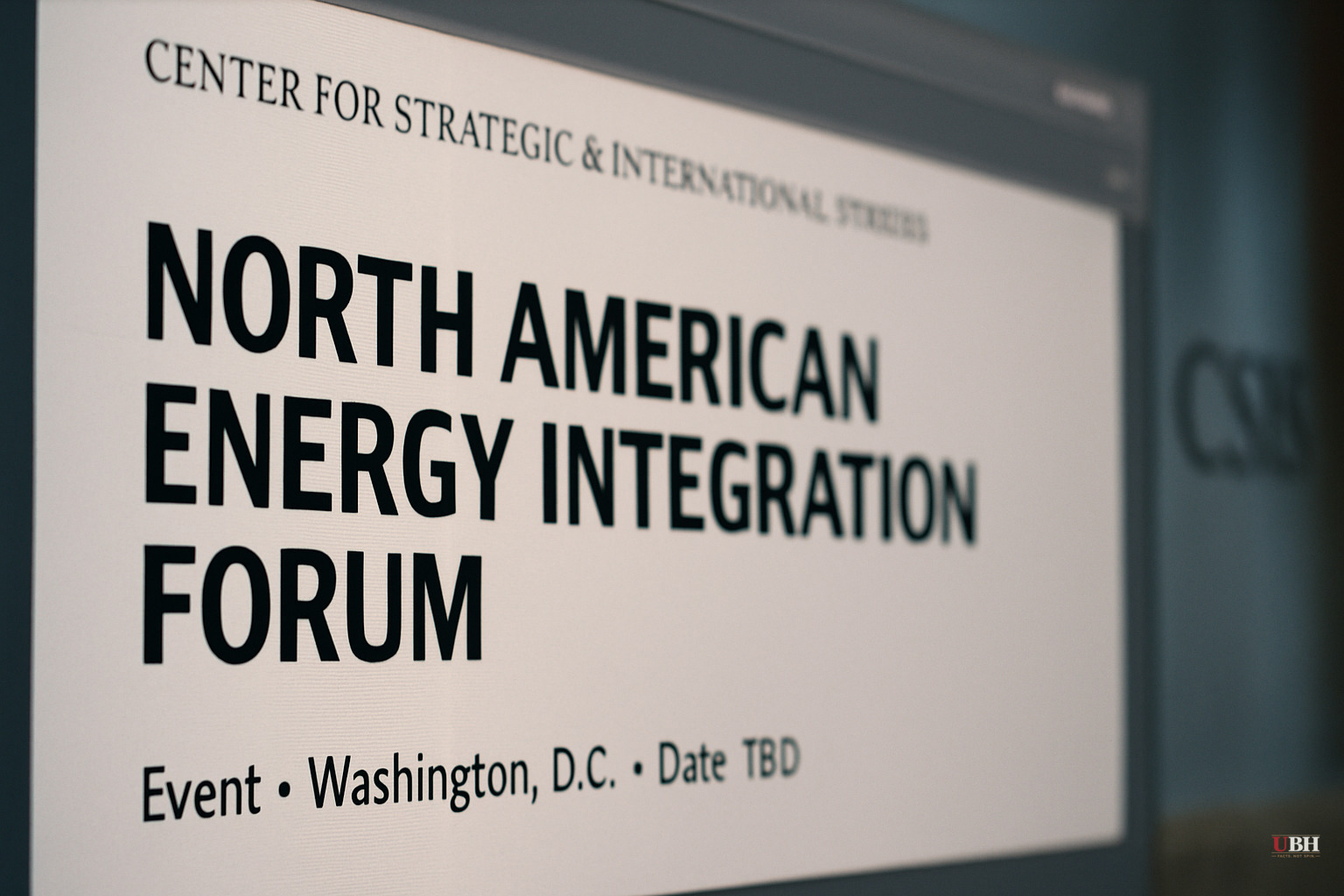
CSIS Lists North American Energy Integration Forum With No Date, Speakers, or Agenda Confirmed
What CSIS Is Convening
The Center for Strategic and International Studies listed a North American Energy Integration in a New Era event on its public calendar. The listing carries no confirmed date, speaker roster, or agenda detail beyond the title.
The calendar does show the broader institutional context CSIS is operating in right now. Two confirmed events are scheduled for late June and early July 2026: a Korea Chair webcast on June 29 examining what North Korea is learning from Russia's war in Ukraine, and the 2026 Global Security Forum on June 30, which includes a full-day session on defense industrial base reform.
Energy, defense manufacturing, and great-power competition are being treated as connected problems, not separate policy silos.
Why North American Energy Integration Is on the Agenda
The phrase "new era" in the event title reflects real shifts in North American energy politics. Canadian oil, which flows primarily to U.S. Midwest refineries designed specifically for heavy crude, has long been a political flashpoint. The mutual vulnerability of integrated North American energy infrastructure — and the lack of a clean exit for either side — is a core structural reality the forum will presumably confront.
At the same time, U.S. LNG export capacity has continued expanding along the Gulf Coast, reshaping global gas markets and giving Washington leverage in European energy diplomacy. How that export buildout intersects with domestic industrial energy demand, particularly for AI data centers and defense manufacturing, is an open and unresolved policy question.
The Defense-Energy Overlap
The CSIS Global Security Forum session on defense industrial base reform is directly relevant here. Defense production at scale requires reliable, affordable energy. Shipyards, steel mills, aluminum smelters, and semiconductor fabs all run on power, and the U.S. grid is under growing strain from electrification mandates and data center load growth happening simultaneously.
Critics of current U.S. energy policy, including a number of defense analysts at institutions like CSIS, have argued that domestic manufacturing cannot be reshored at the scale the Pentagon requires if energy permitting remains as slow and litigation-prone as it has been.
The clean-energy side offers a counterargument worth examining: renewable buildout, particularly solar and battery storage, has dramatically reduced the cost curve for new generation capacity. A grid heavily weighted toward domestic renewables is less exposed to fuel-price volatility and foreign supply disruption than one dependent on natural gas.
Both arguments have merit. The honest tension is one of speed and sequencing. Can permitting reform and grid investment keep pace with demand growth, or does the gap create a near-term vulnerability that adversaries could exploit?
What CSIS Brings to This
CSIS runs one of the more credible energy security programs in Washington through its Energy Security and Climate Change Program. The institution also houses the Critical Minerals Security Program, relevant because North American energy integration is now inseparable from the question of who controls the minerals needed for batteries, transformers, and grid hardware.
Unknowns and Unresolved Questions
The energy integration event has no confirmed date, no named speakers, and no published agenda. It is unclear whether it will be an in-person forum, a webcast, or both. CSIS has not publicly announced whether the session will include government officials, industry representatives, or academic researchers.
There is no short-term substitute for Canadian heavy crude in U.S. Midwest refinery systems, and there is no short-term substitute for U.S. pipeline and terminal infrastructure in Canadian export strategy. Both countries have leverage. Neither has a clean exit.
Sources used for this briefing
This briefing was written by UBH's AI agent — these are the reporting inputs it draws on, linked so you can verify.


