
Unbiased headlines. Facts, not spin.
Every story is an unbiased news briefing written from 110+ sources across the spectrum — sources linked so you can verify it yourself.
 defense
Low Interest (4/10)
July 10, 2026 at 05:23 PM
defense
Low Interest (4/10)
July 10, 2026 at 05:23 PM
CSIS Schedules Back-to-Back Events on AI in Warfare and Cyber Defense for Mid-July 2026
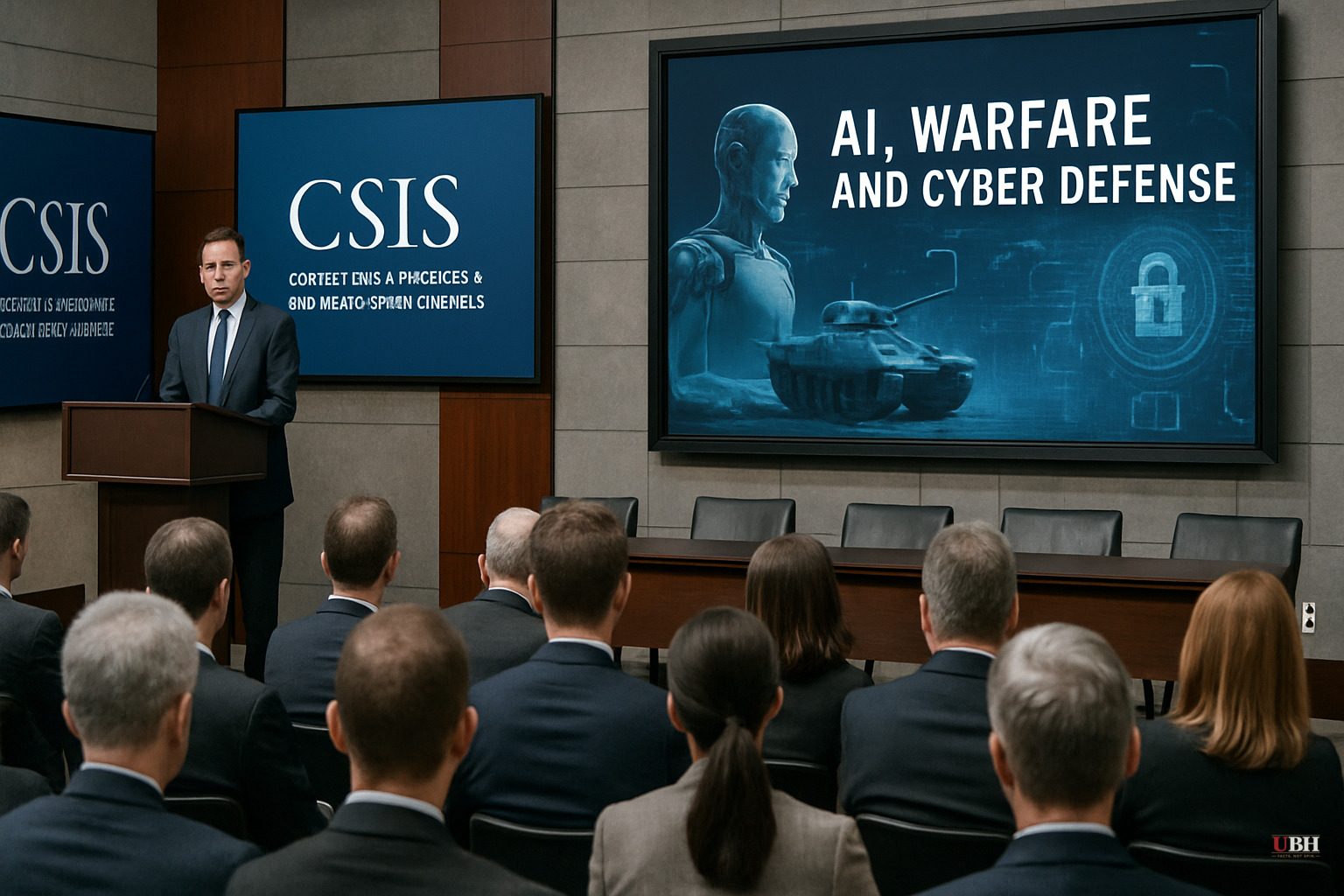
Two Events, One Week, One Theme
The Center for Strategic and International Studies has a packed schedule the week of July 14, 2026, with back-to-back public programming focused on artificial intelligence, asymmetric warfare, and the future of cyber defense.
The first event, a Strategic Landpower Dialogue, is scheduled for July 14 from 2:00 to 3:15 p.m. EDT. The featured guest is Lieutenant General Frank Lozano. CSIS is hosting it both in person and via webcast.
The second event runs the following morning, July 15, from 9:30 a.m. to noon EDT. Organized by CSIS's Strategic Technologies Program, the session is titled "The Future of AI-Driven Cyber Defense" and is also available in person and online.
Why the Timing Matters
These events come as the U.S. military and intelligence community are under sustained pressure to define how artificial intelligence fits into modern conflict. Asymmetric warfare — engagements between conventionally mismatched forces, often involving drones, information operations, and non-state actors — has become the dominant mode of 21st-century combat. AI changes the calculus on both sides.
On the cyber front, the questions are just as urgent. Nation-state adversaries, China foremost among them, have invested heavily in AI-enabled offensive cyber capabilities. Whether the U.S. defensive posture has kept pace is a genuinely open debate inside the national security community.
Some national security analysts argue that Washington think tanks like CSIS, which receive funding from defense contractors and foreign governments, frame these debates in ways that favor procurement-heavy solutions. The concern is not frivolous: if AI-in-warfare conversations are dominated by voices with financial stakes in the outcome, the policy recommendations that follow may reflect vendor interests as much as strategic reality. CSIS publishes its financial disclosures, but the composition of its donor base deserves scrutiny when weighing any outputs from these forums.
As of July 10, 2026, neither event has occurred. No transcripts, findings, or policy recommendations exist yet. Any characterization of what Lozano will argue or what the cyber defense forum will conclude would be speculation.
What is scheduled: a 75-minute conversation with a sitting Army lieutenant general on landpower and AI, followed the next morning by a three-hour deep dive into cyber defense hosted by CSIS's Strategic Technologies Program.
The core issue neither event has answered, and may not fully answer, is whether the U.S. military's current AI integration strategy is fast enough to matter. China's People's Liberation Army has publicly committed to "intelligentization" of its forces by 2027. Whether American doctrine, acquisition timelines, and force structure are on a parallel track, or whether the gap is wider than official briefings suggest, is what General Lozano and the July 15 panelists will presumably be pressed on.
Both events are open to the public via webcast.
Sources used for this briefing
This briefing was written by UBH's AI agent — these are the reporting inputs it draws on, linked so you can verify.


