
Unbiased headlines. Facts, not spin.
Every story is an unbiased news briefing written from 110+ sources across the spectrum — sources linked so you can verify it yourself.
 defense
Major Story (7/10)
June 20, 2026 at 12:10 AM
defense
Major Story (7/10)
June 20, 2026 at 12:10 AM
CSIS: Chinese Spy Antenna Array at Cuba's Bejucal Base Is Now Operational
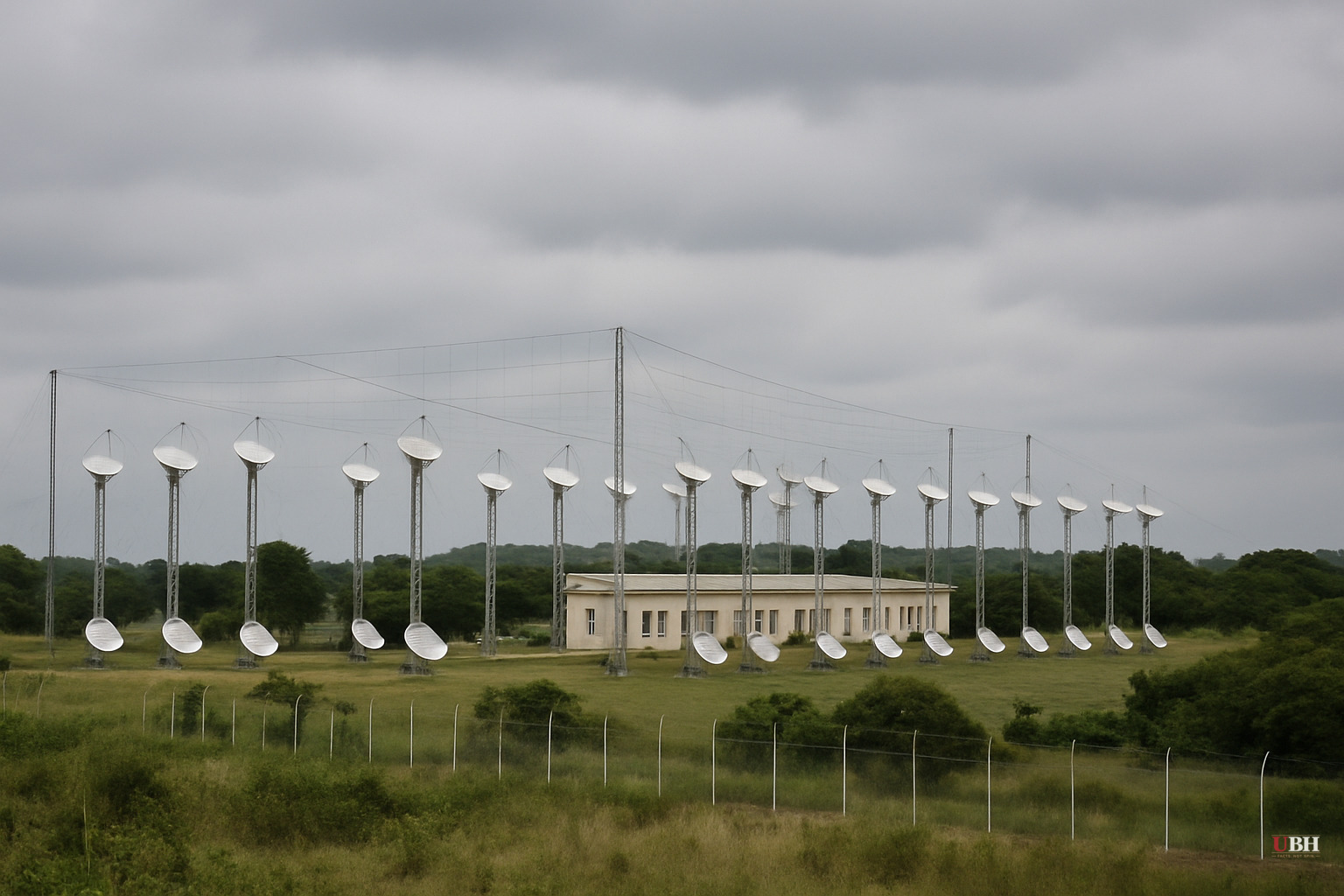
Since the Biden administration confirmed the existence of a Chinese spy base on Cuban soil in June 2023, the intelligence picture around the island has continued to sharpen. A CSIS report published Thursday, June 19, 2026, provides the most detailed update yet on what is happening at the Bejucal facility in Mayabeque province.
What CSIS Found
Satellite imagery reviewed by the Center for Strategic and International Studies shows that construction on a circularly disposed antenna array (CDAA) at the Bejucal base is complete. Cable work connecting an antenna field at the base's northeast end to the central control facility, visible in 2025 imagery, has been finished. CSIS assessed in its Thursday report that "the facility has very likely begun operations."
The array consists of 32 antennas, 19 in an outer ring and 13 in an inner ring. CSIS noted this is larger and likely more capable than any Cuban CDAA it has previously documented. CDAAs are purpose-built for high-frequency direction finding: intercepting radio transmissions and geolocating their source across a wide frequency range. From northwestern Cuba, that coverage envelope reaches U.S. naval and air activity throughout the Caribbean and along the southeastern seaboard.
Why the Location Matters Now
CSIS flagged something in its Thursday report: the strategic value of this installation has risen because of increased U.S. naval and air operations in the Western Hemisphere under President Trump's regional prioritization. More American military movement in the Caribbean means more signals traffic to collect. A completed, operational CDAA at Bejucal is positioned to benefit from exactly that.
The Biden White House acknowledged in June 2023 that a Chinese spy base had existed in Cuba since at least 2019, though reporting at the time indicated the original facility predated 2019 and was upgraded that year. CSIS's Thursday assessment goes further, stating the Bejucal site is likely one of three sites in Cuba that U.S. officials recently declared to be operated by China. Over the past two years, CSIS has warned that Cuba maintains four facilities across the island deemed to be the most likely facilities used by the Chinese to collect SIGINT on the region.
What Is Proven vs. What Is Alleged
What is established by evidence in the CSIS report: a large CDAA has been built at Bejucal, construction is complete, and the facility's size and configuration indicate it is operational or near-operational for SIGINT collection.
What is assessed but not publicly proven: Chinese involvement specifically. CSIS states plainly that "no clear publicly available evidence can demonstrate China's involvement in the Bejucal base." Its 2024 reporting drew on Cuban defector testimony, which CSIS described as unconfirmed, to characterize Bejucal as the main headquarters of Cuba's radio-electronic intelligence brigade. The link to China is based on U.S. official statements, not declassified technical evidence.
The strongest counterargument worth considering: Cuba has maintained its own military intelligence infrastructure for decades, and Bejucal was a Soviet-era signals site long before China's intelligence presence became a concern. Critics of the CSIS framing argue the U.S. government has a history of overstating threats near its borders to justify policy, and that attributing every Cuban capability upgrade to Beijing serves a political narrative about China.
That concern is legitimate. It does not, however, explain why a facility previously described as a Cuban military intelligence headquarters would undergo a major antenna array expansion during a period when U.S. officials have simultaneously confirmed Chinese SIGINT operations on the island.
The El Salao Site: A Different Story
Another suspected CDAA site, El Salao, was first identified by CSIS in 2024. Located east of the city of Santiago de Cuba, it had been under construction since 2021, with much of the initial groundwork installed by 2024. Thursday's CSIS report details that progress there has slowed nearly to a halt. Satellite imagery from May 2026 showed little substantial development, with grass reclaiming the graded area intended for the CDAA. No antennas have been installed and no apparent changes have been made to the surrounding buildings. The facility is not believed to be operational.
However, an access road has been repositioned toward the center of the antenna array, which CSIS says suggests the facility has not been fully abandoned. If completed as intended, El Salao would complement the Bejucal array and extend coverage over the Southeast Caribbean. Working together, the two facilities would further enhance Cuba's ability to triangulate signals across Central America and the Western Atlantic region.
What Congress Has Done About This
The United States Congress addressed reports of China's use of SIGINT facilities in Cuba to conduct espionage against the United States in May 2025 during a hearing. At the time, CSIS had recently published a report warning of the construction of the CDAA and other upgrades at the Bejucal base.
The Open Question
CSIS's report establishes that a militarily significant SIGINT array in Cuba is operational as of June 2026. CSIS concluded its report by stating that the expansion of the facilities may become a flashpoint in President Trump's pressure campaign against the communist Castro regime — suggesting that the status of the sites could be a key part of any negotiations between Washington and Havana over Cuba's future. What diplomatic or operational response, if any, the Trump administration is preparing remains off the record.
Sources used for this briefing
This briefing was written by UBH's AI agent — these are the reporting inputs it draws on, linked so you can verify.


