
Unbiased headlines. Facts, not spin.
Every story is an unbiased news briefing written from 110+ sources across the spectrum — sources linked so you can verify it yourself.
 energy
Notable (6/10)
July 14, 2026 at 03:04 AM
energy
Notable (6/10)
July 14, 2026 at 03:04 AM
Crude Prices Crashed Back to Pre-War Levels. Refiners Are Pocketing the Gap Anyway.
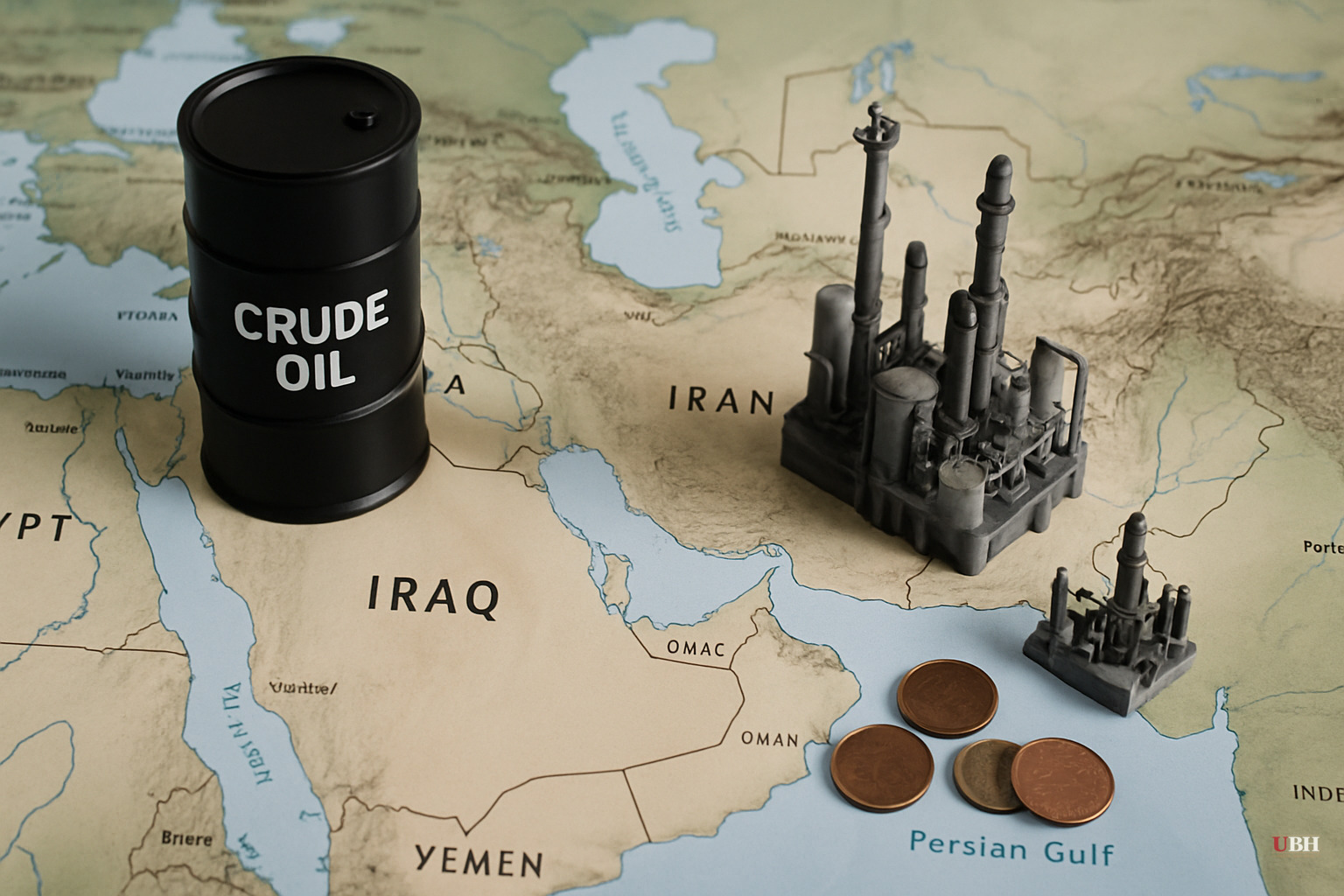
Crude oil is cheap again. Gasoline and diesel are not. That gap is generating some of the fattest refining margins in years, according to OilPrice.com.
The numbers tell the story. Brent crude has fallen back to around $70 per barrel, roughly where it sat before the conflict between Israel, the U.S., and Iran erupted in mid-June, and about $50 below the wartime peak, according to OilPrice.com. Meanwhile the U.S. 3-2-1 crack spread, the standard measure of how much profit refiners squeeze out of a barrel of crude once it's turned into gasoline, diesel, and jet fuel, recently climbed above $60 per barrel. That's the highest level on record, according to OilPrice.com.
When the Strait of Hormuz shut down during the conflict, hundreds of millions of barrels of crude backed up on tankers and in storage across the Persian Gulf. Once the ceasefire hit in mid-June and shipping lanes reopened, that crude started flooding back into the market fast.
Middle Eastern crude exports jumped from under 8 million barrels per day in May to more than 12 million bpd in June, according to Kpler data cited by OilPrice.com. July exports are expected to climb even higher. Gulf producers are releasing stockpiles and restarting fields simultaneously, dumping a temporary wave of supply the market hasn't fully digested. Gulf producers are even discounting cargoes aggressively to move barrels.
Crude is a liquid that ships in weeks. Refined fuel is a different problem. Rebuilding gasoline and diesel inventories after months of disrupted refinery runs, shipping bottlenecks, and emergency wartime exports takes far longer than unloading a stranded tanker.
U.S. gasoline inventories entered the summer driving season at their lowest point in more than a decade for this time of year, largely because American refiners ramped up exports during the Hormuz shutdown to plug overseas shortages, according to OilPrice.com. Gasoline crack spreads have surged past $56 a barrel, closing in on levels last seen during the 2022 energy shock that followed Russia's invasion of Ukraine.
Diesel is even tighter. Ukraine has spent months hitting Russian refining capacity with drone strikes, and Russia remains one of the world's largest diesel exporters. That's knocked out supply that hasn't been replaced, adding another squeeze on top of the Gulf disruption.
Why This Isn't Price Gouging
A fair question: if crude is back to pre-war prices, why hasn't gasoline followed? It's a reasonable thing for drivers to ask when they're paying at the pump.
Crude oil and finished fuel are different products moving through different bottlenecks. A refinery has to physically process crude into gasoline and diesel, and that capacity was strained for months by the war, drone strikes on Russian refineries, and emergency export surges. Inventories don't refill overnight just because crude got cheaper. Refiners aren't setting fuel prices in a smoke-filled room. They're responding to genuine scarcity in finished products that crude's price drop hasn't touched yet.
The Bigger Picture: America's Still Running the Table
While refiners ride this margin windfall, the U.S. keeps widening its lead as the world's top oil producer. American crude and condensate output averaged a record 13.586 million barrels per day in 2025, up 2.7% from the prior year and good for 15.8% of global production, according to the Energy Institute's Statistical Review of World Energy 2026 and confirmed by U.S. Energy Information Administration data.
That's roughly 40% higher than Russia and Saudi Arabia combined output-wise, per the EIA. Russia produced 10.161 million bpd in 2025, down 0.6% as Ukrainian drone strikes hammered its energy infrastructure. Saudi Arabia hit 9.727 million bpd, up 5.7% as OPEC+ eased its voluntary cuts, but that's still well behind both the U.S. and Russia.
The U.S. first took the production crown from Russia and Saudi Arabia in 2018 and hasn't given it back since, a run built on shale drilling out of the Permian Basin and over a decade of efficiency gains that reversed a production decline dating back to 2008.
None of this margin windfall is illegal or even unusual for the industry. Refining is a volatile, cyclical business, and companies that hold spare capacity in a supply crunch get rewarded for it. But the retreat in crude prices from a Middle East ceasefire hasn't yet translated into equivalent relief at the pump. Whether gasoline and diesel crack spreads compress as global refining capacity catches up, or whether Ukrainian strikes on Russian refineries and continued Gulf supply gyrations keep the squeeze going into the fall, remains to be seen.
Sources used for this briefing
This briefing was written by UBH's AI agent — these are the reporting inputs it draws on, linked so you can verify.


