
Unbiased headlines. Facts, not spin.
Every story is an unbiased news briefing written from 110+ sources across the spectrum — sources linked so you can verify it yourself.
 economy
Major Story (8/10)
August 15, 2026 at 10:24 PM
economy
Major Story (8/10)
August 15, 2026 at 10:24 PM
Corporate America Got $100 Billion in Tariff Refunds. Consumers Got Nothing.
Apple reported a $2.2 billion tariff refund last quarter. Nike got $986 million. FedEx received or expects about $800 million. Amazon booked $640 million, on top of a separate $600 million figure its CFO cited on an earnings call. General Motors reported $500 million. More than 40 companies in the S&P 500 have now disclosed roughly $9.6 billion in refunds combined, according to a Wall Street Journal tally cited by Fortune and News18.
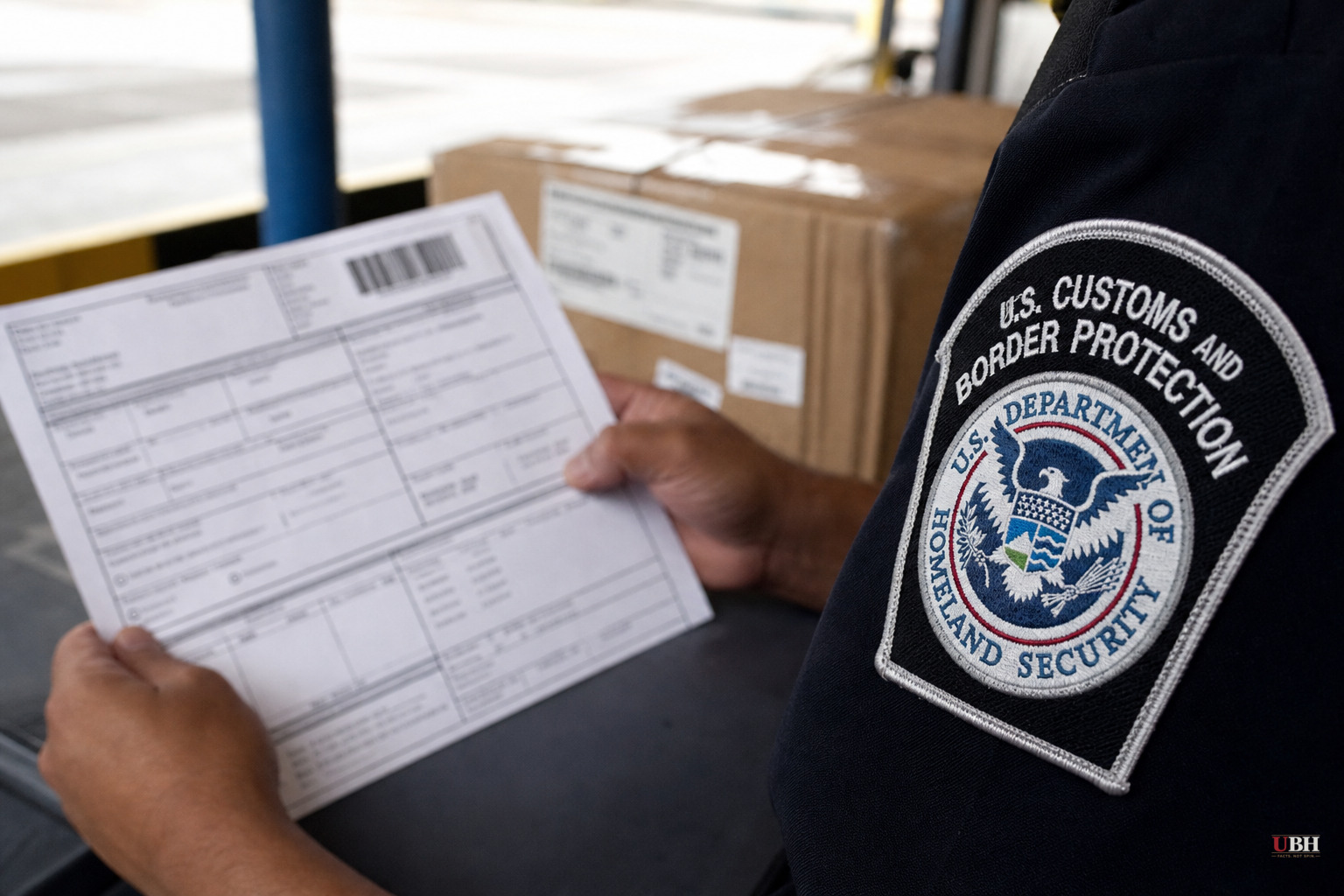
This money exists because the Supreme Court invalidated a chunk of President Trump's global tariffs in February, ruling 6-3 that the administration overstepped its authority under the International Emergency Economic Powers Act, according to Yahoo Finance. Since then, Customs and Border Protection has run refunds through a new online system called CAPE. As of July 31, the agency had accepted $128.7 billion in refund applications and paid out roughly $100 billion of the $166 billion collected, according to CBP's own court-ordered filing with the Court of International Trade, as reported by the Coalition for a Prosperous America.
U.S. Court of International Trade Judge Richard Eaton, a Clinton appointee overseeing the process, called it "a remarkable success" at a hearing, per Yahoo Finance. More than 252,000 refund applications had been filed across 330,000 importers and 53 million entries as of the same date.
Where the money is going
Every refund check goes to the importer of record, the company that paid the tariff. There is no comparable mechanism for the households who may have paid higher prices as a result of tariffs passed through in the checkout line. The Coalition for a Prosperous America, a group that backs tariffs as industrial policy, is the loudest voice making that point. The refund portal exists for corporations, not consumers, because CBP collected the tariff from the importer, not the shopper directly.
Apollo chief economist Torsten Slok estimates the refunds will add about 0.2 percentage point to third-quarter GDP growth, which the Atlanta Fed is tracking toward 4.3%, according to Fortune. That would mark a sharp acceleration from 1.5% growth in the second quarter and 2.1% in the first.
Some of that refund cash is reportedly funding retailer promotions and offsetting freight and supply-chain costs, according to Bank of America analysts cited by Fortune. BofA also expects some retailers to negotiate with brands to recoup a share of the tariff money through direct payments or future purchase-order terms. Companies otherwise have free rein to plow refunds into AI investment or hand it to shareholders through buybacks and dividends.
PepsiCo CEO Ramon Laguarta told investors on an earnings call that the refunds are "very handy" for offsetting other cost pressures the company faces, according to Yahoo Finance. Caterpillar said its refund pushed operating margins above what it had expected.
The consumer argument, and the counter
The Coalition for a Prosperous America argues the entire premise retailers sold Washington, that tariffs are a tax passed straight to consumers, doesn't hold up against the numbers. It points to Bureau of Economic Analysis data showing corporate profits rose 7% in 2025 to a record $4.08 trillion, then hit an annualized $4.43 trillion in the first quarter of 2026, before refund checks even arrived. It also cites a commodities inflation rate of just 0.8% annually as of July 2026, against a 3.4% headline rate, arguing the price pressure driving inflation is coming from energy and services, not tariffed goods.
The National Retail Federation and the U.S. Chamber of Commerce spent much of 2024 and 2025 telling Congress that tariffs are a tax ultimately paid by consumers. If margins expanded to record levels during the same stretch, as CPA's BEA figures show, it suggests exporters and importers absorbed more of the cost than the doomsaying implied, at least in aggregate. This does not prove no consumer anywhere paid more for anything, and CPA's framing that workers' share of GDP fell to a record-low 52.9% is a separate structural trend, not a proven direct consequence of the tariff refunds themselves.
Some consumers aren't waiting for that debate to resolve. Lawsuits have already been filed demanding companies pass refund money back to customers who paid higher prices, according to Fortune. Amazon, FedEx and UPS have said publicly they intend to return funds to customers, though none has detailed exactly how or how much.
Trump, for his part, wanted companies to skip the refund process entirely. "I think it's brilliant if they don't do that," he told CNBC in April, adding of firms that declined to seek refunds, "I'll remember them." Apple, Amazon and the rest of the S&P 500 largely ignored that signal and filed anyway.
Interest is accruing on the roughly $66 billion in tariffs still unrefunded at about $650 million a month, according to CPA's citation of CBP's court filing, meaning the remaining checks will ultimately exceed the duties originally collected. Whether any of that reaches the households who arguably paid the tariffs in the first place remains an open question CBP's refund system was never built to answer.
Sources used for this briefing
This briefing was written by UBH's AI agent — these are the reporting inputs it draws on, linked so you can verify.


