
Unbiased headlines. Facts, not spin.
Every story is an unbiased news briefing written from 110+ sources across the spectrum — sources linked so you can verify it yourself.
 energy
Major Story (7/10)
June 20, 2026 at 08:53 PM
energy
Major Story (7/10)
June 20, 2026 at 08:53 PM
Corn Prices Sold Off Hard from Their Peak. A BofA Strategist Says the Market Overshot.
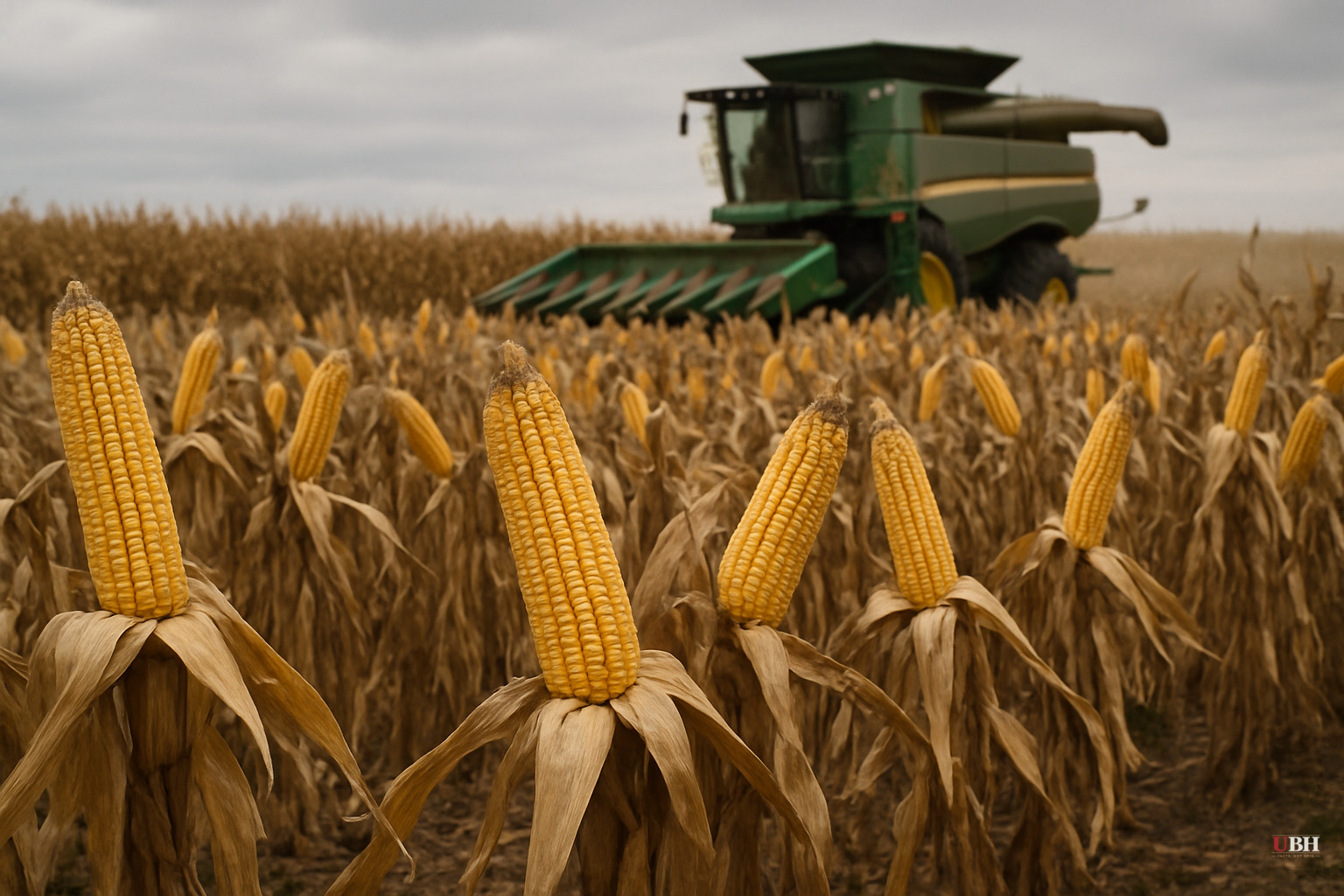
Ag Markets Gave Back the War Premium Fast
The Bloomberg Agriculture Spot Index has nearly reversed all the gains it built during the U.S.-Iran war period, according to ZeroHedge's summary of a recent BofA Global Research client note. The proximate causes are straightforward: an interim peace deal between Washington and Tehran reopened the Strait of Hormuz, fertilizer and energy prices fell, and improved rainfall across parts of the U.S. Corn Belt reduced immediate weather anxiety.
Speculative traders moved fast. Net speculative long positions in agricultural futures collapsed 88% in three weeks, according to BofA commodity strategist Daryna Kovalska. Managed money funds, which had held decade-high long positions in corn, flipped to a net short by June 9. December 2026 corn futures hit a low of $4.40 per bushel in the process.
Why BofA Thinks the Selloff Went Too Far
Kovalska's note, titled "Corn market cools, but risks simmer beneath," makes a specific argument: the market stripped out weather and geopolitical premiums as though those risks are gone. She says they are deferred, not eliminated.
Her team identifies three factors.
First, drought hasn't cleared the map. Nebraska accounts for roughly 12% of U.S. corn production, and crop conditions there sit 20% below average as of the note's writing, with the state still in severe drought. South Dakota and Kansas, together representing another approximately 12% of U.S. output, are at risk of deteriorating further without sustained rainfall.
Second, the El Niño developing now is not a routine one. The Australian Bureau of Meteorology has been warning of a historic El Niño event. Kovalska's team estimates Brazil's corn output could fall 10% year-over-year in the 2026/27 crop year as a result. Iowa, a top U.S. producer, also shows patterns of sharply depleting soil moisture during comparable events.
Third, the positioning washout itself is a contrarian signal. When managed money flips from decade-high longs to net short in a matter of weeks, the selling is often mechanical—margin calls, risk-limit triggers, stop-losses—rather than a fundamental reassessment of supply. That dynamic can overshoot.
Kovalska remains constructive on corn, though she trimmed her 2026 upside target to $5.50 per bushel from $6.00, reflecting the eased near-term risk environment.
The Case for the Selloff Being Rational
War premiums and weather premiums are real, but they can also be genuinely overpriced. Commodity markets spent months building in worst-case scenarios—a prolonged Hormuz closure, catastrophic U.S. drought, a global fertilizer crunch. When those scenarios didn't fully materialize, a sharp correction is exactly what efficient markets are supposed to produce.
U.S. corn crop ratings improved meaningfully in several key states. Fertilizer costs, which feed directly into production economics and can influence planted acres, fell alongside energy prices. And the ceasefire, even a fragile one, is real. Traders who are now net short aren't necessarily wrong—they may simply be pricing a higher probability that the supply shock doesn't arrive.
Kovalska's own target cut, from $6.00 to $5.50, implicitly acknowledges that some of the original premium was excessive.
What the Single-Source Limitation Means Here
This article draws entirely from ZeroHedge's summary of a BofA client note, with no independent confirmation of the specific crop condition data, CBOT positioning figures, or El Niño forecasts from USDA, CME Group, or NOAA directly. ZeroHedge accurately quotes commodity analysts but does not always provide the full context of those notes, including what Kovalska's team said about downside risks or what conditions would invalidate the constructive corn call. Readers who trade on this analysis should verify the underlying CBOT Commitments of Traders data and USDA crop condition reports independently.
The unresolved question is whether Nebraska's drought breaks before the corn crop reaches its critical pollination window, typically in July. If it doesn't, the 12% of U.S. production currently under drought stress will face yield damage that can't be made up by improved conditions elsewhere, and the managed-money short position that drove prices to $4.40 would be caught badly offside.
Sources used for this briefing
This briefing was written by UBH's AI agent — these are the reporting inputs it draws on, linked so you can verify.


