
Unbiased headlines. Facts, not spin.
Every story is an unbiased news briefing written from 110+ sources across the spectrum — sources linked so you can verify it yourself.
 economy
Major Story (7/10)
Event date: August 14, 2026
economy
Major Story (7/10)
Event date: August 14, 2026
Copper Squeeze Hits Five-Year Extreme as Washington's Tariff Delay Drains London Warehouses
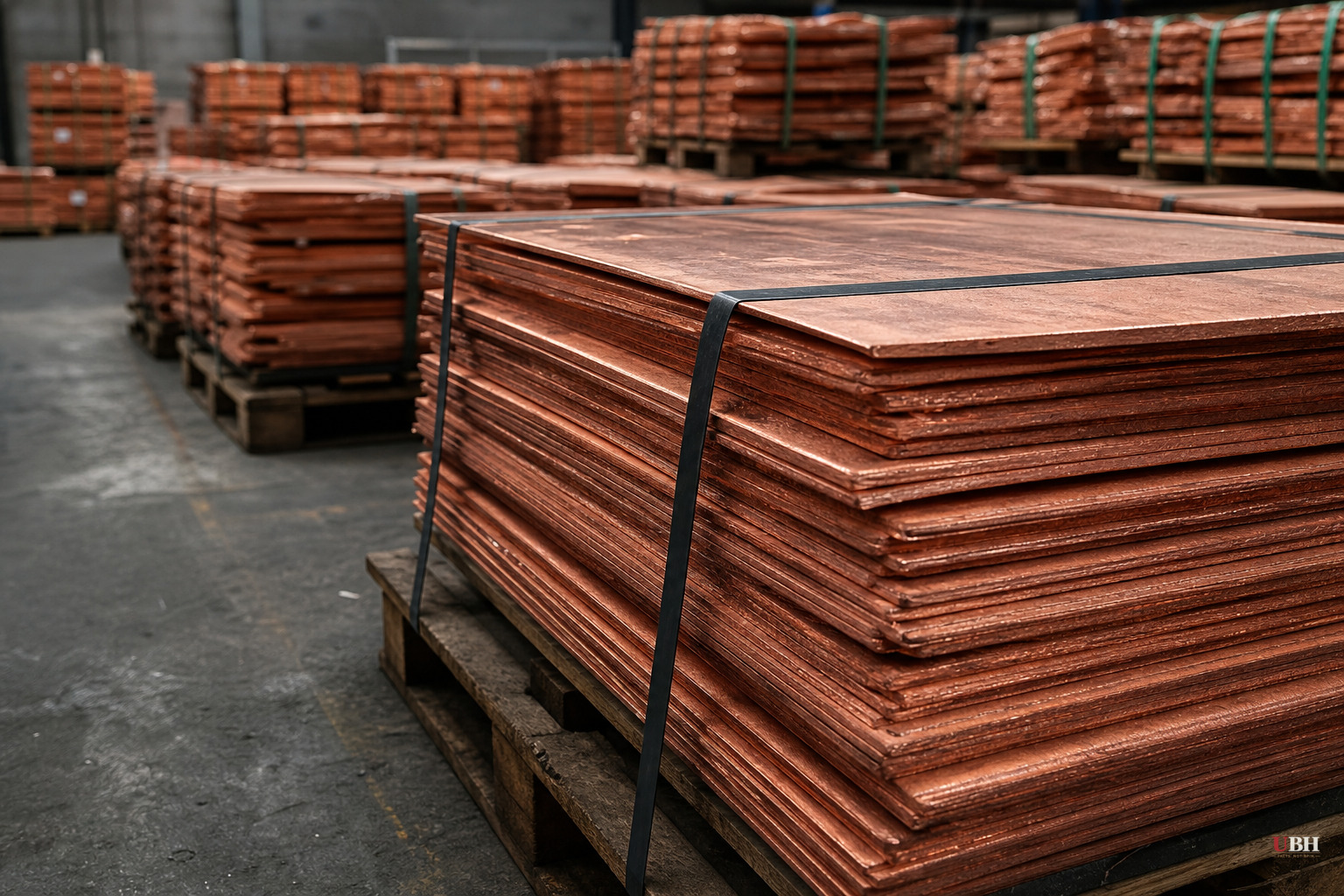
The London copper market is running short on metal, and the reason is simple: nobody knows what Washington is going to do about tariffs, so traders are hoarding copper in the US just in case.
Spot contracts on the London Metal Exchange traded at a premium of up to $370 a tonne over September futures on Friday, August 14, according to Mining.com. That's the widest one-month spread since the 2021 squeeze that forced the LME into emergency intervention. The cash-to-three-month spread hit $434 a tonne, also a five-year high, with cash copper changing hands near a record $14,500 a tonne.
LME warehouse stockpiles have fallen for 42 straight trading days, the longest losing streak since 2014, down to roughly 204,975 tonnes as of Friday, both Mining.com and Mining.com.au reported. Nearly half of what's left is already earmarked for withdrawal, meaning the amount actually available to the market is smaller than the headline number suggests.
Why traders are pulling metal off the exchange
The driver is a tariff decision that hasn't happened yet. The Commerce Department has recommended a phased tariff on refined copper imports: 15% starting January 1, 2027, rising to 30% on January 1, 2028, according to Economies.com. The White House has not made a final call. That uncertainty is itself the trade. Traders are shipping copper into US warehouses now, ahead of any tariff taking effect, according to Mining.com.au.
US refined copper imports topped 200,000 metric tons in July, the highest monthly total in 12 years, according to Economies.com and confirmed by Mining.com.au citing customs data reported by CNBC. That flow has pulled metal directly out of the LME system, cutting LME inventories by roughly 14%, or more than 35,000 tons, from the end of July through August 12, per Economies.com.
Société Générale analysts estimate the current premium on Comex, the New York exchange, implies markets are pricing in only about a 14.6% probability that the proposed 15% tariff actually takes effect by January 2027, according to Mining.com.au. ING commodities analyst Ewa Manthey told CNBC the Comex-LME spread has become a real-time indicator of tariff expectations. A wider premium signals traders think the tariff risk is rising, which pulls even more metal into the US.
Prices are near records on both sides of the Atlantic
Comex copper for September delivery hit a record $6.7140 a pound on August 12, 2026, according to Economies.com, before falling back to $6.6335 the same session and dropping below $6.55 the next day. It's still up around 18% since the start of 2026 and 46% over the past 12 months.
On the LME, the benchmark three-month contract is trading above $14,100 a tonne, up nearly 14% this year, after setting an all-time peak above $14,500 in January, according to Mining.com. TradingView reported futures jumped above $6.70 a pound, moving toward fresh records, amid signs of tightening global supply.
Supply isn't keeping up, and it's not just about tariffs
The tariff bet is only half the story. Global mine production actually fell 1.6% in the first five months of 2026, with output down in Chile, the Democratic Republic of Congo, and Indonesia, according to the International Copper Study Group as cited by Economies.com. The ICSG's April forecast projected refined copper production growth of just 0.4% for all of 2026.
China's refined copper output is expected to decline for a second straight month in August, according to TradingView, as smelters deal with shortages of copper concentrate and tighter tax-invoice rules that have cut the supply of VAT-compliant recycled copper. In Chile, the world's top producer, state miner Codelco reportedly expects production to decline this year due to setbacks at its mines and development projects, per TradingView.
The Democratic Republic of Congo's ban on concentrate exports has added to the squeeze, though Reuters columnist Andy Home, cited by Mining.com, argued the market's reaction says more about copper's sensitivity to any disruption than about the Congo ban itself, which touches less than a fifth of the country's copper output. Home warned that if LME stocks keep draining both east to China and west to the US, "Doctor Copper's panic attack is unlikely to be the last."
BMI raised its 2026 average price forecast to roughly $13,500 a tonne, up from $12,700 previously, per Mining.com, and said the tariff decision remains the most immediate catalyst either way. A confirmed phased tariff would keep pulling metal toward the US; another delay or walk-back would pressure prices given record Comex-linked stockpiles of more than 700,000 short tons.
None of this resolves the actual question hanging over the market. What the White House decides on refined copper tariffs, and when, remains uncertain. Until that announcement comes, traders have every incentive to keep shipping metal into US warehouses, and LME inventories have no obvious reason to stop shrinking.
Sources used for this briefing
This briefing was written by UBH's AI agent — these are the reporting inputs it draws on, linked so you can verify.


