
Unbiased headlines. Facts, not spin.
Every story is an unbiased news briefing written from 110+ sources across the spectrum — sources linked so you can verify it yourself.
 economy
Major Story (7/10)
Event date: August 17, 2026
economy
Major Story (7/10)
Event date: August 17, 2026
Copper Hits Near-Record Prices as Tariff Bets Drain Global Stockpiles
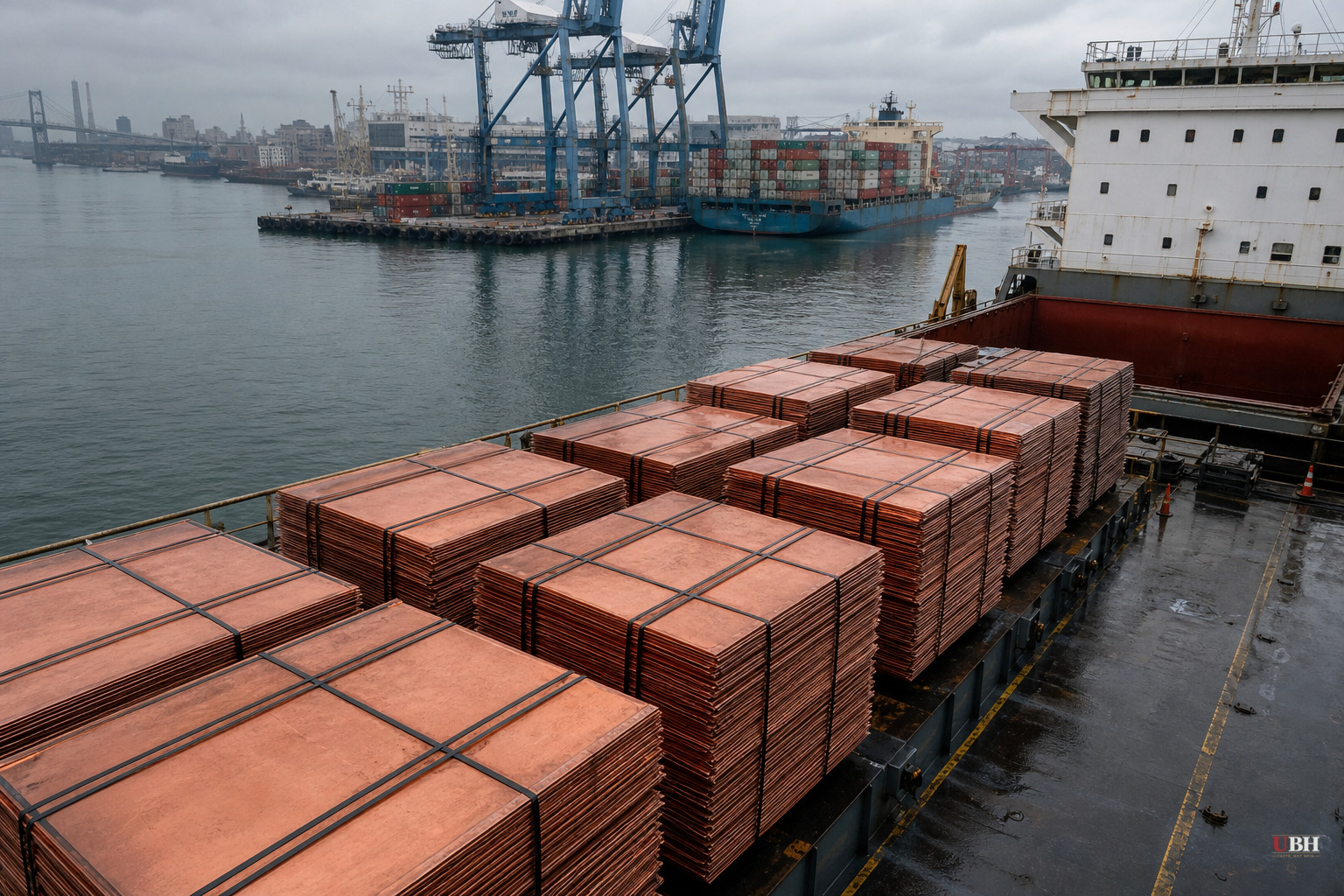
Copper is having a moment, and it's not the good kind if you're building anything that requires wire.
London Metal Exchange three-month futures climbed as much as 1.7% Monday to $14,396 a ton, according to Mining.com, closing in on the record of $14,527.50 set in January. That's the eighth straight weekly gain, per BigGo Finance. ZeroHedge reported copper has held above $14,000 a ton for nine consecutive sessions.
Spot copper traded as much as $545 a ton above the three-month contract Monday, according to Mining.com, the widest backwardation since the 2021 squeeze that forced the LME to adopt emergency measures. ZeroHedge put the number at $543.50. BigGo Finance cited a $478 premium earlier Monday. Whichever figure you use, it's the biggest gap in four years. Buyers who need copper right now are paying a massive premium over buyers who can wait three months.
Why Tariffs Are Driving This
The root cause, according to Mining.com, is a surge in copper shipments to the United States as traders bet President Trump will impose tariffs on imported refined copper. BNP Paribas metals strategist David Wilson told Bloomberg, as cited by BigGo Finance, that as long as shipping copper to the U.S. stays profitable, there's little incentive to deliver metal into LME warehouses instead.
That arbitrage has drained LME stockpiles by nearly half since mid-May, per Mining.com. ZeroHedge reported LME inventories have plunged 32% in the past month alone, down to 205,000 tons, while Comex inventories in the U.S. rose 8% to 735,000 tons. The metal isn't disappearing. It's piling up in America instead of London because traders are betting Washington slaps a tariff on it.
The White House has not announced a final decision on copper tariffs, and Mining.com noted the administration has kept the market guessing. That uncertainty itself is fueling the stockpiling behavior, since traders would rather have copper on U.S. soil before any tariff hits than get caught paying it later.
The Supply Side Is Genuinely Broken
This isn't purely a tariff story. Jefferies' copper mine production tracker, released August 16 and cited by BigGo Finance, found that miners covering roughly 55% of global copper supply posted a 3.9% year-over-year production decline in the second quarter. Ivanhoe Mines, Newmont, and Freeport-McMoRan all cut output due to operational disruptions or falling ore grades.
Chile, the world's largest copper producer with 18% of global reserves according to Forbes, is struggling to capitalize on record prices. State-run Codelco said in July it expects production to stay flat for years. At Escondida, the world's largest copper mine, output fell 3% as ore grades dropped from 1.02% to 0.90%, Forbes reported. Barclays analyst Richard Garchitorena, cited by ZeroHedge, said Chilean production overall fell 6.7% year-over-year through June, prompting Chile's Cochilco to cut its 2026 forecast by 2.6% to 5.27 million tons.
Antofagasta cut its annual guidance about 5% after severe weather hit its Los Pelambres mine, per ZeroHedge. An outage at Indonesia's Gresik smelter has delayed shipments with no restart date set.
Jefferies projects a global copper deficit of 442,000 tons in 2026, widening to 782,000 tons by 2030, according to BigGo Finance. The firm forecasts an average 2026 price of $13,380 a ton and maintains buy ratings on major miners.
Demand Isn't Slowing Down Either
Copper demand is projected to rise 50% by 2050, according to Forbes, driven by AI data centers, electric vehicles, and power grid buildouts. The International Energy Agency's Global Critical Minerals Outlook 2025, cited by International Banker, found grid investment in China has been the single largest driver of copper demand growth over the past two years.
Wood Mackenzie analyst Shashank Sriram, quoted by International Banker, said most estimates of data center metals demand undercount reality because they stop at "the server room door." The power infrastructure needed to run a data center carries a metals footprint three to four times larger than the servers themselves.
What's Actually Unresolved
The Trump administration hasn't confirmed whether or when it will impose the copper tariff traders are betting on. Until it does, the arbitrage that's draining LME warehouses will likely keep running.
Separately, the Department of Homeland Security in late July expanded its Uyghur Forced Labor Prevention Act blacklist to 43 more Chinese companies, including Shandong Gold Mining and firms tied to lithium battery materials, according to the Epoch Times. Companies targeted operate in sectors including aluminum, apparel, copper, cotton, seafood, and tomatoes. DHS Secretary Markwayne Mullin said the actions are aimed at protecting U.S. citizens from "unfair competition that not only disadvantages Americans, but harms human dignity," adding, "The American worker must not be undercut and cheated by foreign companies that use slave labor." That action targets forced labor in Xinjiang, not copper specifically, but it's part of the same broader push by Washington to tighten control over metals and mineral supply chains that feed EVs, batteries, and grid infrastructure.
The open question for anyone buying wire, cars, or a house: does a formal U.S. tariff decision arrive before this squeeze breaks on its own, or does record-high copper become the new normal by the time any tariff is announced.
Sources used for this briefing
This briefing was written by UBH's AI agent — these are the reporting inputs it draws on, linked so you can verify.


