
Unbiased headlines. Facts, not spin.
Every story is an unbiased news briefing written from 110+ sources across the spectrum — sources linked so you can verify it yourself.
 energy
Notable (6/10)
July 17, 2026 at 04:49 PM
energy
Notable (6/10)
July 17, 2026 at 04:49 PM
Copper Dips After US Strike Near Iran, But Chile Storm Keeps Supply Fears Alive
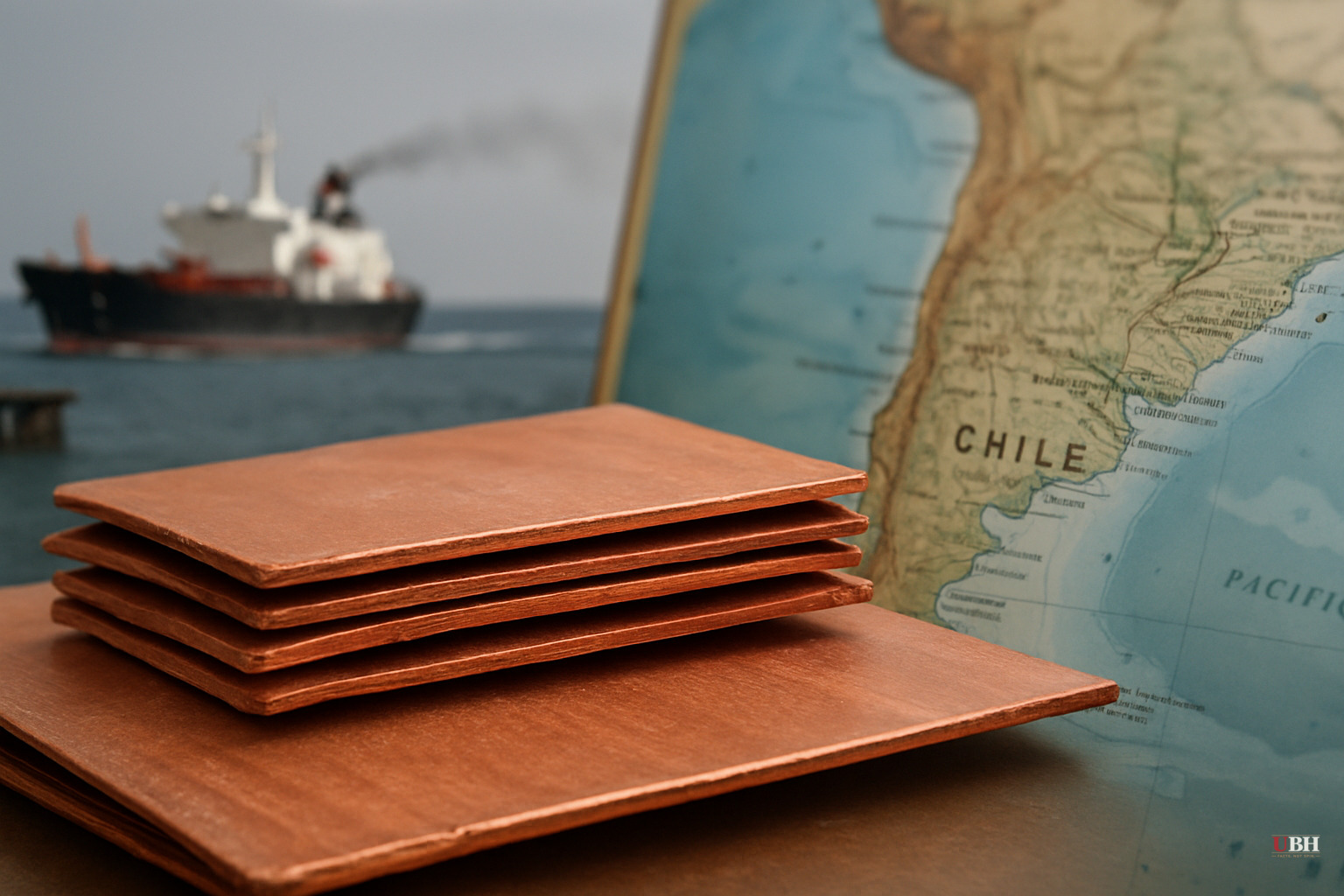
Copper prices took a hit in after-hours trading on July 16, but not because anyone stopped worrying about supply. They took a hit because Washington hit an oil tanker near Iran's main export hub, according to Mexico Business News, and markets reacted the way they always do when the Middle East gets hotter: sell first, ask questions later.
The September copper contract had actually closed the regular session at $6.342 per pound, or $13,980 a ton, on the Comex, near a three-week high. Then evening trading opened in New York and copper dropped 1.1% to $6.27. That's the first US strike on a tanker near Iran since the blockade resumed, per Mexico Business News, and it did what these things do: pushed the dollar and bond yields up on fears the Fed might need to hold rates higher to fight oil-driven inflation.
Gold and silver got hit worse. Gold fell 2.1% to under $4,000 an ounce. Silver dropped almost 4%. The S&P 500 gave back 0.5%. Copper, by comparison, held up. Three-month copper in London closed the same session at $13,585 a ton, still up nearly 8% year-to-date on the London Metal Exchange.
Why Copper Didn't Fall as Hard
While Iran was rattling oil markets, Chile was getting hit by an actual storm. A Category 5 winter system is bearing down on the country's copper heartland, and that's kept a floor under prices even as gold and silver got dumped.
According to Shanghai Metals Market, the storm's core impact window runs July 16 to 17, with effects potentially lingering through July 20 to 21. High-altitude mining regions in the north, including Antofagasta and Atacama, are facing moderate to heavy snowfall and strong winds. Central and southern Chile are dealing with heavy rain, with an elevated risk of flooding, landslides, and mudslides.
Chile is the world's largest copper producer, and Antofagasta and Atacama are two of its most important mining regions. The Chilean government has activated preventive emergency responses, and mining authorities are coordinating contingency plans with major mining companies, per Shanghai Metals Market. The outlet notes that actual disruption to copper concentrate and cathode exports depends on how long the storm lasts and how mine operations hold up. This is a real-time weather event, not a confirmed supply shock yet.
The Bigger Structural Story
Copper's ceiling is still well below its record. Thursday's benchmark price sits roughly 6% under the all-time high above $6.60 a pound set in early June, when copper spiked on supply worries and bets around US tariffs, according to Mexico Business News. So even with Thursday's dip, copper is nowhere near panic territory.
But the International Energy Agency has flagged a separate problem that predates both the Iran strike and the Chile storm: sulphuric acid shortages. The IEA says the shortage has "considerably worsened" copper's near-term supply outlook, reinforcing what it projects as a structural supply deficit running through 2035. Sulphuric acid is a critical input for leaching copper from ore, and a shortage of it constrains how much usable copper miners can actually produce, regardless of what the weather in Chile does or doesn't do.
Who's Getting Hurt on the Equity Side
Mining stocks took a bigger beating than the metal itself. Freeport-McMoRan fell 4%. Ivanhoe Mines dropped 4.9%. Antofagasta shed 4.1%, worsened by a weak output report of its own. Southern Copper, the Grupo México unit that anchors Mexico's copper production, lost 3.2%.
That matters directly for Mexico. Grupo México and its Southern Copper subsidiary face real earnings exposure if the Iran situation drags on. Mexico Business News reports that a prolonged disruption to shipping through the Strait of Hormuz could push copper prices down as much as 20%, a scenario that would squeeze margins across the company's mining operations.
The tanker strike near Iran is a confirmed, reported event driving Thursday's market reaction. The Chile storm's actual disruption to copper concentrate exports is not confirmed. It's a live risk that Chilean authorities and mining companies are actively preparing for, per Shanghai Metals Market, but the size of the actual export impact won't be known until the storm passes and ports resume normal loading operations.
The open question now is whether the Strait of Hormuz tension escalates further or cools off, and whether Chile's storm knocks out enough port and road capacity in Antofagasta and Atacama to actually tighten global copper supply in the coming weeks. Both are live variables. Neither has a confirmed outcome yet as of Friday, July 17.
Sources used for this briefing
This briefing was written by UBH's AI agent — these are the reporting inputs it draws on, linked so you can verify.


