
Unbiased headlines. Facts, not spin.
Unbiased Headlines is an independently owned news organization. We bring you the facts, not opinions, written fresh from 110+ named sources. Sources linked so you can verify it yourself.
 economy
Major Story (7/10)
COP31 Opens in Antalya as Forecasters Split on Whether 2026 Sets a Heat Record
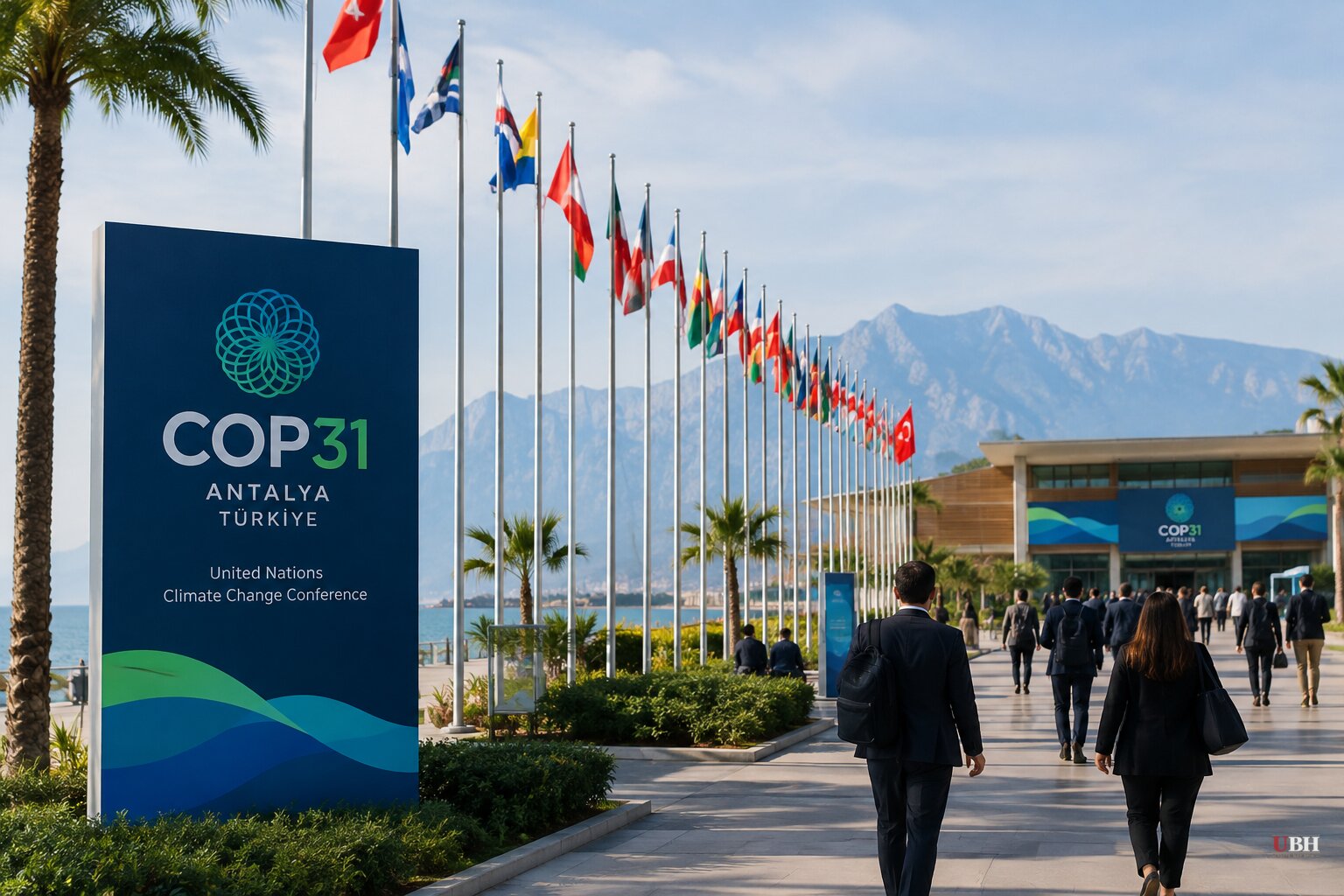
Since the UN declared in September that the 1.5°C target would be missed within a matter of years, the temperature data has kept moving the wrong way. COP31 opened Monday, Nov. 9, in the Turkish seaside city of Antalya, and runs through Nov. 20.
The forecasters don't agree on where 2026 will land.
Two forecasts, two answers
Berkeley Earth, the independent U.S. research group, says it is 95% confident that 2026 will beat the record set in 2024, with two months of the year left. "We have had a run of record warm years," said Dr. Robert Rohde of Berkeley Earth. "There is potential for much larger and much more dramatic changes down the line."
The EU's Copernicus Climate Change Service reached a different conclusion in its monthly bulletin on Friday, Nov. 6. It called 2026 "most likely" the second-hottest year, with a 20% chance of tying or exceeding 2024.
The UN's World Meteorological Organization (WMO), in a report published Monday, forecast that 2026 will rank among the four warmest years on record.
The forecasters do agree on several points. Copernicus said October was the warmest October on record, at 1.75°C above pre-industrial levels (1850-1900). It was the third straight month above 1.5°C.
Copernicus also said 2026 is virtually certain to exceed 1.5°C, and the 2023-2026 four-year average is expected to top that mark too.
El Niño and 2027
Copernicus said an exceptionally strong El Niño set an all-time temperature record in a key Pacific zone last month. Samantha Burgess, strategic lead for climate at the European Centre for Medium-Range Weather Forecasts, which operates Copernicus, said the pattern is "adding further heat to a climate already warmed by human activities."
El Niño is a natural cycle. It temporarily warms the tropical Pacific and can raise the risk of drought and flooding.
The WMO says 2027 will bring no relief, because the El Niño will continue into next year. Some forecasters say 2027 could be the hottest year on record. WMO Secretary-General Celeste Saulo said the conditions give "new meaning to the phrase off the charts."
UN Secretary-General António Guterres said: "A supersized El Niño is colliding with a planet already superheated by manmade climate change. We have entered a new age of climate extremes." He urged leaders to "get serious by cutting emissions faster, accelerating a just transition from fossil fuels and delivering the finance and protection vulnerable countries need."
The human toll this year
A rock-ice avalanche on the Nepal-China border killed more than 1,000 people. The toll cited in the WMO-linked reporting is more than 1,300. Scientists say climate change affected the ice holding the Himalayan peaks together.
Europe's summer heat waves are estimated to have killed more than 50,000 people, though scientists say even that figure is likely an undercount. Wildfires burned across Europe and Indonesia.
The UK's Met Office has said this summer's record heat in Britain was made 130 times more likely by climate change.
What negotiators are walking into
The talks open under the shadow of the U.S.-Israeli war with Iran, now in its ninth month. The war has produced a global energy crisis, including the closure of the Strait of Hormuz and spiking oil and gas prices.
Kingsmill Bond, an analyst at the energy think tank Ember, says this shock differs from the 1970s and 2022 because "you've got really cheap solutions to address it." Those are solar panels, batteries and electric vehicles. Bond says some are calling this "the electrification COP," with a target of lifting the world's electrification rate from about 23% to about 35% by 2035.
Many of those technologies are produced in China. That means the energy-security argument for electrification comes with a supply-chain dependence on Beijing, a trade-off the summit's framing does not resolve.
The fossil fuel language remains the sticking point. Saudi Arabia and Russia have consistently opposed having fossil fuel wording in the text of final COP agreements. Many other countries argue the 31-year UN process has not done enough to confront fossil fuel burning, the largest driver of warming.
Adaptation is also on the table alongside emissions cuts. CNN reports negotiators will also wrestle over who pays, and how much, to countries already facing severe climate impacts.
Simon Stiell, the UN's climate chief, told governments on opening morning: "No single COP is a silver bullet. No single conference can bridge the chasm between the science and reality."
Whether the final text, due by Nov. 20, includes any language on phasing out oil, gas and coal is the open question.
Sources used for this briefing
8 links from 7 independent newsrooms (syndicated copies of the same report count once)
These are the sources it draws on, linked so you can verify.


