
Unbiased headlines. Facts, not spin.
Every story is an unbiased news briefing written from 110+ sources across the spectrum — sources linked so you can verify it yourself.
 defense
Low Interest (4/10)
July 12, 2026 at 03:13 PM
defense
Low Interest (4/10)
July 12, 2026 at 03:13 PM
Cook County Sheriff Recovers $1.3 Million in Stolen AI Data Center Cargo, Copper Theft Up 77% Nationwide
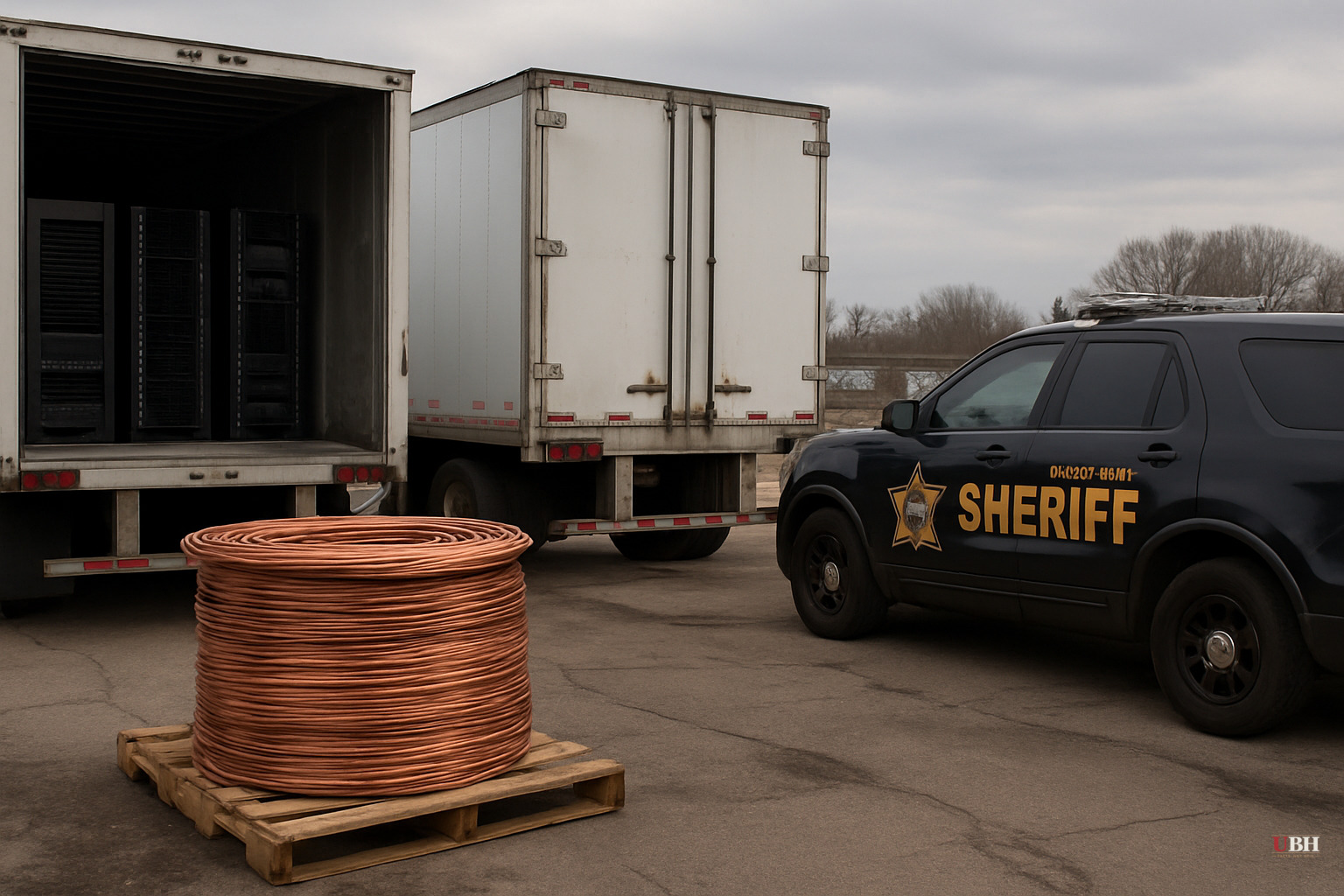
$1.3 million in stolen cargo turns up near Chicago
The Cook County Sheriff's Office recovered two stolen trailers loaded with data center construction materials, according to Business Insider. One trailer held roughly $300,000 in copper wire spool stolen after leaving Florida bound for Alabama. A second trailer, recovered about a week apart from the first, carried close to $1 million in data center infrastructure equipment taken from Florida. Combined, investigators say the recovered cargo was worth about $1.3 million.
The copper alone traveled hundreds of miles from where it was stolen before turning up in Illinois, underscoring how far organized theft rings are willing to move stolen freight before trying to offload it.
Copper theft is up 77% as AI construction accelerates
CargoNet, which tracks freight theft across the US, found cargo theft incidents rose about 18% in 2025, according to TechRadar. Total losses jumped 60%, and the average value of each theft climbed 36%. Metal theft specifically, which includes the copper wiring essential to every data center build, rose 77%.
That spike lines up with the pace of AI infrastructure spending. Hyperscalers like Microsoft, Amazon, Google and Meta have announced multibillion-dollar data center projects on a near-weekly basis, and every one of those builds requires truckloads of copper wiring, cooling systems, networking hardware and servers moving across state lines before a single rack gets installed, according to Republic World. Each shipment is a target of opportunity for a criminal network with a truck and a buyer lined up.
The Department of Homeland Security estimates cargo theft costs American businesses roughly $35 billion a year across all industries, not just tech, according to both Business Insider's reporting and Republic World. Data center materials are a growing slice of that total, not the whole problem.
Why copper specifically
Copper has been a favorite target for thieves going back decades because it's easy to strip, easy to melt down or resell as scrap, and its price stays high. A data center build can require staggering quantities of it for power systems and networking infrastructure, meaning a single shipment can be worth hundreds of thousands of dollars, as Republic World notes. Complete servers and GPUs are harder to fence because buyers spending real money typically demand documentation and proof of ownership, according to TechRadar. Raw copper doesn't ask questions.
Manufacturers and logistics companies are responding with serial-numbered components, embedded trackers, and GPS units hidden inside trailers, per TechRadar. That's a reasonable, low-cost countermeasure. Whether it actually deters organized theft rings with the resources to move stolen freight across three or four states before recovery, as happened in the Alabama-to-Illinois copper case, is unclear.
The pushback on data centers is real, but that's a separate issue from theft
Communities near proposed data center sites have raised legitimate concerns about electricity demand straining local grids and water consumption for cooling systems, concerns reflected in local zoning fights and utility rate disputes across multiple states. Those are real policy questions worth debating on their own merits.
But Vice's coverage of this theft story folded that community-backlash argument directly into its reporting on the cargo thefts, framing the thefts almost approvingly as a byproduct of an industry Vice suggests Americans broadly resent, citing unspecified 'recent polling' without naming the pollster or the actual numbers. That's editorializing dressed up as a news angle. Whether the public likes or dislikes data centers has nothing to do with whether organized crime rings are stealing $1.3 million in copper and hardware off American highways. Those are two separate stories, and conflating them doesn't clarify either one.
What happens next
No arrests have been announced in either the Alabama copper theft or the Florida equipment theft, based on the available reporting. The Cook County Sheriff's Office has not released details on how the trailers were tracked down or whether the recovery has led to any suspects. With AI infrastructure spending showing no signs of slowing and CargoNet's theft numbers climbing every year, the pressure is on freight carriers and hyperscalers to figure out supply chain security before the next multimillion-dollar shipment disappears somewhere between the plant and the job site.
Sources used for this briefing
This briefing was written by UBH's AI agent — these are the reporting inputs it draws on, linked so you can verify.


