
Unbiased headlines. Facts, not spin.
Every story is an unbiased news briefing written from 110+ sources across the spectrum — sources linked so you can verify it yourself.
 energy
Low Interest (3/10)
August 3, 2026 at 09:56 AM
energy
Low Interest (3/10)
August 3, 2026 at 09:56 AM
Consultants Warn Energy Firms: Sanctions and Middle East Conflict Are Now Permanent Business Risks, Not One-Off Shocks
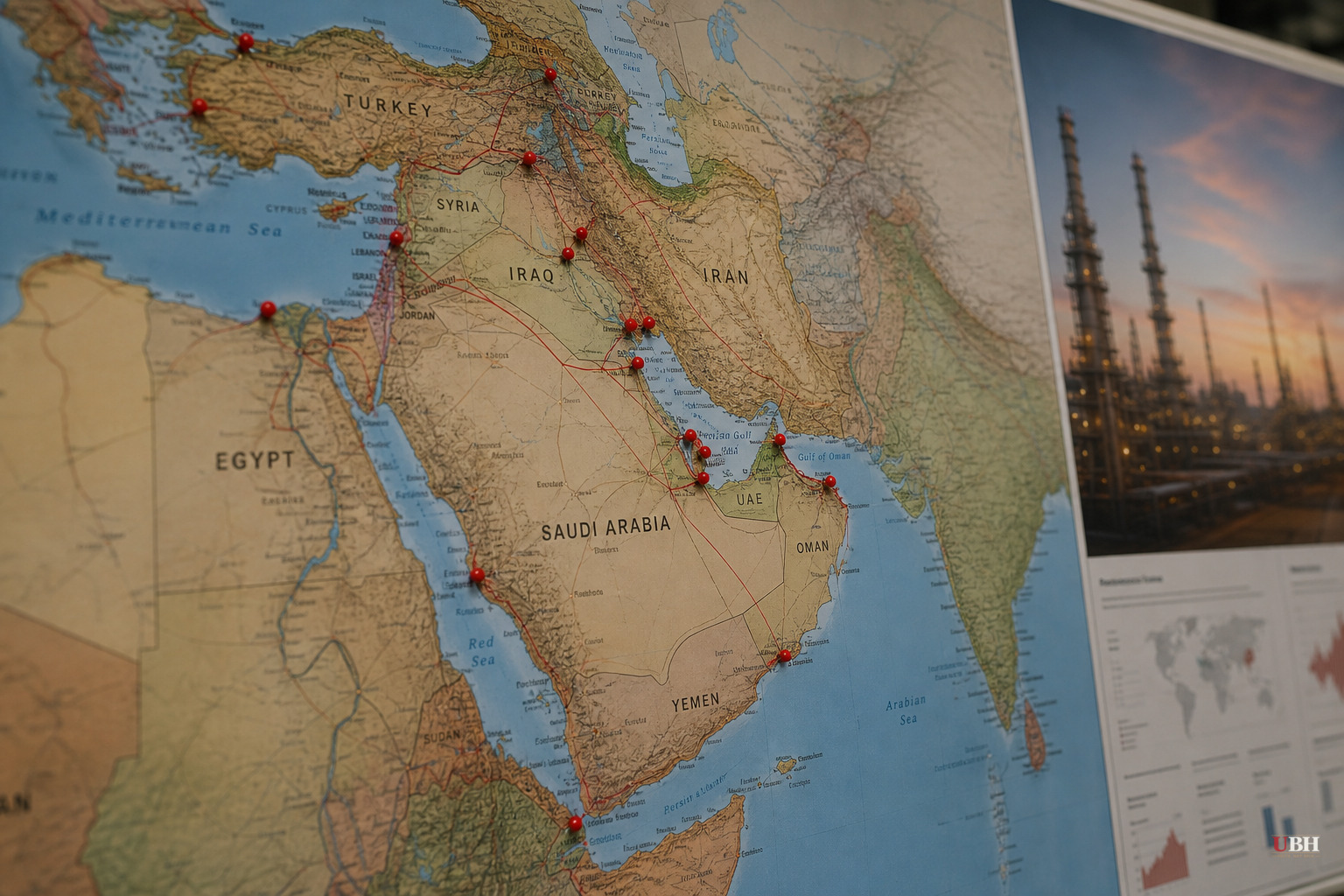
Aon, the global insurance and consulting firm, published guidance this year telling North American energy executives to treat geopolitical instability as a permanent fixture of business planning rather than a temporary headache, according to Utility Dive. The core claim: resource nationalism, Middle East conflict and sanctions on oil-producing nations are now structural forces reshaping global energy markets, not passing storms.
The brief doesn't name a single new event, sanction, or conflict. It's a framework document, the kind consulting firms publish to sell risk-advisory services. But the trend line it describes is worth considering.
What's actually happening in the market
Global supply constraints and shipping disruptions are pushing more international demand toward North American gas, LNG, and refined products, according to Aon's analysis relayed by Utility Dive. That's a straightforward supply-and-demand story. When tankers get rerouted around conflict zones, when sanctions take barrels off the market, and when insurers start pricing in war risk for shipping lanes, buyers look elsewhere. North America, with its shale gas, LNG export terminals, and refining capacity, is a natural landing spot for that displaced demand.
That's good news for American producers and workers in the Permian Basin, the Gulf Coast LNG corridor, and Appalachian gas fields. Higher international demand for U.S. energy exports means more drilling, more jobs, more royalty income for landowners and states. It also means American energy independence, built over the last two decades through fracking and LNG buildout, is paying strategic dividends as adversaries and unstable regimes get squeezed out of global supply chains.
The compliance headache is real too
Aon flags something worth taking seriously: sanctions and emergency energy policies are shifting fast, and companies with global operations face compliance obligations that carry direct financial and legal consequences, according to Utility Dive. A company shipping components or product through a region that gets hit with new sanctions overnight can find itself out of compliance without having done anything wrong. That's a legitimate operational risk. Firms with international supply chains need legal teams watching Treasury's Office of Foreign Assets Control listings and export-control rules in close to real time.
Where this reads like consulting-firm self-interest
This document is a sales pitch. Aon runs a "Global Risk Management Survey" that it cites to justify its own advisory services, and the brief's language, "embedding risk intelligence into daily decisions," "tested response playbooks," "risk leaders should treat geopolitical volatility as a standing enterprise risk," is consultant-speak designed to get energy companies to sign retainer contracts. There's no new data point, no specific sanctioned entity, no named conflict escalation in the piece itself. It's a template that could have been written at almost any point in the last five years and still sound current.
That doesn't make the underlying advice wrong. Energy companies with exposure to the Strait of Hormuz, Russian sanctions regimes, or Venezuelan oil restrictions genuinely do need documented decision triggers for when geopolitical conditions shift fast. But readers should recognize the difference between "here is a new geopolitical event requiring urgent action" and "here is a permanent-state consulting framework we'd like you to pay for."
What's missing from this framing
The brief doesn't quantify anything. No specific price movements, no named sanctions list, no dollar figures on what disruption has actually cost North American energy firms. It also doesn't grapple with the flip side: heavier reliance on U.S. energy exports as a geopolitical hedge means American producers become more exposed to foreign demand swings too. If a ceasefire breaks out in the Middle East or global oil supply stabilizes, the "structural" demand shift toward North American gas and LNG that Aon describes could reverse just as fast as it built.
There's also no mention of domestic policy levers, permitting reform for LNG export terminals, pipeline approval timelines, or federal drilling policy on public lands, that would let American producers actually capture more of that displaced global demand. A risk brief focused entirely on defensive compliance measures skips the more consequential question: is U.S. energy policy positioned to seize the opportunity Aon says is already here?
The open question for energy executives isn't whether geopolitical risk is real. It obviously is. It's whether Washington will move fast enough on permitting and export infrastructure to let American producers capture the demand shift Aon describes, before competitors in Qatar, Australia, or elsewhere fill the gap instead.
Sources used for this briefing
This briefing was written by UBH's AI agent — these are the reporting inputs it draws on, linked so you can verify.


