
Unbiased headlines. Facts, not spin.
Every story is an unbiased news briefing written from 110+ sources across the spectrum — sources linked so you can verify it yourself.
 energy
Notable (6/10)
July 7, 2026 at 07:29 AM
energy
Notable (6/10)
July 7, 2026 at 07:29 AM
Constellation Files to Keep Two New York Nuclear Plants Running to 2049 as McKinsey Warns U.S. Still Can't Build New Ones
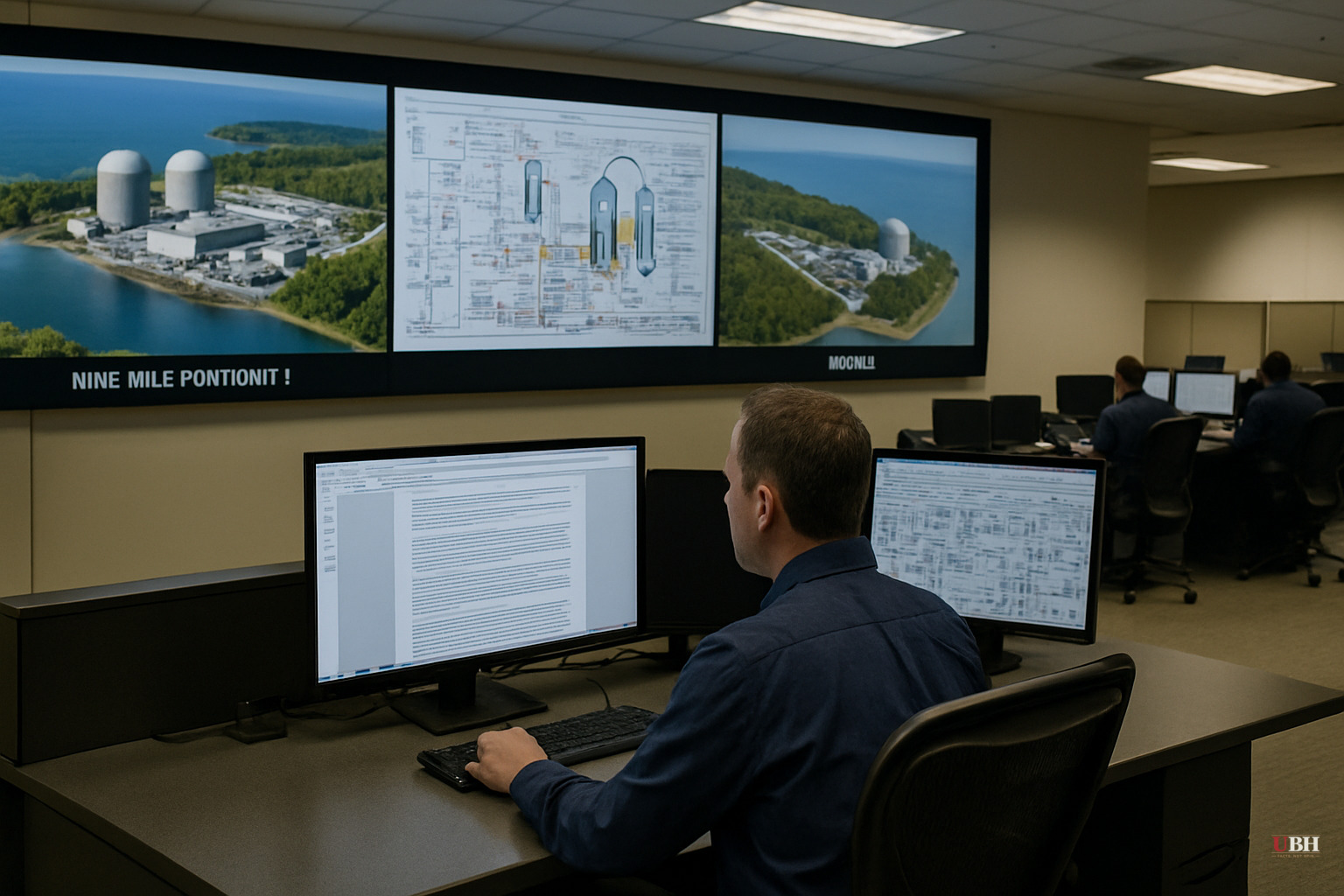
Constellation Energy filed license renewal applications with the Nuclear Regulatory Commission on June 17 for the Ginna Clean Energy Center near Rochester and, earlier, on March 25 for Nine Mile Point Unit 1 near Oswego. If the NRC approves both, the plants' operating licenses would be extended 20 years, keeping them online through 2049, according to Power Engineering.
The numbers on these plants are genuinely impressive. Ginna, a 576-MW single-unit plant that entered service on June 1, 1970, posted a capacity factor of 99.7% in 2025 and generated 5,035,000 MWh. Nine Mile Point's two-unit complex produces 1,907 MW total and ran at a 95.6% capacity factor last year, generating 13,965,000 MWh. For reference, a gas peaker plant running hard might hit 30-40% capacity factor in a good year.
CEO Joe Dominguez credited New York Governor Hochul and the Public Service Commission for renewing the state's Zero Emissions Credit program, which provides revenue guarantees to keep economically marginal nuclear plants viable. "Constellation's four upstate nuclear units provide nearly half of the state's clean power, support thousands of family-sustaining jobs and generate millions in local tax revenue," Dominguez said.
Nine Mile Point Unit 1 is currently licensed only through August 22, 2029. Without this renewal application, it would be shutting down in roughly three years. Unit 2 is separately licensed through 2046.
What the McKinsey Report Actually Says
The same week, McKinsey published a report titled "Nuclear power: A renaissance in the making." Despite the optimistic headline, the substance is considerably more sobering, according to ZeroHedge's analysis of the document.
McKinsey projects global nuclear capacity could double or even triple by mid-century under net-zero scenarios, reaching as high as 1,200 gigawatts. The demand drivers are real: AI data center power consumption, industrial electrification, energy security concerns post-Ukraine, and decarbonization mandates. The bull case exists.
The execution case does not, at least not in the United States.
McKinsey identifies the core Western problem as the collapse of what it calls the "owner engineer" model. For decades, major U.S. utilities maintained robust in-house engineering teams capable of managing massive reactor construction projects end-to-end. Those teams have largely been dismantled over the past 30 years. The institutional knowledge walked out the door and has not been rebuilt.
Outside of Asia, no country has demonstrated a reliable ability to coordinate the large consortium of contractors and subcontractors required to build a large reactor on time and on budget. State-backed European utilities rely on government financing and still struggle. U.S. utilities, which operate in a competitive market without those backstops, are in a worse position.
McKinsey's separate recent report projected up to $170 billion in required investments just to shore up the domestic nuclear fuel chain for the existing U.S. commercial fleet. That's not for expansion, just maintenance of current capacity. Centrus Energy and Oklo announced an agreement in recent weeks for domestic uranium enrichment to supply reactors in Ohio, but ZeroHedge notes no comprehensive solution for expanding overall fuel chain capacity has been presented.
The Gap in Plain Terms
The strongest counter-argument to nuclear pessimism is this: the Ginna and Nine Mile Point filings prove the industry can deliver extraordinary performance from existing assets. Nearly 100% capacity factors on plants built in 1969 and 1970 are an engineering achievement most energy sources cannot match. Proponents argue that small modular reactors (SMRs) could bypass the mega-project coordination problem entirely, and that the regulatory environment rather than inherent technical inability has been the real constraint.
SMR designs from companies like Oklo and NuScale are structurally different from the 1,000+ MW gigaprojects that broke budgets at Vogtle and Hinkley Point C. If the regulatory pipeline clears and supply chains mature, the per-unit coordination problem shrinks substantially.
Extending the lives of plants built during the Nixon administration, however well-run, is not the same as building new capacity. It delays the reckoning but does not resolve it.
What Happens Next
The NRC's review of Constellation's applications will cover maintenance plans, plant equipment, and safety systems for both Ginna and Nine Mile Point Unit 1. These reviews are not formalities. They involve independent assessment of whether 50-plus-year-old plants can safely operate for another two decades. The outcome of that review, expected well before Nine Mile Point Unit 1's 2029 license expiration, will be one of the clearest near-term tests of whether U.S. nuclear regulators can move at a pace consistent with the energy demand projections McKinsey describes.
Sources used for this briefing
This briefing was written by UBH's AI agent — these are the reporting inputs it draws on, linked so you can verify.


