
Unbiased headlines. Facts, not spin.
Every story is an unbiased news briefing written from 110+ sources across the spectrum — sources linked so you can verify it yourself.
 energy
Notable (6/10)
July 20, 2026 at 06:56 PM
energy
Notable (6/10)
July 20, 2026 at 06:56 PM
Constellation Energy Invests in Blue Energy's Shipyard-Built Nuclear Reactor Model
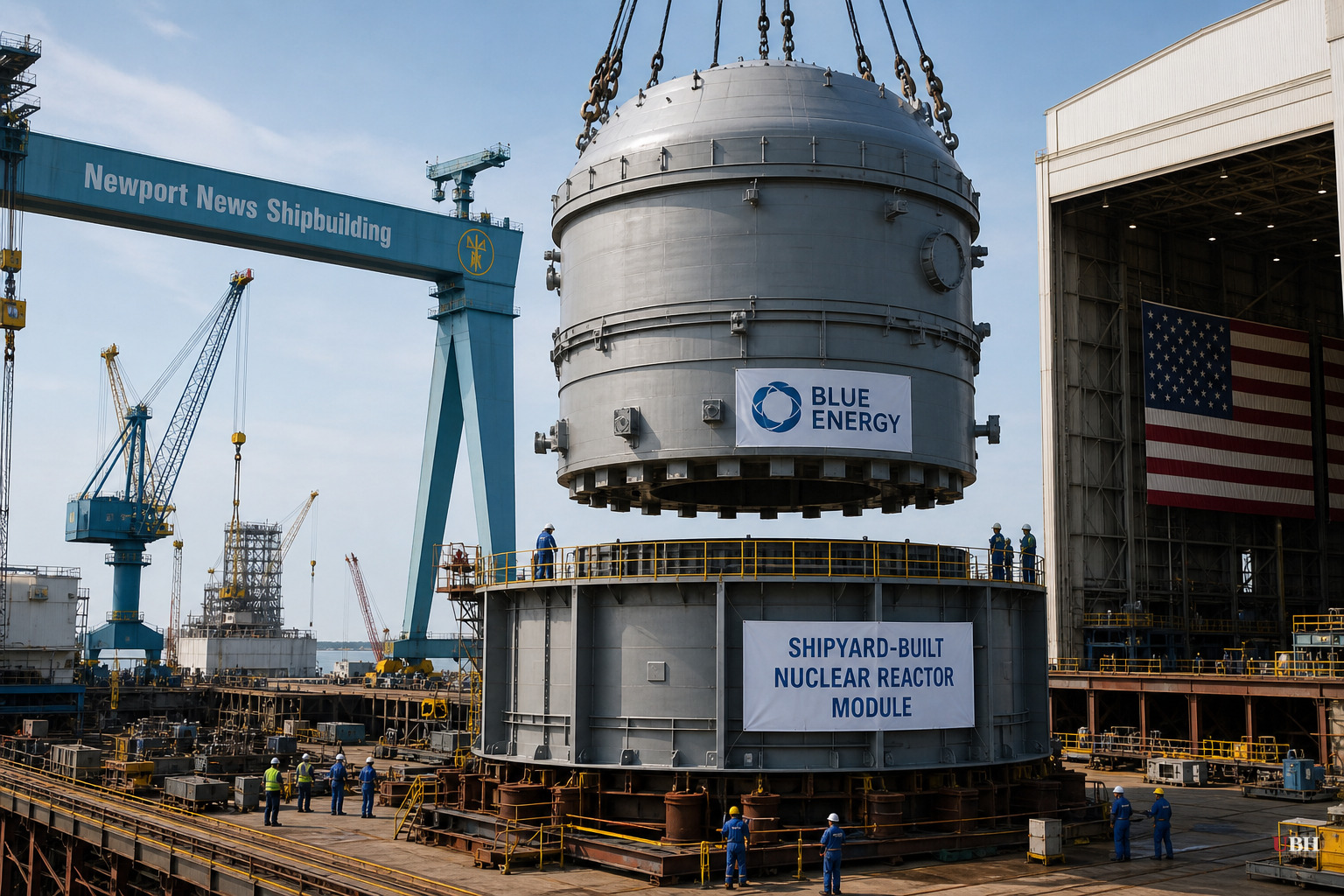
Constellation Energy's venture arm made its first bet on an American small modular reactor developer. The company announced on July 16, 2026, that Constellation Technology Ventures (CTV) took a strategic equity stake in Blue Energy, a Texas-based startup that wants to build nuclear plants the way shipyards build ships.
Terms weren't disclosed. Based on CTV's past checks, including a $4 million investment in SWTCH, this one is likely in the single-digit millions, according to ZeroHedge. That's pocket change for Constellation, a company with a $91 billion market cap, according to The Motley Fool. The money isn't the point. The endorsement is.
Why Constellation, of all companies, matters here
Constellation isn't a random investor chasing a nuclear trend. It operates 21 reactors across 12 stations, delivering roughly 22 gigawatts of capacity, according to carboncredits.com. Its plants run at capacity factors above 90%, per ZeroHedge. This is the company that struck deals to restart the shuttered Three Mile Island unit for Microsoft and lock up output from its Clinton plant for Meta.
When a company with that track record puts its name behind a new deployment model, it carries weight a pure venture check doesn't. David Dardis, Constellation's Senior Executive Vice President and Chief External Affairs and Growth Officer, said the investment supports Blue Energy's plan to deploy GE Vernova Hitachi's BWRX-300, calling it "a proven technology with a potential path to scale for the next generation of nuclear energy."
The shipyard pitch
Nuclear construction has a brutal history. Projects routinely blow past budgets and timelines by years, sometimes by a decade, according to The Motley Fool. The reactor itself usually isn't the problem. It's the buildings, piping, and cooling systems built on-site, exposed to weather, labor shortages, and inspection delays.
Blue Energy's answer is to move that work into existing shipyards. Those facilities already run mass-assembly manufacturing with indoor, climate-controlled space, heavy cranes, and robotic welding systems built for offshore oil rigs and LNG vessels. Blue Energy fabricates large reactor modules there, then barges them to the final site, according to Investing News Network.
The company's plan for its Texas site is a phased buildout. Two GE Vernova gas turbines would come online around 2030, delivering about 1 gigawatt of power, according to ZeroHedge. The steam supply would later shift to GE Vernova Hitachi BWRX-300 reactors, eventually scaling to as much as 1.5 gigawatts of nuclear capacity. Early site work could start this year, ahead of a final investment decision in 2027.
The BWRX-300 itself isn't experimental. It's a boiling water reactor design building on decades of prior technology, with added passive safety systems, and each unit generates about 300 megawatts, enough for hundreds of thousands of homes, according to carboncredits.com. The design has already cleared an NRC-approved licensing topical report, according to ZeroHedge.
The financing problem this is actually solving
Jake Jurewicz, Blue Energy's CEO and co-founder, framed the deal as solving nuclear's real bottleneck. "With demand for near-term power rising, Constellation's investment will help Blue Energy meet America's need by making new nuclear development predictable, rapidly scalable, and project financeable for the first time in history," Jurewicz said, according to Investing News Network. "The future of nuclear energy isn't a decade away and doesn't take a leap of faith on technology or construction execution, it's being built right now."
Traditional nuclear projects have leaned on federal loan guarantees because private capital won't touch construction risk on a technology with a track record of ten-figure cost overruns. Blue Energy's structure splits the nuclear island, supplied by the vendor, from balance-of-plant work done under fixed-price commercial contracts. The gas-to-nuclear phasing also lets the site start generating revenue on natural gas years before the reactors arrive, according to The Motley Fool.
Skeptics have reason to withhold judgment. No shipyard-built reactor of this kind has been deployed at commercial scale in the U.S. The 2030 gas timeline and 2027 nuclear investment decision are both projections, not completed milestones. Small modular reactor developers have missed deadlines before, and Blue Energy's most ambitious claim, a three-year buildout, according to The Motley Fool, hasn't been tested against an actual construction schedule yet.
What's actually confirmed and what isn't
The equity investment is real and dated to July 16, 2026. The dollar amount is not disclosed. The 2030 gas power date and 2027 final investment decision are company targets, not guaranteed outcomes. Whether Blue Energy's fixed-price, shipyard-built approach actually holds down costs the way it did for offshore oil and LNG projects remains an open question until modules start coming off the line.
The bigger test comes at the 2027 investment decision. That's when Blue Energy and its partners, including Constellation, will have to put real capital behind the nuclear phase of the Texas project, not just the gas turbines. Whether Wall Street treats this shipyard model as bankable at scale, the way it treats LNG terminal financing, is the question the industry will be watching closest.
Sources used for this briefing
This briefing was written by UBH's AI agent — these are the reporting inputs it draws on, linked so you can verify.


