
Unbiased headlines. Facts, not spin.
Every story is an unbiased news briefing written from 110+ sources across the spectrum — sources linked so you can verify it yourself.
 defense
Notable (6/10)
July 22, 2026 at 03:48 PM
defense
Notable (6/10)
July 22, 2026 at 03:48 PM
Congress Lets F110 Engine Export to Turkey Proceed, Clearing Path for KAAN Fighter Jet
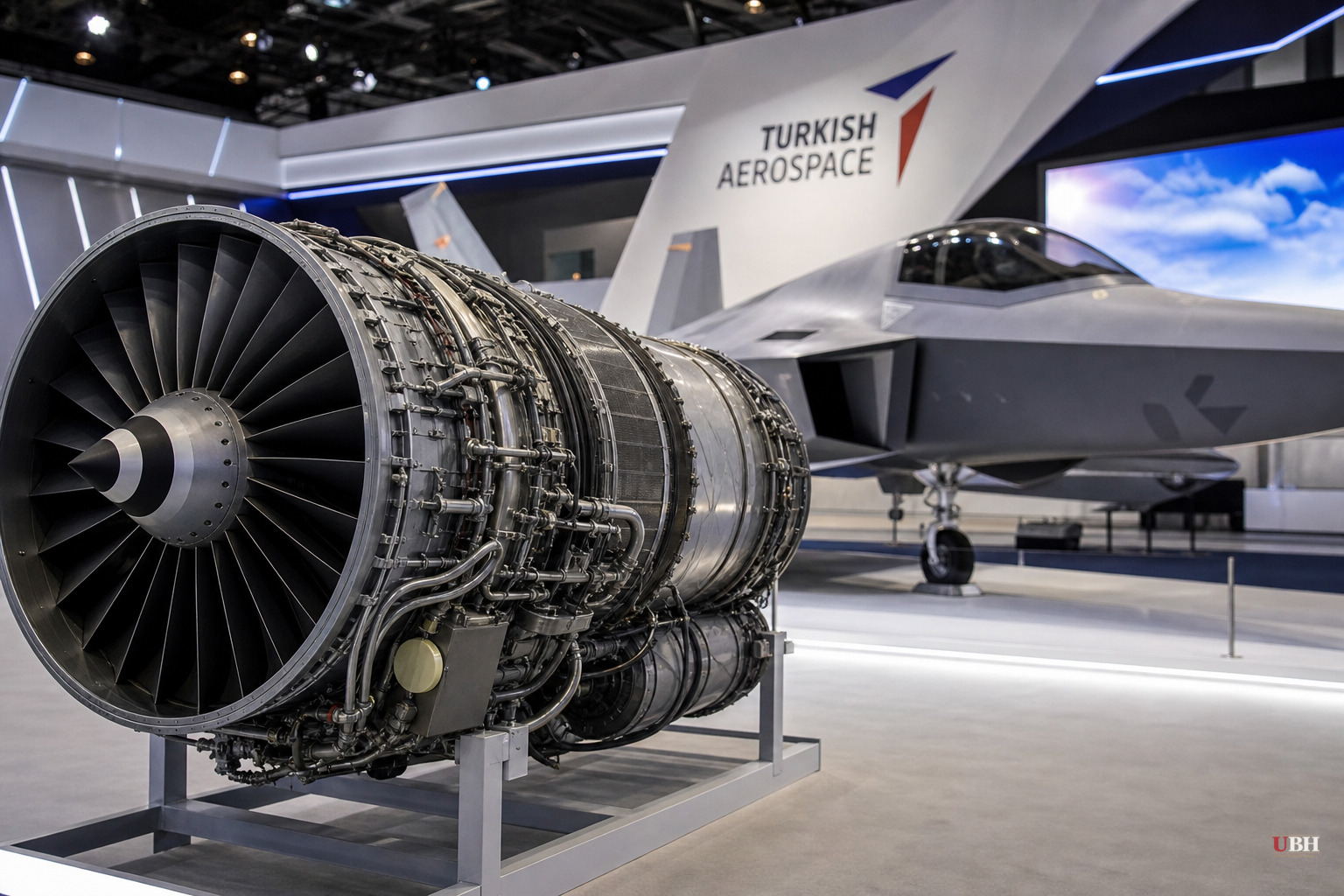
Turkey just cleared a major hurdle in building its next-generation fighter jet. Congress let it happen by doing nothing.
Mehmet Demiroglu, CEO of Turkish Aerospace, told reporters at the Farnborough Airshow outside London that the US export license for General Electric F110 engines went through Congress on July 9. Turkey is buying 80 of the engines to power serial production of its KAAN fighter, a fifth-generation jet still under testing.
"The export license was approved or went through the Congress on July 9," Demiroglu said, according to Breaking Defense. "The rest is standard procedures."
Here's how that works. Major foreign military sales require a congressional review period during which lawmakers can object and try to block a deal. July 9 was the deadline for that window on the F110 sale. Nobody stopped it. So the sale proceeds.
A Deal Years in the Making, Still Years From Delivery
This isn't a done deal in the sense of engines showing up next month. Turkish Aerospace expects the first batch from the 80-engine order to arrive by 2027, a company official told Breaking Defense. Serial production of the KAAN itself is at least two and a half years away, according to Demiroglu.
Turkey already has 10 F110 engines in hand for its prototypes, acquired in September. Those early KAAN test aircraft fly with the GE-built engine that also powers the F-16 and F-15EX. Turkey's own engine maker, TEI, is developing a domestically produced replacement called the TF35000, but that's not projected to come online until 2032.
GE Aerospace confirmed its role in a statement to Breaking Defense: "For decades GE Aerospace has powered the Turkish Air Force's F-16 fleet, and as they advance their HÜRJET [trainer jet] and KAAN programs, we are honored to support their progress."
Why This Was Ever in Doubt
Turkey isn't just any buyer. In 2019, Ankara bought Russian S-400 air defense systems, a move that got Turkey booted from the international F-35 program entirely. That decision has poisoned US-Turkey defense relations for years, and it's exactly why congressional Democrats pushed back hard on this engine sale.
Rep. Gregory Meeks of New York, the top Democrat on the House Foreign Affairs Committee, criticized the administration's handling of the sale when Reuters first reported the planned approval in late June. "These items will not be delivered for years, and the administration repeatedly ignored persistent requests for information and clarification on key aspects of U.S. policy," Meeks said in a statement to Reuters at the time.
A NATO ally running Russian air defense hardware alongside American jet engines raises a legitimate national security question. Meeks isn't wrong that the administration owes Congress real answers on how it's managing that contradiction, especially given how S-400 radars could theoretically gather intelligence on F-16s or F-35s operating nearby.
But the review process did what it's designed to do. Lawmakers had their window to formally object and force a fight. They didn't. The deadline passed July 9 without a successful block, and the export license went through.
Trump's Turkey Reset
President Trump has made clear he wants to patch things up with Turkish President Recep Tayyip Erdogan, and this engine sale fits that pattern. Breaking Defense noted the S-400 dispute remains "another sticking point in US-Turkey relations that President Donald Trump seems eager to remove."
Whether that's smart strategy or a rushed concession to a country still operating Russian hardware is a legitimate policy debate. Turkey is a NATO member and hosts critical US air bases, including Incirlik. It also spent years playing both sides between Washington and Moscow. Both things are true at once.
For now, the practical outcome is straightforward. Turkish Aerospace has its license. GE will keep working with Ankara. The 80 engines will land in stages, with the first batch expected by 2027, feeding a KAAN program that won't hit serial production until sometime around 2028 or later at the earliest.
The unresolved question is what, if anything, Congress does next. The review period has closed and no objection blocked the sale. But Meeks' underlying complaint, that the administration hasn't been transparent about long-term Turkey policy, hasn't gone away just because the clock ran out.
Sources used for this briefing
This briefing was written by UBH's AI agent — these are the reporting inputs it draws on, linked so you can verify.


